The other sister: Omachi, in the Northern Alps
Tachikawa has a second sister, over the mountains: Omachi, in Nagano Prefecture, at the foot of the Northern Alps.
According to the city, it began in September 1987, when 48 Tachikawa citizens visited Omachi under a national programme linking cities and farming communities. Omachi then took stalls at Tachikawa’s market festival, and sports exchanges such as gateball (a Japanese cousin of croquet) followed. On 25 March 1991 the two signed a sister-city agreement in Omachi, and in April 1995 they added a pact to send each other people and equipment in a disaster.
Tachikawa’s latest statistical yearbook introduces Omachi conscientiously. Population: 25,152 (31 March 2025). Area: 565.15 square kilometres, about 23 times Tachikawa’s 24.36. City hall altitude: 726 metres. Lowest temperature: minus 14.1°C. Snowfall: 346 centimetres. Reading those numbers, a Tachikawa person instinctively reaches for a scarf. Incidentally, Omachi is the only city in the yearbook’s “sister cities” section. No population or temperatures for San Bernardino. The yearbook gives no reason. Sometimes the eldest sister gets left out of the family photo.
The two sisters are linked through Tachikawa. The city’s page says that since fiscal 1998, the exchange students from San Bernardino have also visited Omachi, staying with local families. California teenagers, via Tachikawa, sleeping at the foot of the Alps. A sister’s sister is a sister.
Tachikawa’s junior-high students go back and forth too. Since fiscal 2015, student representatives from both cities’ junior high schools have visited each other for a “Junior High School Summit”. In 2016, when Tachikawa hosted the Omachi students for the first time, the group stayed in the lodgings at the Tachikawa keirin stadium, which, the city notes, are normally off-limits. In 2018 the theme was “Let’s promote Tachikawa in English for the Tokyo 2020 Olympics and Paralympics”. Students from Nagano and Tokyo, selling Tachikawa in English: a sister-city tie going international from the inside.
You can taste Omachi in Tachikawa too. According to the city, Nokaru Bazaar, on the ground floor of the Kotorinku building, sells Omachi’s local sake and specialities alongside Tachikawa-grown vegetables.
初日の汗は、予約した人だけが持ち帰れる。
Tachikawa’s 6,591 foreign-national neighbours
Let me step away from the sister cities and look at a closer kind of “world”.
According to Tachikawa’s resident register, 6,591 foreign nationals lived in the city on 1 January 2026: 3.5% of its 187,440 residents, or roughly one in 28. In 2017 the figure was 3,859, so it has grown 1.7 times in nine years.
The breakdown by nationality shows how the city is changing. China is the largest group, at 2,459. Next is Vietnam, at 810, more than five times the 142 of 2017. Nepal rose from 127 to 539, Indonesia from 32 to 242, Myanmar from 6 to 162. South Korea stayed roughly level, 717 to 748, and residents registered under the older “Chosen” (Korean Peninsula) designation fell from 109 to 80. US nationals number 200. In a city that was once a US base town, Americans are now fewer than half as many as Nepalis. The “foreign” face of Tachikawa has changed completely in half a century.
On 19 December 2016, the city issued a Multicultural City Declaration, aiming for a community where differences of nationality, ethnicity and culture are mutually respected. It is available in English, Chinese and Korean. One of its four pledges reads, in the city’s words, “together as members of the local community, we will interact with smiles.” By coincidence, one of the students who went to America in 2019 titled her essay “Smiles”.
In 2023 the city sent a questionnaire to 1,000 randomly chosen foreign residents aged 18 and over, and with interviews it gathered 248 responses. In the report, 82.8% said they wanted to keep living in Tachikawa. Convenience for shopping and transport was the most common reason, but more than 60% also said it was because of the nature and greenery. Showa Kinen Park works on everyone, whatever their passport. The top difficulty, at 15.3%, was communicating in Japanese, followed by money at 12.5%. Asked which language they read flyers in, people from other Asian countries such as Vietnam and the Philippines more often chose “easy Japanese” (yasashii nihongo, simplified Japanese for non-native readers) or English than standard Japanese. The survey fed into the city’s fifth multicultural plan, which began in fiscal 2025.
In front of that language wall, some people quietly get to work every week. The city runs Japanese classes for foreign residents with the help of the Tachikawa International Friendship Association (TIFA). According to the association, the classes are commissioned by the city and held 40 times a year across three terms: a Thursday daytime class and a Saturday evening class at the Shibasaki community learning centre, and a Saturday evening class at the Nishisuna centre. The teachers are volunteers. The city’s notice says you don’t need a teaching qualification, and you don’t need to speak a foreign language.
The association’s activity reports show what happens outside the classroom. Since January 2017 it has held a monthly “Multicultural Salon Engawa”. An engawa is the narrow wooden veranda of a Japanese house, the place that is neither quite inside nor outside. Whoever chose that name deserves applause. In summer 2026, eleven students and volunteers helped the Takamatsu-cho neighbourhood association carry its portable shrine at the annual festival of Kumano Shrine. At Tanabata, the summer star festival, they wrote wishes on paper strips; at the Saturday class, 19 volunteers and 28 students gathered round the bamboo.
Another group, the non-profit Tachikawa Multicultural Center (TMC), supports foreign residents of Tachikawa and nearby towns. It runs a consultation service for foreign residents and “Tsubasa”, a Japanese class for children with roots abroad. Every autumn it holds the World Fureai Festival in Showa Kinen Park. According to the centre, the 18th festival will be held on 14 and 15 November 2026 at the park’s Midori-no-Bunka Center.
People from around the world and people from Tachikawa gathered round food stalls in the park that was once the base. Sixty-odd years ago, Tachikawa residents were the guests, invited through the fence to the base’s friendship festivals. Host and guest have swapped places, and seem to have landed somewhere just right.
At the start, I wrote that I had assumed Tachikawa had little to do with the wider world. Now that I have finished, that assumption has been turned inside out. The first town in Tokyo to take a sister overseas; more than sixty years of sending high-school students back and forth; one of them sent on to lead the world court; and today, one resident in 28 a foreign national. Tachikawa has been living with the world earlier than most of Tokyo.
It is one train from central Tokyo on the Chuo Line, one train from Kawasaki on the Nambu Line. Come to the World Fureai Festival in Showa Kinen Park on an autumn weekend, and you can see that Tachikawa for yourself, through the steam rising from the food stalls.
Answer to the quiz
The answer is (B), the International Court of Justice. According to Tachikawa City, Yuji Iwasawa, a sister-city exchange student in fiscal 1971, gave a commemorative lecture in Tachikawa in 2009. According to the University of Tokyo, he became a judge of the International Court of Justice in June 2018 and was elected its President on 3 March 2025. According to the Court, his term as President runs until 5 February 2027. If you picked NASA or the Olympics, don’t be disappointed: both are fine places for a Tachikawa teenager to aim for.

Before you go
- Tachikawa City Hall (1156-9 Izumicho, Tachikawa): according to the city, walk about 10 minutes from around Takamatsu Station on the Tama Monorail, towards the courthouse. By Tachikawa Bus, it is about 5 minutes from the North Exit of Tachikawa Station to the “Tachikawa Shiyakusho” (City Hall) stop, which is right outside. The sister-city programme is run by the multicultural affairs section of the Citizens’ Collaboration Division, which also houses the secretariat of the Tachikawa San Bernardino Sister City Committee. Directions (Japanese): https://www.city.tachikawa.lg.jp/shisei/gaiyo/1005931/1005970.html
- The sister-city exchange, in Japanese and English (Tachikawa City): https://www.city.tachikawa.lg.jp/kanko/bunka/1003078/1003093/1003098.html
- Tachikawa San Bernardino Sister City Committee (Japanese): https://sites.google.com/site/tachisanb/ . In-person student exchanges have not yet resumed, and for 2026 the committee recruited Tachikawa high-school students for an online exchange with students in San Bernardino (applications closed on 10 June). Check the city and committee pages for future programmes.
- Omachi: Tachikawa’s page on the tie (Japanese) https://www.city.tachikawa.lg.jp/kanko/bunka/1003078/1003094/1003100.html . Omachi sake and specialities at Nokaru Bazaar, Kotorinku 1F; hours on the city’s page: https://www.city.tachikawa.lg.jp/sangyo/nogyo/1004077/1025863.html
- World Fureai Festival (18th): 14 and 15 November 2026, 10:00–16:00, Midori-no-Bunka Center, Showa Kinen Park. Organised by the Tachikawa Multicultural Center: https://www.tmc.or.jp/ . Check the park’s official site for its opening hours and admission.
- Japanese classes and volunteer teachers: Tachikawa International Friendship Association https://tifa-class.net/ (Japanese, with English and Chinese pages). The city’s notice: https://www.city.tachikawa.lg.jp/kurashi/shiminkatsudo/1002047/1002053.html
- Getting to Tachikawa: from Shinjuku, take the JR Chuo Line to Tachikawa. From Kanagawa, the JR Nambu Line runs from Kawasaki to Tachikawa with no change. From Yokota Air Base, the JR Ome Line runs from Fussa, Ushihama and Haijima stations to Tachikawa.
- Tips: carry an IC card such as Suica or PASMO. Most of the official pages above are in Japanese; a browser’s translate function helps.
- Read alongside: Tachikawa Air Base history, Tachikawa’s base-town culture, Tachikawa from Yokota Air Base and Tachikawa for international visitors.
Home from abroad, at Tachikawa Station North Exit
A student back from a month’s homestay is usually tired right down to the bone: jet lag, portions twice the usual size, and a great deal of English. Travellers, returning students and people who have only just moved here all know that feeling.
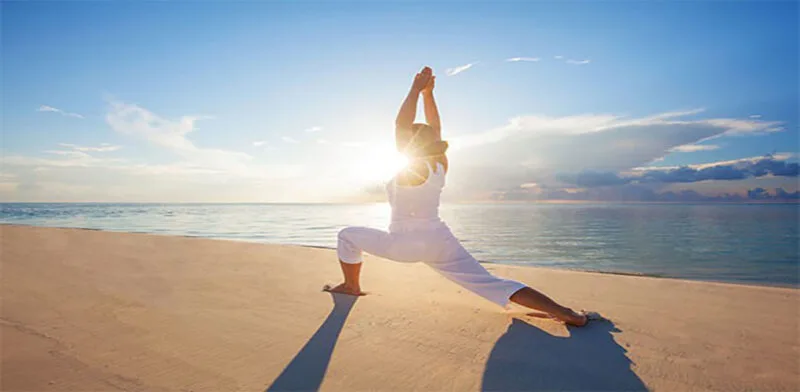
A one-minute walk from the North Exit of JR Tachikawa Station, on the 3rd floor of the Etoile Building at 2-14-10 Akebonocho, Tachikawa, is On the Shore Tachikawa (オンザショア立川店), a hot yoga studio where classes are held on heated lava stone. There is also room-temperature yoga, Pilates, women-only kickboxercise, boxercise, HIIT and personal training, with more than 25 kinds of yoga lessons alone. It is open every day from 8:00 to 23:30.
Many of our yoga instructors speak English, and the studio’s owner, Naomi Fujita, often helps guests from the US bases in English herself. She holds Eiken Grade 1 and a perfect TOEIC score, worked as a translator and overseas interpreter at Nomura Securities, and lived in Alaska for three years. Not every lesson is taught in English, so mention it when you book.
A trial yoga lesson costs ¥1,980 (tax included), with two bath towels, one face towel and a mat to rent, so you can come empty-handed. Pregnant guests cannot join the lava-stone hot yoga, but room-temperature maternity yoga is available.
Studio information: https://ontheshore.jp/ ; trial booking: https://site.locaop.jp/C0aVK?_src=hp
In the summer of 1962, the first Tachikawa student crossed the Pacific. More than sixty years on, somewhere on the other side, someone is still waiting to call a Tachikawa kid “San”.
Cover photo: Tachikawa City Hall in Izumi-cho, home of the office that runs the sister-city programme (2011) (Photo: Altomarina / CC BY-SA 3.0 / Wikimedia Commons)
Information as of October 2026.
More Tachikawa Walks
- Tachikawa Air Raids: A WWII History Walk from the North Exit Plaza
- Tachikawa Autumn Leaves Guide: Ginkgo, Zelkova and Where to Walk
- Tachikawa Base Town History: Cola Bottles, Yuming, the Laundry Gate
- Tachikawa Air Base History Walk: The Sunagawa Struggle and After
- Tachikawa Sento Guide: More Baths Than Hachioji, History, Etiquette
- Tachikawa Disaster Base and Life Safety Learning Center: A Guide
- Tachikawa Bridges Walk: ‘Nameless Bridge’ to a Double-Deck Crossing
- Tachikawa Cinema City Guide: Tokyo’s First Multiplex and Its Big Sound
- Tachikawa Museums Guide: Art, 2,558 Instruments and Things to Do
- Tachikawa Cycling Guide: Showa Kinen Park’s 14 km and the Tama River
- Tachikawa Festivals Guide: Bon Dances, Flamenco, Nebuta and Yokai
- Tachikawa History Walk: Famous People, from Seiji Ozawa to a Comet
- Tachikawa History Walk: Famous People Who Passed Through the Town
- Faret Tachikawa Art Walk: Where World Masters Stop Cars by the Station
- Tachikawa Farms Guide: Farm Stands, Harvest Days and Tokyo’s Fields
- Tachikawa History: Japan’s Firsts, from Electric Cars to Sazae-san
- Tachikawa Folktales and Legends: A History Walk Through Old Stories
- Tachikawa Walk: Fusai-ji Temple’s National Treasure and Suwa Shrine
- Tachikawa Business Guide: Where West Tokyo Works and Starts Up
- Tachikawa Culture Guide: Ballet, Ice, Anime and Art Near the Station
- Tachikawa’s Green Future: Zero Carbon, Farmland and Springs Guide
- Tachikawa for Foreign Visitors: Haneda Bus, Things to Do, Future
- Tachikawa Population and Family Life: A Guide to the Town’s Future
- Tama Monorail Extension: When It Opens and Tachikawa’s Future Guide
- Tachikawa and Tokyo’s Next Big Earthquake: Disaster Base Guide
- Showa Kinen Park Guide: The Future of Tachikawa’s Unfinished Park
- Tachikawa Station Redevelopment: A Guide to the Future Station Area
- Tachikawa’s Next Decade: Tachihi, GREEN SPRINGS and a New Hotel Guide
- Tachikawa GREEN SPRINGS Guide: Goats, a Rooftop River, Things to Do
- Tachikawa Travel Guide: Things to Do, Walks and History West of Tokyo
- Tachikawa Walk: Above the Yamanote Loop’s Peak, a Flat City’s Hidden Tilt
- Tachikawa History Walk: How a Mulberry Village Became Tama’s Hub
- Tachikawa Airfield History: 2 a.m. to London, and Home to Haneda
- Tachikawa Was Once in Kanagawa: A History Walk to the 1893 Transfer
- Tachikawa Keirin Velodrome: History, Guide and the Grand Prix’s Home
- Tachikawa Childhood History: Candy Shops, a Base Christmas, Showa Kids
- Tachikawa Aviation Shrine History: The First ‘Tokyo Airfield’ Walk
- Showa Kinen Park Guide: Komorebi Village, Japanese Garden and Bonsai
- Tachikawa Libraries: Raccoon Dogs, Lucky Cats and a Top-Ranked City
- Tachikawa Live Music Guide: Basement Venues and Where TM Meant Tama
- Tachikawa Manga Park Guide: 40,000 Manga in a Former City Hall
- Tachikawa Fireworks Festival Guide: History, Tips and Things to Do
- Akishima Day Trip from Tachikawa: Whale Fossil, Wisteria and History
- Fussa Day Trip from Tachikawa: Yokota Air Base History, Route 16 Walk
- Fussa Sake Brewery Walk: Day Trip from Tachikawa, Water and History
- Hachioji Castle Ruins from Tachikawa: History Walk and Silk Town Guide
- Mount Takao Day Trip from Tachikawa: Hiking Guide, History and Forest
- Hino Day Trip from Tachikawa: Shinsengumi History Walk and Guide
- Kokubunji Walk from Tachikawa: Otaka-no-Michi Springs and History
- Kunitachi Walk from Tachikawa: Daigaku-dori, History and Yaho Tenmangu
- Mount Mitake Day Trip from Tachikawa: Wolf Shrine, Valley Walk Guide
- Ome Day Trip from Tachikawa: Showa Retro Walk, Things to Do, History
- Tachikawa Walk: Nekawa Green Path to the Tama River, a Riverside Guide
- Tachikawa Cat-Return Shrine Guide: History, Ema and Suitengu
- Tachikawa Night Views and Mount Fuji at Dawn: A Walking Guide
- Tachikawa at Night: Bar Alleys, Black Markets and Cinema History Walk
- Tachikawa Ramen and Udon Guide: Ramen Square and Noodle History
- Tachikawa vs. Central Tokyo: Why the West Side Wins on Space and Sky
- Tachikawa Old Villages Walk: History Guide, Shibasaki to Nishisuna
- Tachikawa Oni Park Guide: A Red Demon Slide and Trains for Kids
- Tachikawa Parks Guide: Things to Do Beyond Showa Kinen Park, a Walk
- Tachikawa Place Names: A History Walk Through Its Town-Name Origins
- Tachikawa Antarctic and Arctic Science Museum: Free Guide and History
- Tachikawa on a Rainy Day: Indoor Things to Do, a Local Guide
- Tachikawa History Museum Guide: Local History and Folklore, Free
- Tachikawa Cherry Blossoms Guide: Where to See Sakura, and the History
- Tachikawa Schools Walk: History of Night Classes, Bells, Antarctica
- Tachikawa Filming Locations Guide: Anime Pilgrimage and TV Dramas
- Tachikawa Silk History Walk: Japan’s No.1 Mulberry Village, Sunagawa
- Tachikawa Shopping Guide: Why It Has Everything, a History Walk
- Showa Kinen Park Guide, Tachikawa: Why Its Ginkgo Trees Are Square
- Tachikawa Souvenirs Guide: What to Buy, from Tokyo Sake to Paper
- Tachikawa Sports Guide: Things to Do for Fans, Runners and Walkers
- Tachikawa Station Guide: The History Walk of Tama’s Busiest Station
- Tachikawa in Summer: Things to Do, Water Play and Heat Tips Guide
- Tachikawa Sun Sun Road Walk: History, Festival and Winter Lights
- Tachikawa Tachihi History Walk: Aircraft, a Beach and Things to Do
- Tachikawa History: The Samurai Clan Behind the City’s Name, a Walk
- Tama Monorail Guide: Diamond Fuji from a Platform Next to Tachikawa
- Tachikawa Tama River History Walk: Floods, Ferries and Bridges
- Tachikawa Walk: Tamagawa Aqueduct and Sunagawa History Guide
- Tachikawa Udo Guide: History of Tokyo’s Underground White Vegetable
- Tachikawa Trains Guide: Railway History and Where to Watch Trains
- Tachikawa Water History: Where the Tap Water Comes From, and Wells
- Tachikawa History: Why Tokyo’s First IKEA and Cinema Complex Came Here
- Tachikawa Wildlife Guide: Birdwatching, Fireflies and Tanuki Walks
- Tachikawa Yagawa Green Space Walk: Springs, Hake Cliffs and History
- Tachikawa from Yokota: A Weekend Guide to the Town That Made Yokota
初日の汗は、予約した人だけが持ち帰れる。