A rainy day with children: indoor play, and a room that shakes
A rainy day with children is more pressing than a rainy day for adults. Their energy has nowhere to go. Tachikawa has several places suited to such days within walking distance of the station.
First, PLAY! at GREEN SPRINGS. Its official website introduces PLAY! MUSEUM on the 2nd floor as “a cultural complex that fuses a museum and a playground — the kind of place you’d think existed but didn’t.” It holds exhibitions on picture-book artists and picture-book characters, and in principle closes only when exhibitions are changed and over the New Year. PLAY! PARK on the 3rd floor is an indoor kids’ park, with an area for parents and children under three. For parents looking for somewhere to let their children run around on a rainy day, the words “in principle, open every day” are probably the most welcome of all.
On the 2nd floor of the Tachikawa City Children’s Future Center, which gave the old city hall a new life, is Tachikawa Manga Park. It has about 40,000 books, and you can take off your shoes and read on tatami mats. There are even seats where you crawl inside an oshiire, a Japanese built-in futon cupboard, to read. According to its official history, the old city hall opened as the Children’s Future Center in December 2012, Manga Park opened the following March, in 2013, and in July that year the cupboard space was greatly expanded. A library that runs short of cupboards is a rare thing. It plans to grow its collection to about 50,000 books. This place has its own story in this series, so here I will add only the general observation that children on rainy days love cupboards.
You could also go and experience a disaster on purpose on a rainy day. The Tachikawa Life Safety Learning Center in Izumicho — officially the Tokyo Fire Department Tachikawa Life Safety Learning Center — is free to enter. In its earthquake simulation room you can experience shaking just like the real thing, from the age of three. On 20 March 2026 the earthquake corner was renewed, and you can now learn about earthquake precautions for apartment buildings. It is closed on Thursdays and the third Friday of the month, among other days, so do not go on a rainy Thursday and find it shut. However, it is open regardless of the day of the week on 1 September (Disaster Prevention Day), 1 October (Tokyo Citizens’ Day) and 17 January (Disaster Prevention and Volunteer Day). The VR experience is for children in the second year of elementary school and above who are at least 100 cm tall. There must be a few households in Tachikawa that measure their child’s height before heading out on a rainy day.
Two more stops along the monorail, 10 minutes’ walk from Takamatsu Station, the Antarctic and Arctic Science Museum is also free. Touch Antarctic ice, watch aurora footage on a 4-metre dome, and look up at a real snow vehicle that drove to the South Pole. The rain outside is cold, but Antarctic ice is colder. By comparison, Tachikawa’s rain starts to seem rather sweet. The museum’s guide calls the Antarctic ice sheet a “time capsule” that tells the story of the Earth’s past, built up over a long time from snow that fell and never melted. Things fallen from the sky, piling up and remaining: just the exhibit for a rainy day. It opened on 24 July 2010, and as of 1 July 2026 it had welcomed more than 445,000 visitors in total. It is closed on Sundays, Mondays and public holidays, among other days, so it suits a rainy weekday.
Having written this far, I noticed something. Almost all of Tachikawa’s rainy-day spots for children are free, or close to it. This is a city where a rainy day does not soak your wallet as well.
There are places to enjoy that from the adults’ side, too.
初日の汗は、予約した人だけが持ち帰れる。
A rainy day for grown-ups: Edo books, cinema, and bookshelves until 10 p.m.
For an adult’s rainy day, the place I would most recommend is the National Institute of Japanese Literature (国文学研究資料館). It is at 10-3 Midoricho, Tachikawa, 10 minutes’ walk from Takamatsu Station on the monorail, or about 25 minutes on foot from JR Tachikawa Station. It is a national institution that collects and studies Japan’s classical books, and it has an exhibition room on the ground floor.

Photo: Kakidai / CC BY-SA 4.0 / Wikimedia Commons
From 1 October to 27 November 2026 it is holding the special exhibition “Calligraphy, Paintings and Letters of the Edo and Meiji Periods: The Kitano Masaru Collection.” Admission is free. It is open from 10:00 to 16:30 and closed on Saturdays, Sundays, public holidays and the fourth Wednesday of the month. After the New Year, from 22 January to 18 March, the regular exhibition “A History of Classical Japanese Literature Through Books” is planned.
Listening to the rain while reading letters written with a brush by people in the Edo period. Many of the letters are probably updates on how someone was doing, thank-you notes or requests. People a century and a half ago probably wrote about the rain, too. Imagine that before you see the exhibition, and check afterwards. I know of no more luxurious way to spend a rainy day. But since it is open mostly on weekdays, you cannot get in if the idea strikes you on a rainy Saturday. Luxuries usually come with conditions.
There is also the cinema. Tachikawa has been a city of many cinemas since before the war, and Cinema City at the North Exit draws people from across Japan with its “Gokujo Bakuon” (extreme-sound) screenings. LaLaport Tachikawa Tachihi, two monorail stops north, has a cinema too. Watch one film and two hours vanish. The history of the cinemas is in this series’ story on Cinema City.
If you want to stand in front of bookshelves without watching the clock, try the 8th floor of Lumine Tachikawa, the station building. According to its official hours, the book floor on the 8th floor is open until 10 p.m. Even on a rainy night after the library has closed, you can browse the spines of books.
For those who like to walk among furniture, there is IKEA Tachikawa in Midoricho, 10 minutes on foot from the North Exit of JR Tachikawa Station, or 7 minutes from Takamatsu Station on the monorail. Inside are a Swedish restaurant and bistro, and a children’s play area called Småland. There are 1,500 parking spaces, but if you drive there on a rainy day, you will probably be loading big boxes on the way home. If you walk, at least you will not agonise over the size of the boxes.
TACHIKAWA STAGE GARDEN at GREEN SPRINGS is the largest-scale hall in the Tama area, with about 2,500 seats. For a rainy evening, it is worth checking the schedule of performances.
On a rainy day, ride a roof that runs through the sky
There is a rainy-day pastime in Tachikawa I am secretly fond of: riding the Tama Monorail.
The Tama Monorail links Kamikitadai in the north with Tama Center in the south: 19 stations over 16.0 km. The section from Tachikawa-Kita to Kamikitadai opened on 27 November 1998, and the section from Tama Center to Tachikawa-Kita on 10 January 2000. The track runs on high girders above the roads, so once you are on board, the window itself becomes an observation deck over the rainy city.
It is not only the view that makes it a rainy-day ride. According to the company, the Tama Monorail has had platform doors at every station since it opened, and they open and close in step with the train doors. It is designed so that even if you slip on the platform, you cannot fall onto the track. For anyone walking on a wet platform on a rainy day, that is a welcome bit of thoroughness.
Heading south from Tachikawa-Minami Station, the view opens up after the Shibasaki Gymnasium and you cross the Tama River. Below the track is the Tachihi Bridge, opened in 1989. On a rainy day the Tama River is a deeper colour than on a sunny one, and you can see how wide its riverbed is. Head north instead, and from Takamatsu, the second station, you can walk to the Antarctic and Arctic Science Museum, the National Institute of Japanese Literature and IKEA Tachikawa.
That said, even the monorail, so good in the rain, has a weakness: wind. There are anemometers along the line at the Tachihi Bridge and the Takamatsu junction bridge; at wind speeds of 20 metres per second or more, services may be suspended depending on conditions, and at 25 metres per second or more they are stopped immediately. September, the month of typhoons, is also Tachikawa’s wettest month. Rainy-day sky-walking is for rainy days without much wind. This line is covered in detail in this series’ story on the Tama Monorail.
So far I have listed nothing but places with roofs. But to finish, let me recommend just one place without one.
Showa Kinen Park in the rain, on purpose
According to the official guide to Showa Kinen Park (Showa Memorial Park, a national government park), it is open from 9:30 to 17:00 from March to October and until 16:30 from November to February. On weekends and holidays from April to September, it is open until 18:00. The free area of the Green Culture Zone opens at 8:30.
I could find nothing on the guide page specifically about rainy days. It closes over the New Year and on certain days in January, among others, and rain itself is not listed as a reason for closing. In other words, the park is open as usual on rainy days.
Recommending the park in the rain is purely my own taste. But the meadows, packed with people on sunny days, return to sheer openness on a rainy day. In the free area, you can rest under a roof at the Hana Midori Culture Center. The smell of wet gravel and earth is one you cannot smell on a sunny day. The rain falling on the former airfield seems to show more clearly than usual how flat that land, once runways, really is.
That said, the park in the rain is definitely colder than the park in the sun. Standing with an umbrella in the middle of a vast meadow, you feel terribly small. Whether you like that feeling or not will decide what you think of Showa Kinen Park in the rain. I am on the side that likes it — but if you ask whether I like it all the way into my shoes, I am less sure.
Now, it is time to return to the mystery we started with. How did the station front where water would not drain whenever it rained become the most reliable place to be on a rainy day?
Why is Tachikawa never dull on a rainy day?
Half the answer lies in the number of people. According to figures from the 2020 census compiled by Tokyo Metropolitan Government, Tachikawa’s daytime population is 207,832, more than 24,000 higher than its resident population of 183,581. Its daytime/night-time population ratio is 113.2, the highest of the 26 cities in Tama. Put simply, more than a tenth as many people again as live here arrive from outside the city for the daytime alone.
A city people come to cannot let them get soaked. It laid a second floor in front of the station, connected the buildings to the station, and made it possible for people to move around even on rainy days. Read the deck’s timeline, and that floor stretched out a little at a time between 1999 and 2005. Being a good place on a rainy day is something the city learned bit by bit, in order to take in the people who arrive every day.
The other half lies in the history of the land. The airfield and base land that spread north of the station were returned; a library was built there, national research institutes and archives moved in, and a park, a museum and play spaces appeared. Many of the places we have walked in this series become destinations under a roof on a rainy day. On sunny days, people scatter to the park’s meadows and the Tama River. When it rains, they come back under the roofs around the station. And when they do, there are this many places to welcome them.
The North Exit, where water would not drain away whenever it rained and residents petitioned the town council, has become, a century later, a place that gathers people on rainy days. The Showa-era rainy-day refuge — dashing through the underpass into a cinema — has turned into a refuge reached by crossing a second floor to a library or a science museum. Above ground that was weak against water, there is now another floor for people. On that floor, a traveller picks up a map at the information centre, reads the records of the airfield in the library, and touches Antarctic ice in a free science museum.
As the rain lifts, beyond the deck’s handrail, drops are falling from the monorail’s girders.
Quiz answer
The answer is (A), one. Of the six tourist information centres listed on Tokyo’s official tourism website — the Metropolitan Government Building, Busta Shinjuku, Haneda Airport, Keisei Ueno, Yaesu and Tama — the only one outside the 23 wards is the Tama centre, on the third floor of ecute Tachikawa.
Before you go
- Getting to Tachikawa: From Shinjuku, take the JR Chuo Line; Tachikawa Station is on the line. Check the current timetable before you set off.
- Getting around the station: There are pedestrian-only decks at the North and South Exits of JR Tachikawa Station, so you can move between the station and the buildings around it at second-floor height. Whether the deck is roofed varies from section to section, so it is safest to bring an umbrella.
- Tokyo Tourist Information Center Tama: 3F ecute Tachikawa, 3-1-1 Shibasakicho, Tachikawa. Mon–Sat 10:00–21:00, Sun and holidays 10:00–20:00, open every day of the year (according to the official information). Latest details on the official site: https://www.gotokyo.org/jp/plan/tourist-info-center/index.html
- Tachikawa City Central Library: 2F–4F Faret Tachikawa Center Square, 2-36-2 Akebonocho, Tachikawa. Weekdays 10:00–20:00, weekends and holidays 10:00–17:00 (the 4th-floor children’s floor closes at 17:00 every day). Closed Mondays, the third Thursday of each month and other days. Latest details on the official site (Japanese): https://www.library.tachikawa.tokyo.jp/contents?pid=32
- National Institute of Japanese Literature: 10-3 Midoricho, Tachikawa. 10 minutes’ walk from Takamatsu Station on the monorail, about 25 minutes from JR Tachikawa Station. Exhibition dates and opening days on the official site: https://www.nijl.ac.jp/
- Antarctic and Arctic Science Museum: 10-3 Midoricho, Tachikawa. Free. Closed Sundays, Mondays, public holidays and other days. Latest details on the official site: https://www.nipr.ac.jp/science-museum/
- Tachikawa Life Safety Learning Center: 1156-1 Izumicho, Tachikawa. Free. Closed Thursdays, the third Friday of the month and other days. Check experience times and booking on the official site.
- PLAY! MUSEUM / PLAY! PARK: GREEN SPRINGS W3, 3-1 Midoricho, Tachikawa. About 8 minutes’ walk from JR Tachikawa Station. Prices and exhibitions on the official site: https://play2020.jp/
- Showa Kinen Park: Open on rainy days. Hours vary by season. Latest details on the official site: https://www.showakinen-koen.jp/
- Practical tips: Carry an IC transport card such as Suica or PASMO; it works on JR trains and the monorail alike. Opening days change, so check each official site before you go.
- Combine it with: the history of the station and its decks in this series’ story on Tachikawa Station; the department stores and station buildings linked by the decks in the story on shopping; Antarctic ice in the story on the Antarctic and Arctic Science Museum; and Manga Park and the Life Safety Learning Center in their own stories. Once the rain stops, follow the winter sky and the night scenery in the story on night views and mornings.
At the end of your rain shelter, by the North Exit of Tachikawa Station
Hopping from roof to roof on a rainy day chills the body more than you expect. Wet socks, air-conditioned buildings, and then the rain outside again. Sit long in a library chair, and your shoulders and lower back stiffen too.
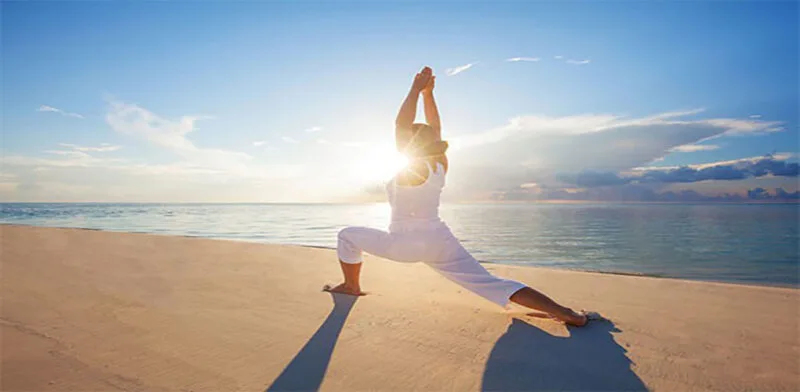
One minute’s walk from the North Exit of JR Tachikawa Station, on the third floor of the Etoile Building at 2-14-10 Akebonocho, Tachikawa, is On the Shore Tachikawa (オンザショア立川店), a hot yoga studio heated by lava-stone plates. Besides lava-stone hot yoga, it offers room-temperature yoga, Pilates, women-only kickboxercise, boxercise, HIIT and personal training, with more than 25 kinds of yoga lesson.
It is open every day from 8:00 to 23:30. On a night when the rain grows heavier, even after the library and Lumine’s bookshelves have closed, there is still time.
A trial yoga lesson costs ¥1,980 including tax, with two bath towels, one face towel and a yoga mat included in the rental. If you have a wet umbrella, there is little else you need to bring.
Pregnant guests cannot take part in lava-stone hot yoga, but room-temperature maternity yoga is available. Many of our yoga instructors speak English, and the studio’s owner, Naomi Fujita, who holds Japan’s top English qualification (Eiken Grade 1) and a perfect TOEIC score and once worked as a translator and overseas interpreter at Nomura Securities, and who lived in Alaska for three years, often helps guests from the US bases in English herself (visitors from abroad have even left Google reviews about the care they received in English); if you would like an English-friendly lesson, just say so when you book.
Studio information: https://ontheshore.jp/ — trial lesson booking: https://site.locaop.jp/C0aVK?_src=hp
The rain outside does not look like stopping for a while yet. In that case, you can stay under a roof a little longer.
Cover photo: The North Exit of Tachikawa Station seen from the pedestrian deck, with the station building beyond red arches. (Photo: DiKnK8713 / CC BY-SA 4.0 / Wikimedia Commons)
Information as of October 2026.
More Tachikawa Walks
- Tachikawa Air Raids: WWII History and a Memorial Walk Guide
- Tachikawa Autumn Leaves Guide: Ginkgo, Zelkova and Where to Walk
- Tachikawa Base Town History: Cola Bottles, Yuming, the Laundry Gate
- Tachikawa Air Base History Walk: The Sunagawa Struggle and After
- Tachikawa Sento Guide: Public Baths, Their History and Bath Etiquette
- Tachikawa Disaster Base and Life Safety Learning Center: A Guide
- Tachikawa Bridges Walk: ‘Nameless Bridge’ to a Double-Deck Crossing
- Tachikawa Cinema City Guide: Tokyo’s First Multiplex and Its Big Sound
- Tachikawa Museums Guide: Art, 2,558 Instruments and Things to Do
- Tachikawa Cycling Guide: Showa Kinen Park’s 14 km and the Tama River
- Tachikawa Festivals Guide: Bon Dances, Flamenco, Nebuta and Yokai
- Tachikawa History Walk: Famous People, from Seiji Ozawa to a Comet
- Tachikawa History Walk: Famous People Who Passed Through the Town
- Tachikawa Public Art Walk: A Guide to the 109 Works of Faret Tachikawa
- Tachikawa Farms Guide: Farm Stands, Harvest Days and Tokyo’s Fields
- Tachikawa History: Japan’s Firsts, from Electric Cars to Sazae-san
- Tachikawa Folktales and Legends: A History Walk Through Old Stories
- Tachikawa Walk: Fusai-ji Temple’s National Treasure and Suwa Shrine
- Tachikawa Business Guide: Where West Tokyo Works and Starts Up
- Tachikawa Culture Guide: Ballet, Ice, Anime and Art Near the Station
- Tachikawa’s Green Future: Zero Carbon, Farmland and Springs Guide
- Tachikawa for Foreign Visitors: Haneda Bus, Things to Do, Future
- Tachikawa Population and Family Life: A Guide to the Town’s Future
- Tama Monorail Extension: When It Opens and Tachikawa’s Future Guide
- Tachikawa and Tokyo’s Next Big Earthquake: Disaster Base Guide
- Showa Kinen Park Guide: The Future of Tachikawa’s Unfinished Park
- Tachikawa Station Redevelopment: A Guide to the Future Station Area
- Tachikawa’s Next Decade: Tachihi, GREEN SPRINGS and a New Hotel Guide
- Tachikawa GREEN SPRINGS Guide: Goats, a Rooftop River, Things to Do
- Tachikawa Travel Guide: Things to Do, Walks and History West of Tokyo
- Tachikawa Walk: Slopes, River Terraces and a Flat City’s Hidden Tilt
- Tachikawa History Walk: How a Mulberry Village Became Tama’s Hub
- Tachikawa Airfield History: The 2:12 a.m. Flight to London, 1937
- Tachikawa Was Once in Kanagawa: A History Walk to the 1893 Transfer
- Tachikawa Keirin Velodrome: History, Guide and the Grand Prix’s Home
- Tachikawa Childhood History: Candy Shops, a Base Christmas, Showa Kids
- Tachikawa Aviation Shrine History: The First ‘Tokyo Airfield’ Walk
- Showa Kinen Park Guide: Komorebi Village, Japanese Garden and Bonsai
- Tachikawa Libraries Guide: Raccoon Dogs, Lucky Cats, Local History
- Tachikawa Live Music Guide: Basement Venues and Where TM Meant Tama
- Tachikawa Manga Park Guide: 40,000 Manga in a Former City Hall
- Tachikawa Fireworks Festival Guide: History, Tips and Things to Do
- Akishima Day Trip from Tachikawa: Whale Fossil, Wisteria and History
- Fussa Day Trip from Tachikawa: Yokota Air Base History, Route 16 Walk
- Fussa Sake Brewery Walk: Day Trip from Tachikawa, Water and History
- Hachioji Castle Ruins from Tachikawa: History Walk and Silk Town Guide
- Mount Takao Day Trip from Tachikawa: Hiking Guide, History and Forest
- Hino Day Trip from Tachikawa: Shinsengumi History Walk and Guide
- Kokubunji Walk from Tachikawa: Otaka-no-Michi Springs and History
- Kunitachi Walk from Tachikawa: Daigaku-dori, History and Yaho Tenmangu
- Mount Mitake Day Trip from Tachikawa: Wolf Shrine, Valley Walk Guide
- Ome Day Trip from Tachikawa: Showa Retro Walk, Things to Do, History
- Tachikawa Walk: Nekawa Green Path to the Tama River, a Riverside Guide
- Tachikawa Cat-Return Shrine Guide: History, Ema and Suitengu
- Tachikawa Night Views and Mount Fuji at Dawn: A Walking Guide
- Tachikawa at Night: Bar Alleys, Black Markets and Cinema History Walk
- Tachikawa Ramen and Udon Guide: Ramen Square and Noodle History
- Tachikawa vs. Central Tokyo: Why the West Side Wins on Space and Sky
- Tachikawa Old Villages Walk: History Guide, Shibasaki to Nishisuna
- Tachikawa Oni Park Guide: A Red Demon Slide and Trains for Kids
- Tachikawa Parks Guide: Things to Do Beyond Showa Kinen Park, a Walk
- Tachikawa Place Names: A History Walk Through Its Town-Name Origins
- Tachikawa Antarctic and Arctic Science Museum: Free Guide and History
- Tachikawa History Museum Guide: Local History and Folklore, Free
- Tachikawa Cherry Blossoms Guide: Where to See Sakura, and the History
- Tachikawa Schools Walk: History of Night Classes, Bells, Antarctica
- Tachikawa Filming Locations Guide: Anime Pilgrimage and TV Dramas
- Tachikawa Silk History Walk: Japan’s No.1 Mulberry Village, Sunagawa
- Tachikawa Shopping Guide: Why It Has Everything, a History Walk
- Showa Kinen Park, Tachikawa: A Walking Guide to Highlights and History
- Tachikawa and San Bernardino: The History of Tokyo’s First Sister City
- Tachikawa Souvenirs Guide: What to Buy, from Tokyo Sake to Paper
- Tachikawa Sports Guide: Things to Do for Fans, Runners and Walkers
- Tachikawa Station Guide: The History Walk of Tama’s Busiest Station
- Tachikawa in Summer: Things to Do, Water Play and Heat Tips Guide
- Tachikawa Sun Sun Road Walk: History, Festival and Winter Lights
- Tachikawa Tachihi History Walk: Aircraft, a Beach and Things to Do
- Tachikawa History: The Samurai Clan Behind the City’s Name, a Walk
- Tama Monorail from Tachikawa: A Guide to Views, Mt. Fuji and History
- Tachikawa Tama River History Walk: Floods, Ferries and Bridges
- Tachikawa Walk: Tamagawa Aqueduct and Sunagawa History Guide
- Tachikawa Udo Guide: History of Tokyo’s Underground White Vegetable
- Tachikawa Trains Guide: Railway History and Where to Watch Trains
- Tachikawa Water History: Where the Tap Water Comes From, and Wells
- Tachikawa History: Why Tokyo’s First IKEA and Cinema Complex Came Here
- Tachikawa Wildlife Guide: Birdwatching, Fireflies and Tanuki Walks
- Tachikawa Yagawa Green Space Walk: Springs, Hake Cliffs and History
- Tachikawa from Yokota Air Base: A Weekend Guide and Things to Do
初日の汗は、予約した人だけが持ち帰れる。
2