Tachikawa, the “city of cinema” at night
According to Sumitomo Mitsui Trust Realty’s town record, in the 1960s Tachikawa had ten cinemas between its North and South Exits and was called “the city of cinema.” Counting from the Tachikawa Kinema of 1925, that is ten cinemas in about 40 years. The airfield-and-base town was a cinema town as well.

Photo: Razgrad / CC BY-SA 4.0 / Wikimedia Commons
The town record notes down the names of those ten one by one. At the North Exit: Cinema Tachikawa, Tachikawa Central, Tachikawa Shochiku and Tachikawa Chuo. At the South Exit: Tachikawa Meigaza, Tachikawa Nikkatsu, Tachikawa Daiei, Toei Tachikawa Minamiza, Tachikawa Toho, and Tachikawa Shintoho, also known as Tachikawa Nishikiza. Just reading them aloud brings back the air of the days when the signs of the film studios lined both sides of the station. There must still be plenty of people in Tachikawa who see these names and say, “Oh, that one — I remember.”
When I counted them, I was a little surprised. Four at the North Exit, six at the South. The South Exit, left far behind the north in sales, had more cinemas than the North Exit. In the lanes of the side called the back door, the light of the screens gathered most thickly.
When the last show let out, the audience must have scattered into the lanes north and south. Night-time drinking quarters and cinemas usually share the same customers. The low signboard lights of the South Exit probably lit the way home for filmgoers too.
But the North Exit cinemas disappeared with the redevelopment of the station area. According to the town record, three North Exit cinemas closed in 1992 for redevelopment. Two years later, in 1994, “Cinema City” opened as Tokyo’s first cinema complex — the first multiplex in Tokyo. A TV Tokyo programme that featured Tachikawa in 2018 also described this cinema as Tokyo’s first multiplex, opened in 1994, and reported on its dedication to sound, using speakers designed for concert halls.
Tokyo’s first multiplex was built not in Shibuya, not in Shinjuku, but in Tachikawa. The name “city of cinema” was handed on in a new form.
Then: ten cinemas north and south of the station, and as many film-studio names as there were signs. Now: four cinemas with 23 screens in the city. The number of cinemas has fallen by more than half, but each has more than five screens on average.
A wayfarer’s quiz
When did Tachikawa Station’s South Exit open?
- A: 1889, at the same time as the Kobu Railway
- B: 1930, the year the Itsukaichi Railway arrived
- C: 1977, the year the base was returned
The answer comes near the end of this article.
After the cinema lights, what lit the North Exit’s nights were department-store windows.
初日の汗は、予約した人だけが持ち帰れる。
Department-store lights and the remaking of the North Exit
The skeleton of the North Exit’s night view was built by department stores. Trace their history in the town record and it is dizzying. Isetan opened in 1956, moved in 1970 and moved again in 2001. The “Tachikawa Ginza Department Store” opened in 1961 and was rebuilt as “Tachikawa Takashimaya” in 1970. Chubu Department Store opened in 1962 and was reborn as “From Chubu” in 1984. Marui opened at the South Exit in 1952 and moved into the North Exit in 1970.

Photo: Dick Johnson from Tokyo, Japan / CC BY 2.0 / Wikimedia Commons
The year 1970 keeps coming up. In that year, the North Exit’s department stores moved all at once. It was also the year Marui, born at the South Exit, crossed to the north. The flow of people was clearly heading north.
And what finally transformed the North Exit’s nights was the site of the base. When the US military’s Tachikawa Air Base was fully returned to Japan in 1977, a large area north of the North Exit came back to the city. Faret Tachikawa opened as a new district in 1994, and in 1998 Tachikawa-Kita Station on the Tama Toshi Monorail opened. According to the town record, a land readjustment from 1990 to 2009 rebuilt the area in front of the North Exit. The area north of the covered-over Midorikawa was redeveloped into Faret Tachikawa, and the site of the three cinemas became the Cinema City building.
The North Exit’s nights are wide, bright and new because the land there was once empty. Once through wartime building clearance, once through the return of the base. Twice, the North Exit got the chance to rebuild the town from scratch.
So what about the South Exit?
Why the South Exit’s lanes stayed narrow
The town record has figures that show the South Exit’s struggles. After the war, its station plaza and roads were cramped. In fiscal 1972, sales at the station-front shopping streets were roughly 80 per cent North Exit and roughly 20 per cent South Exit.
The South Exit’s land-readjustment project was decided as a city plan in 1964 and approved as a project in 1966. According to the city’s chronology, work on relocations for part of the South Exit readjustment began in 1974. According to the town record, the project was completed in 2015. Fifty-one years from the planning decision. A child born the year the plan was decided would have been 51 when it was finished.
Meanwhile, new buildings went up at the South Exit too. In 1999 the station buildings “Granduo Tachikawa” and “Southern” opened, and in 2005 the “Alearea Building.” In 2022, a joint facility of the Tokyo Metropolitan Government and the City of Tachikawa was completed at the South Exit.
What physically joined north and south was the station itself. According to the city’s chronology, work on a temporary station building began in 1980, and the same year a redevelopment plan for the South Exit was drawn up. And in 1982, the Tachikawa Station building, the station shopping building and the Tachikawa Station North–South Free Passage were completed. The free passage, as the name says, lets people walk through from the north side of the station to the south without boarding a train. The nights of the North Exit and the South Exit became next-door neighbours, joined by a single path through the station. In 1998 the Tama Toshi Monorail opened, with Tachikawa-Kita Station to the north and Tachikawa-Minami Station to the south. North and south were now joined in the sky as well.
Even so, not all the South Exit’s lanes disappeared. The small early-Showa plots laid out by farmland consolidation were not hit by the great waves of redevelopment as hard as the North Exit was. The urban-history essay says that in the former nigyochi of Nishiki-cho, only a few small bars remain and the atmosphere of the old pleasure quarter has faded. On the other hand, it also says that the area from the station to Nishiki-cho preserves the character the land has had since before the war.
The North Exit is a town rebuilt from empty land; the South Exit is a town built up little by little on top of farm plots. Walk the South Exit’s lanes at night and you notice how low the signs are. It is not the light of big buildings but the light from the eaves that illuminates the road. It is the light of a town that was never rebuilt.
Tachikawa at night today: yokocho alleys and bar-hopping
Tachikawa’s nights today have several faces.
On the east side of the North Exit, around what was once called Night-Stall Street, there is a yokocho where small shops huddle shoulder to shoulder. According to the urban-history essay, this yokocho was created partly out of nostalgia for the Night-Stall Street era. A new alley has taken over the memory of the postwar nights.
“Tachikawa Bar-gai,” a bar-hopping event jointly organised by Tachikawa’s shopping streets, reached its 14th edition in 2026, according to its official website. With an advance ticket, you can eat and drink your way around 54 venues, centred on the area around the North Exit. It runs for three days, starting at 5 p.m. The shopping streets themselves have provided an excuse to open the doors of places you do not know. Since the black-market days, the people who have lit this town’s nights have been the owners of small shops, not the authorities’ plans. That touch is still there in the 14th year’s tickets.
On the other hand, one restaurant guide site writes that there are surprisingly few izakaya (Japanese pubs) around Tachikawa Station open late into the night, and that places you can get into after midnight are precious. That fits a city whose daytime population exceeds its night-time one. Tachikawa’s nights, it seems, are not long. In exchange, the early evening is rich.
In summer there are days when the night sky itself takes centre stage. The “Tachikawa Festival Showa Kinen Park Fireworks Display” runs for an hour, from 7:15 to 8:15 p.m., according to the organising committee’s official website, and launches 5,000 fireworks, according to a fireworks information site. Over the park on the site of the former airfield, for one summer night only, a great light is lit.
And there is something true of every night. You can walk Tachikawa at night without drinking. Gaze at the North Exit’s lights from the deck, see a film, look at the signs in the South Exit’s lanes and go home. That alone is enough to feel, in your body, the difference between this city’s two nights. If you do drink, drink in moderation. The time of the last train, and the state of you the next morning, will not wait for you the way Bokusui’s poem stone does.
North Exit and South Exit: the answer of two nights
Back to the first question. Why do Tachikawa’s North and South Exits show such different faces at night?
Half the answer lay in the history of the station’s exits. For more than 40 years, Tachikawa Station had only a northern exit, and the town grew with the north as its front. When the South Exit opened in 1930, the land to the south had already been divided into small plots by farmland consolidation. On those plots, the lights of ryotei and the pleasure quarter came on.
The other half lay in the history of empty land. The North Exit became empty land through wartime building clearance, and a black market rose on it. Lights for American soldiers came on along Night-Stall Street, cinemas lined up, department stores gathered. And with the return of the base, the North Exit gained a large area of land once again. The North Exit, rebuilt twice, became wide and new; the South Exit, tidied up little by little over half a century, kept its lanes and its low signs.
This is not a story about which is better. The North Exit’s wide deck was needed to take in 150,000 people every day. The South Exit’s narrow lanes carry into the present the memory of farm plots and Showa-era banquets. On the front and back of the same station, this city has tried out two different ways of building a night.
At the start, I wrote that nothing in particular came to mind about Tachikawa at night. But follow its nights and you find a banquet-room ballad, a black-market plaza, English signs, a school born from a cabaret building, and Tokyo’s first multiplex. Nothing came to mind, I think, only because nobody had yet told the story of this city’s nights as one continuous tale.
Looking down from the North Exit deck, the headlights of taxis form a queue, and the monorail’s carriages pass overhead in a chain of lights. Go down to the south, and at the end of a lane, small signs light up one after another.
One train from Shinjuku on the Chuo Line, one from Kawasaki on the Nambu Line. Within an easy detour on the way home from work on a Friday, there is a night layered with the memories of a black-market plaza, a banquet-room ballad and ten cinemas.
Quiz answer
The answer is B. According to the City of Tachikawa’s chronology, Tachikawa Station’s South Exit opened in 1930. In the same year, the Itsukaichi Railway arrived in Tachikawa, and “Tachikawa Kouta” began to be sung in the banquet rooms.
Before you go
- From central Tokyo and Kanagawa: Tachikawa Station is one train from Shinjuku on the JR Chuo Line. A Tokyo Metropolitan Government Bureau of Environment walking guide gives the journey from Shinjuku to Tachikawa on the Chuo Line as 30 minutes. From Kanagawa, the JR Nambu Line links Kawasaki Station and Tachikawa Station with no change of trains.
- North Exit: Leave by the North Exit and the pedestrian deck connects to the surrounding buildings. Faret Tachikawa is 3 minutes by pedestrian deck from the North Exit of JR Tachikawa Station (according to the Faret Tachikawa Art official website). Tachikawa-Kita Station on the Tama Toshi Monorail is also linked by the deck.
- South Exit: Leave by the South Exit and lanes branch off from the station front. When walking the lanes at night, watch out for cars and bicycles on the narrow streets.
- To visit Wakayama Bokusui’s poem stone and other traces of modern Tachikawa: City of Tachikawa walking course “Walking the Modern Era” (Japanese): https://www.city.tachikawa.lg.jp/kanko/bunka/1004244/1004848/1004891.html
- To see old photographs and records of the station area: At Tachikawa City Central Library (2-36-2 Akebono-cho, Tachikawa; 2nd–4th floors of Faret Tachikawa Center Square), you can look for the materials introduced in the guide “Researching the Changes around Tachikawa Station” (Japanese PDF): https://www.library.tachikawa.tokyo.jp/images/upload/tachishira06_202007.pdf
- Tachikawa Bar-gai (check whether it is being held, the dates and the participating venues on the official site): https://tachikawa-bar.com/
- Tachikawa Festival Showa Kinen Park Fireworks Display (check dates and how to watch on the official site): https://hanabi.tokyo-tachikawa.org/
- If you drink, drink in moderation. Not many places stay open late. It is reassuring to check the time of your train home in advance.
- Practical tips: Carry an IC transport card such as Suica or PASMO; it works on JR and the monorail. If you are unsure how a small bar charges, ask before you sit down. Keep your voice down in the residential lanes late at night.
- Combine it with: In the late afternoon, walk the North Exit deck looking at the artworks of Faret Tachikawa; after dark, see a film. Cross to the South Exit and walk the lanes. If you walk the old Shibasaki district around Fusai-ji Temple and Suwa Shrine during the day, the history of the South Exit’s land falls into place.
One more light in Tachikawa at night
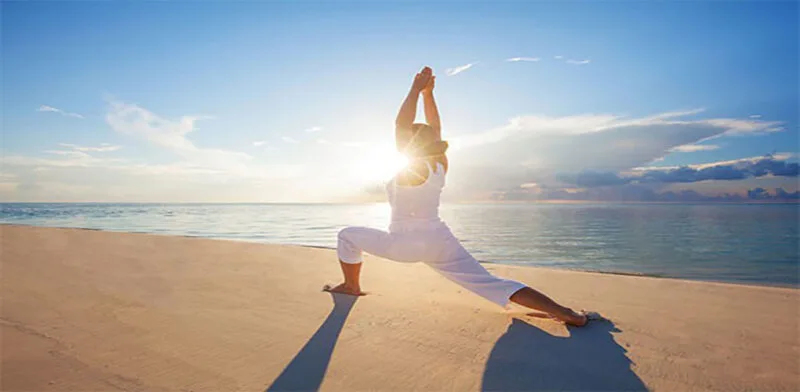
Walking Tachikawa at night chills you more than you expect. Wind blows across the station deck, and the South Exit lanes turn suddenly colder once the sun is down. After two hours in a cinema seat, your back and hips are stiff too.
One minute’s walk from the North Exit of Tachikawa Station, on the third floor of the Etoile Building at 2-14-10 Akebonocho, Tachikawa, Tokyo, is On the Shore Tachikawa (オンザショア立川店), a hot yoga studio heated by lava-stone plates. It also offers room-temperature yoga, Pilates, women-only kickboxercise, boxercise, HIIT and personal training, with more than 25 kinds of yoga lesson.
It is open every day from 8:00 to 23:30. Its lights are still on a little later into the Tachikawa night. You can warm up after work and then head out into the North Exit’s evening.
A trial yoga lesson costs ¥1,980 including tax, with two bath towels, one face towel and a yoga mat included in the rental.
Pregnant guests cannot take part in lava-stone hot yoga, but room-temperature maternity yoga is available. Many of our yoga instructors speak English, and the studio’s owner, Naomi Fujita, who holds Japan’s top English qualification (Eiken Grade 1) and a perfect TOEIC score and once worked as a translator and overseas interpreter at Nomura Securities, and who lived in Alaska for three years, often helps guests from the US bases in English herself (visitors from abroad have even left Google reviews about the care they received in English); if you would like an English-friendly lesson, just say so when you book.
- On the Shore: https://ontheshore.jp/
- Trial lesson booking: https://site.locaop.jp/C0aVK?_src=hp
Leave the ticket gates and turn north, or turn south. In Tachikawa at night, the story has already split in two with your very first step.
Cover photo: Tachikawa Station’s North Exit at night, with a white arch spanning the pedestrian deck (2009). (Photo: Ludvig14 / CC BY-SA 3.0 / Wikimedia Commons)
Information as of October 2026.
More Tachikawa Walks
- Tachikawa Air Raids: WWII History and a Memorial Walk Guide
- Tachikawa Autumn Leaves Guide: Ginkgo, Zelkova and Where to Walk
- Tachikawa Base Town History: Cola Bottles, Yuming, the Laundry Gate
- Tachikawa Air Base History Walk: The Sunagawa Struggle and After
- Tachikawa Sento Guide: Public Baths, Their History and Bath Etiquette
- Tachikawa Disaster Base and Life Safety Learning Center: A Guide
- Tachikawa Bridges Walk: ‘Nameless Bridge’ to a Double-Deck Crossing
- Tachikawa Cinema City Guide: Tokyo’s First Multiplex and Its Big Sound
- Tachikawa Museums Guide: Art, 2,558 Instruments and Things to Do
- Tachikawa Cycling Guide: Showa Kinen Park’s 14 km and the Tama River
- Tachikawa Festivals Guide: Bon Dances, Flamenco, Nebuta and Yokai
- Tachikawa History Walk: Famous People, from Seiji Ozawa to a Comet
- Tachikawa History Walk: Famous People Who Passed Through the Town
- Tachikawa Public Art Walk: A Guide to the 109 Works of Faret Tachikawa
- Tachikawa Farms Guide: Farm Stands, Harvest Days and Tokyo’s Fields
- Tachikawa History: Japan’s Firsts, from Electric Cars to Sazae-san
- Tachikawa Folktales and Legends: A History Walk Through Old Stories
- Tachikawa Walk: Fusai-ji Temple’s National Treasure and Suwa Shrine
- Tachikawa Business Guide: Where West Tokyo Works and Starts Up
- Tachikawa Culture Guide: Ballet, Ice, Anime and Art Near the Station
- Tachikawa’s Green Future: Zero Carbon, Farmland and Springs Guide
- Tachikawa for Foreign Visitors: Haneda Bus, Things to Do, Future
- Tachikawa Population and Family Life: A Guide to the Town’s Future
- Tama Monorail Extension: When It Opens and Tachikawa’s Future Guide
- Tachikawa and Tokyo’s Next Big Earthquake: Disaster Base Guide
- Showa Kinen Park Guide: The Future of Tachikawa’s Unfinished Park
- Tachikawa Station Redevelopment: A Guide to the Future Station Area
- Tachikawa’s Next Decade: Tachihi, GREEN SPRINGS and a New Hotel Guide
- Tachikawa GREEN SPRINGS Guide: Goats, a Rooftop River, Things to Do
- Tachikawa Travel Guide: Things to Do, Walks and History West of Tokyo
- Tachikawa Walk: Slopes, River Terraces and a Flat City’s Hidden Tilt
- Tachikawa History Walk: How a Mulberry Village Became Tama’s Hub
- Tachikawa Airfield History: The 2:12 a.m. Flight to London, 1937
- Tachikawa Was Once in Kanagawa: A History Walk to the 1893 Transfer
- Tachikawa Keirin Velodrome: History, Guide and the Grand Prix’s Home
- Tachikawa Childhood History: Candy Shops, a Base Christmas, Showa Kids
- Tachikawa Aviation Shrine History: The First ‘Tokyo Airfield’ Walk
- Showa Kinen Park Guide: Komorebi Village, Japanese Garden and Bonsai
- Tachikawa Libraries Guide: Raccoon Dogs, Lucky Cats, Local History
- Tachikawa Live Music Guide: Basement Venues and Where TM Meant Tama
- Tachikawa Manga Park Guide: 40,000 Manga in a Former City Hall
- Tachikawa Fireworks Festival Guide: History, Tips and Things to Do
- Akishima Day Trip from Tachikawa: Whale Fossil, Wisteria and History
- Fussa Day Trip from Tachikawa: Yokota Air Base History, Route 16 Walk
- Fussa Sake Brewery Walk: Day Trip from Tachikawa, Water and History
- Hachioji Castle Ruins from Tachikawa: History Walk and Silk Town Guide
- Mount Takao Day Trip from Tachikawa: Hiking Guide, History and Forest
- Hino Day Trip from Tachikawa: Shinsengumi History Walk and Guide
- Kokubunji Walk from Tachikawa: Otaka-no-Michi Springs and History
- Kunitachi Walk from Tachikawa: Daigaku-dori, History and Yaho Tenmangu
- Mount Mitake Day Trip from Tachikawa: Wolf Shrine, Valley Walk Guide
- Ome Day Trip from Tachikawa: Showa Retro Walk, Things to Do, History
- Tachikawa Walk: Nekawa Green Path to the Tama River, a Riverside Guide
- Tachikawa Cat-Return Shrine Guide: History, Ema and Suitengu
- Tachikawa Night Views and Mount Fuji at Dawn: A Walking Guide
- Tachikawa Ramen and Udon Guide: Ramen Square and Noodle History
- Tachikawa vs. Central Tokyo: Why the West Side Wins on Space and Sky
- Tachikawa Old Villages Walk: History Guide, Shibasaki to Nishisuna
- Tachikawa Oni Park Guide: A Red Demon Slide and Trains for Kids
- Tachikawa Parks Guide: Things to Do Beyond Showa Kinen Park, a Walk
- Tachikawa Place Names: A History Walk Through Its Town-Name Origins
- Tachikawa Antarctic and Arctic Science Museum: Free Guide and History
- Tachikawa on a Rainy Day: Indoor Things to Do, a Local Guide
- Tachikawa History Museum Guide: Local History and Folklore, Free
- Tachikawa Cherry Blossoms Guide: Where to See Sakura, and the History
- Tachikawa Schools Walk: History of Night Classes, Bells, Antarctica
- Tachikawa Filming Locations Guide: Anime Pilgrimage and TV Dramas
- Tachikawa Silk History Walk: Japan’s No.1 Mulberry Village, Sunagawa
- Tachikawa Shopping Guide: Why It Has Everything, a History Walk
- Showa Kinen Park, Tachikawa: A Walking Guide to Highlights and History
- Tachikawa and San Bernardino: The History of Tokyo’s First Sister City
- Tachikawa Souvenirs Guide: What to Buy, from Tokyo Sake to Paper
- Tachikawa Sports Guide: Things to Do for Fans, Runners and Walkers
- Tachikawa Station Guide: The History Walk of Tama’s Busiest Station
- Tachikawa in Summer: Things to Do, Water Play and Heat Tips Guide
- Tachikawa Sun Sun Road Walk: History, Festival and Winter Lights
- Tachikawa Tachihi History Walk: Aircraft, a Beach and Things to Do
- Tachikawa History: The Samurai Clan Behind the City’s Name, a Walk
- Tama Monorail from Tachikawa: A Guide to Views, Mt. Fuji and History
- Tachikawa Tama River History Walk: Floods, Ferries and Bridges
- Tachikawa Walk: Tamagawa Aqueduct and Sunagawa History Guide
- Tachikawa Udo Guide: History of Tokyo’s Underground White Vegetable
- Tachikawa Trains Guide: Railway History and Where to Watch Trains
- Tachikawa Water History: Where the Tap Water Comes From, and Wells
- Tachikawa History: Why Tokyo’s First IKEA and Cinema Complex Came Here
- Tachikawa Wildlife Guide: Birdwatching, Fireflies and Tanuki Walks
- Tachikawa Yagawa Green Space Walk: Springs, Hake Cliffs and History
- Tachikawa from Yokota Air Base: A Weekend Guide and Things to Do
初日の汗は、予約した人だけが持ち帰れる。
2