Ishida Village: Hijikata Toshizo’s birthplace and Ishida Sanyaku
Hijikata Toshizo was born in 1835 (Tenpo 6) in Ishida Village, Tama District, Musashi Province, which is today’s Ishida in Hino. According to Takahata Fudoson’s chronology, he was the fourth son of Hijikata Hayato Yoshiatsu; his father died before Toshizo was born, and he was raised by his second-eldest brother Kiroku and Kiroku’s wife. The Board of Education booklet says the Hijikata family was known as a “daijin” household. A daijin: a wealthy family.

Photo: Asanagi / CC0 / Wikimedia Commons
On the site of the family home stands the Hijikata Toshizo Museum, run by descendants of Toshizo’s elder brother. According to an encyclopedia, the museum opened on 11 May 1994 (Heisei 6), the anniversary of Toshizo’s death. The beam at the entrance was the main pillar of the house, which survived until it was rebuilt, and it is said to be the pillar Toshizo slapped with his palms when practising sumo. In the garden, arrow bamboo said to have been planted by Toshizo when he was 17 or 18 still grows thick.
The museum is not open every day. It opens on a limited number of days, and a calendar of opening days is posted on its official website. Be sure to check before you go. I am surely not the only traveller to set out to meet Toshizo and turn back at the gate.
Among the things handed down at the museum is Toshizo’s haiku collection, “Hogyoku Hokku-shu.” Hogyoku was his pen name. According to an encyclopedia it contains 41 haiku, among them: “Ume no hana / ichirin saite mo / ume wa ume” (“A plum blossom: even if only one has bloomed, a plum is a plum”). Absolutely true. There is no arguing with it. The encyclopedia adds, without mercy, that the collection includes poems an expert described as “clumsy verses that ignore the rules.” The man feared as the “demon vice-commander” is, in the world of haiku, being scolded by a strict marker. I am rather fond of this poem.
The Hijikata family had another speciality: a family-recipe medicine, Ishida Sanyaku (Ishida powder). Takahata Fudoson’s chronology says that after an apprenticeship, Toshizo peddled the family’s Ishida Sanyaku while learning Tennen Rishin-ryu swordsmanship at the fencing hall in the home of his brother-in-law, Sato Hikogoro. The Board of Education booklet, too, says Toshizo trained hard at Hikogoro’s hall while selling Ishida Sanyaku.
The encyclopedia entry on Ishida Sanyaku makes good reading. It was said to work on broken bones, bruises, sprains, aching muscles and cuts. Its ingredient was “gyukakuso,” also called mizosoba (a riverside knotweed), which grew along the Asakawa River near the Hijikata house. It could only be cut on the “Day of the Ox” in midsummer. And it was to be taken not with water but with hot sake.
A medicine for bruises, washed down with hot sake. Did the pain fade thanks to the medicine, or the sake? That question was apparently put to a state inquiry in the Showa era. According to the encyclopedia, when the family applied for a licence after the 1948 (Showa 23) revision of the Pharmaceutical Affairs Law, the government returned the verdict “ineffective and harmless,” and the Hijikata family stopped making it. The medicine had been produced for about 250 years, since the Hoei era (1704–1711).
Ineffective and harmless. It does no harm, and no good either. But I suspect the real power of Ishida Sanyaku lay elsewhere. The young man who walked the villages selling it got to know the fencing halls of Tama, got to know people, and found sparring partners. His medicine chest must also have been a pass for his training on the road.
A short walk from the birthplace is Sekiden-ji Temple (石田寺, written with the same characters as Ishida), of the Shingon sect’s Chisan school. Toshizo’s grave is in its cemetery. According to an encyclopedia, there are many households named Hijikata around the temple. Walk past the nameplates on the gates and you see what it means. Takahata Fudoson writes that Sekiden-ji is one of its branch temples.
Toshizo fell to a stray bullet on 11 May 1869 (Meiji 2), in the middle of the fighting at Hakodate, in Hokkaido. So records Takahata Fudoson’s chronology. The youngest son of the wealthy Ishida family crossed the Tama River, went up to Kyoto, then headed north to Aizu and on to Ezo, as Hokkaido was then called, and never came back to the banks of the Asakawa.
His family temple stands at the foot of the hills beyond the Asakawa: Takahata Fudoson.
初日の汗は、予約した人だけが持ち帰れる。
Takahata Fudoson: the battle of “Tachikawa riverbank” and Tokyo’s oldest hall
Takahata Fudoson Kongo-ji has long been counted as one of the Three Great Fudo temples of Kanto. It is a special head temple of the Chisan school of Shingon Buddhism. Fudo Myoo, the Immovable Wisdom King, is a fierce-faced Buddhist guardian deity who burns away obstacles; temples to him, like this one, are often affectionately called “Fudo-san.” According to the temple’s official guide, old documents suggest it was founded before the Taiho era (701), but its beginning is put in the early Heian period, when the priest Ennin (Jikaku Daishi), at the command of Emperor Seiwa, made this place a sacred site for protecting the eastern provinces and built a Fudo hall in the hills.

Photo: Nao Kitano from Kanagawa, Japan / CC BY 2.0 / Wikimedia Commons

Photo: tomohisa suna / CC BY 2.0 / Wikimedia Commons
On entering the precincts you first pass through the Niomon, the gate guarded by two fierce Nio guardian figures. It dates from the Muromachi period (1336–1573) and is an Important Cultural Property of Japan. According to the temple, it was originally planned as a two-storey gate, but the plan was changed partway through, and until recently it looked like a single-storey gate from outside. During its dismantling and restoration in 1959 (Showa 34) it was restored as a two-storey gate. A gate that took more than 400 years to take the shape it was first designed for. Patience on a grand scale.
Behind it is the Fudo-do hall. On the night of 4 August 1335 (Kenmu 2) a great wind blew down the hall in the hills, so the priest Gikai, who revived the temple, moved it down to the foot of the hill and rebuilt it in 1342 (Koei 1). The temple describes it as “the oldest cultural-property building in Tokyo.” The oldest such building in Tokyo is not in Shinjuku or Asakusa but in Hino. Just one river beyond Tachikawa.
The principal image, the seated Fudo Myoo, is now kept in the Okuden hall. According to the temple, it stands 2 metres 85.8 centimetres tall. It is the largest wooden seated Fudo Myoo in Japan among those designated Important Cultural Properties, and the three figures of the triad together weigh more than 1,100 kilograms. The temple also writes that in the Ashikaga era Takahata Fudo was known as the “Sweating Fudo” and was revered by warlords such as the Kamakura kubo, the shogunate’s governor of the east. A Buddhist statue that sweats. In an age of constant war, there must have been plenty to worry about.
Following the precinct map, my eye stopped at the description of one grave marker: “the tomb of Uesugi Noriaki.” According to the temple, in the first month of 1455 (Kyotoku 4), Uesugi Noriaki fought the army of Ashikaga Shigeuji at “Tachikawa-gawara,” the Tachikawa riverbank, was badly wounded, entered Takahata temple and took his own life. A natural stone is his grave marker.
Tachikawa riverbank. The name of Tachikawa is recorded in the grounds of a Hino temple as the site of a Muromachi-period battle. I could not confirm the exact location of the battle on a map, but at least in the temple’s memory, the riverbank at Tachikawa and the hill at Takahata are joined by a single line. Long before the Hino Bridge was built, the land on both banks, for better or worse, shared the same events.
Takahata Fudoson is also Hijikata Toshizo’s family temple. According to the temple, the grounds hold a monument to the “two heroes,” Kondo Isami and Hijikata Toshizo, and a bronze statue of Toshizo, and in the Dainichi-do hall are Toshizo’s memorial tablet and a large tablet for the souls of the Shinsengumi members. According to an encyclopedia, Sato Hikogoro was involved in raising the Junsetsu Ryoyu no Hi, the “Monument to Two Heroes Who Died for Their Loyalty.” After the Meiji Restoration, the young men who had stood on the side of the “rebel army” were carved in stone and remembered by their local headman. The remittances, it seems, kept coming even after they died.
The five-storey pagoda is 39.8 metres tall to the top of the tower and 45 metres overall. According to the temple, it took a full five years to complete, modelled on the style of the early Heian period. In June hydrangeas bloom on the hill at the back of the precincts, and in September, red spider lilies. There is also a pilgrimage path on the hill modelled on the 88 temples of Shikoku. Walk the whole circuit and it becomes a decent hill walk; enough, in fact, to make you want some Ishida Sanyaku with hot sake.
At the teahouse in the grounds, the temple says, there are udon noodles and tea made with mulberry leaves from Hino and Hachioji. Mulberry leaves. When you remember that mulberry fields, for silkworms, once spread across Hino’s uplands too, it is not such an unexpected speciality.
Showa-era Hino: a farmhouse station, housing estates and a zoo without bars
Hino’s other face belongs to the Showa era.
Hino Station on the Chuo Line opened in 1890 (Meiji 23). According to an encyclopedia, it was opened as a Kobu Railway station with donations from local volunteers. An official document of 1889 (Meiji 22) kept at the National Archives of Japan is titled “Placing Hino Station between Tachikawa and Hachioji on the Kobu Railway Company’s line.” In other words, Hino Station was squeezed in afterwards between Tachikawa and Hachioji, which were already running. Less than a year after Tachikawa Station opened. The station next to Tachikawa was one the locals paid to bring in.
The present station building was put up when the station moved in 1937 (Showa 12). The encyclopedia says that because the site lay in the rice-growing area known as “Hatcho Tanbo” (the eight-cho paddies), within Hino, which was called the “rice store of Tama,” the station was given a folk-craft-style building with a hip-and-gable roof to harmonise with the rural landscape. A station on the Chuo Line wearing a farmhouse roof. One stop from Tachikawa’s huge station building, and this is the contrast.
Hino’s uplands were once mulberry fields. According to the encyclopedia, from around 1935 (Showa 10) large companies’ factories moved in one after another, and from the late 1950s housing development took off. The Tamadaira housing estate, where residents began moving in in 1958 (Showa 33), was a pioneer of Japan’s danchi (large public housing estates).
On 5 May of that same year, 1958, Tama Zoological Park opened in the hills of Hino. According to the official guide of the Tokyo Zoological Park Society, it was the first zoo in Japan to make viewing without fences its basic principle; on opening day it was free to the public, and an estimated 250,000 people came.
Its chronology is a delight. In 1959, the year after opening: “Visitor numbers fall due to poor transport and incomplete facilities.” The same year, a chimpanzee appeared in a TV commercial for canned juice and became popular. In 1961 the zoo celebrated its third anniversary with a parade of animals to Takahata Fudoson. In 1964 (Showa 39) the Lion Park opened and the Lion Bus began: the world’s first safari-style viewing of lions by bus. The same year, Keio’s Tama-Dobutsukoen Station opened, and annual visitors topped one million for the first time.
When the visitors drop off, a chimpanzee goes on TV. If that isn’t enough, the animals walk the approach to a temple. In the end a station is built and the visitors finally come. A Showa-era zoo really put its body on the line.
In those days Hino had a station like a farmhouse among the paddies, housing estates on the site of old mulberry fields, and, up in the hills, buses starting to drive among lions. Today the station building is still there, the old estate has become a new neighbourhood, and the descendants of the Lion Bus run over the same hills.
On 3 November 1963 (Showa 38), Hino Town became Hino City. In the same year, across the river, Sunagawa Town merged with Tachikawa City, giving today’s Tachikawa its shape. The two towns on either side of the Tama River took their present form in the same year.
This side and that side of the Tama River
Let me count a few more of the ties between Hino and Tachikawa.
At the start of the Meiji era, both Hino and Tachikawa were in Kanagawa Prefecture. The Hino City chronology in the encyclopedia records that with the abolition of the domains in 1871 (Meiji 4), Hino-juku was placed in Kanagawa Prefecture, and that in 1893 (Meiji 26) the Santama area, the three Tama districts, was moved to Tokyo Prefecture. Tachikawa followed the same path. The two towns are classmates who moved together from Kanagawa to Tokyo.
In population, Hino now has slightly more. Hino City announces 189,583 people, Tachikawa City 188,093. The reference dates are a month apart, but the gap is about 1,500. As a Tachikawa resident, I feel a faint stirring in my chest. But every morning, people from Hino commute to Tachikawa for us on the monorail and the Chuo Line. According to Takahata Fudoson’s directions, it is four stops and ten minutes by monorail from Takahata-Fudo Station to Tachikawa-Minami Station.
From Tachikawa, Hino was the quiet town across the river. From Hino, Tachikawa was the bank on the far side of the ferry, the place people came and went every day. The Hino Ferry stone stands on Tachikawa’s bank, I think, as a mark of the people of Tachikawa saying a proper thank-you for all those years of coming and going.
The young men of the Shinsengumi must have crossed this river many times too. If you came from the Shieikan, the Tennen Rishin-ryu dojo in Edo, to give lessons in Hino, the shortest way was to walk the Koshu Kaido and take the Hino Ferry from the bank at Shibasaki Village. One explanation holds that Toshizo’s pen name “Hogyoku” means “the rich Tamagawa,” that is, the Tama River.
If so, then the demon vice-commander put this river into his own name. That wide river, flowing between Tachikawa and Hino.
Answer to the detour quiz
The answer is (B), about 2.9 metres. According to Takahata Fudoson, the seated Fudo Myoo stands 2 metres 85.8 centimetres tall. It is the largest wooden seated Fudo Myoo in Japan among those designated Important Cultural Properties, and the three figures of the triad together weigh more than 1,100 kilograms. It is now kept in the Okuden hall.
Before you go
- By JR Chuo Line: from JR Tachikawa Station, take the Chuo Line one stop to Hino Station. GO TOKYO gives the Hino-juku Honjin (2-15-9 Hino Honcho, Hino) as a 7-minute walk from Hino Station.
- By monorail: from Tachikawa-Kita or Tachikawa-Minami Station, take the Tama Monorail towards Tama-Center. It crosses the Tama River on the Tachihi Bridge to Koshu-Kaido, Manganji and Takahata-Fudo stations. Takahata Fudoson gives the trip from Tachikawa-Minami to Takahata-Fudo as 4 stops and 10 minutes, and the walk from Takahata-Fudo Station to the temple as 5 minutes.
- From Shinjuku: take the JR Chuo Line towards Tachikawa and Hachioji and change at Tachikawa for the monorail, or stay on the Chuo Line to Hino Station, the stop after Tachikawa.
- On foot across the river: from Tachikawa Station South Exit, head south through Shibasakicho and Nishikicho and cross the Hino Bridge or the Tachihi Bridge. The “Hino Ferry” memorial stone is on the corner of the sewage plant in Nishikicho. The Hino Bridge is being replaced, and traffic switched to a temporary bridge from May 2025 (Reiwa 7).
- Carry an IC card such as Suica or PASMO; it saves buying a separate ticket for the JR line and the monorail.
- Hino City Shinsengumi no Furusato History Museum (4-16-1 Shinmei, Hino): open 9:30 to 17:00, closed Mondays. A 15-minute walk from Hino Station (with a long uphill stretch on the way), or by bus to the “Hino Nanasho Iriguchi” stop. There is a bus stop called “Shinsengumi no Furusato Rekishikan-mae,” but the city warns that no buses use it during the museum’s opening hours. A combined ticket with the Hino-juku Honjin is available. Check the latest on the official page: https://www.city.hino.lg.jp/shinsenr/1022769/index.html
- Project to Pass the Hino-juku Honjin on to the Future (Hino City): https://www.city.hino.lg.jp/shinsenr/1022776/1024008.html
- Hijikata Toshizo Museum (site of Hijikata Toshizo’s birthplace): open on limited days only. Always check the official calendar of opening days first: https://www.hijikata-toshizo.jp/
- Takahata Fudoson Kongo-ji (733 Takahata, Hino): a 5-minute walk from Takahata-Fudo Station on the Keio Line and Tama Monorail. The Okuden and Dainichi-do halls are closed on Mondays. Events on the official site: https://www.takahatafudoson.or.jp/ . It is an active temple; keep your voice down near the halls, and when you visit the memorials to Hijikata and the Shinsengumi, remember they are places of prayer as well as photo spots.
- Sekiden-ji and the streets of Ishida are residential; the many houses named Hijikata are private homes, so look at the nameplates from the road.
- Hino City Tourism Association: https://shinsenhino.com/
- To combine: walk the Nekawa Green Path from Tachikawa Station South Exit to the Hino Bridge on the way out, and take the monorail back from Takahata-Fudo Station. Together with this series’ articles on the Nekawa Green Path and the Tama River, and on the Tama Monorail, you can cover both banks of the Tama River in a day.
Home again: Tachikawa Station North Exit
Walk from Hino-juku to Ishida Village and on up the hill at Takahata, and your legs will feel it. All the more so after climbing up and down the pilgrimage path.
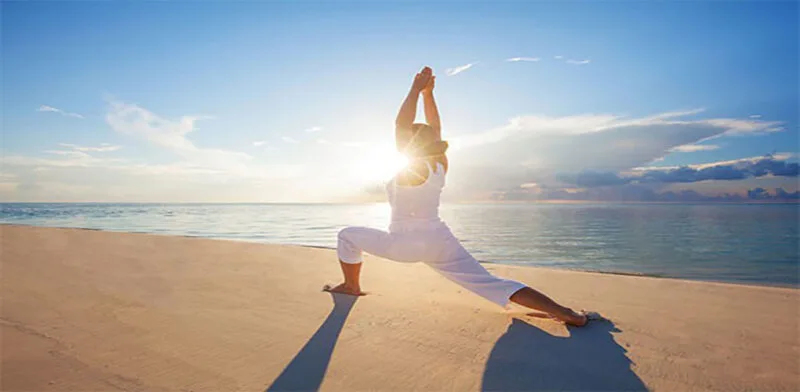
Back in Tachikawa by monorail, a one-minute walk from the North Exit of JR Tachikawa Station is On the Shore Tachikawa (オンザショア立川店), on the 3rd floor of the Etoile Building at 2-14-10 Akebonocho, Tachikawa, Tokyo. It is a hot yoga studio where classes are held on heated lava stone, and it also offers room-temperature yoga, Pilates, women-only kickboxercise, boxercise, HIIT and personal training. There are more than 25 kinds of yoga lessons.
It is open every day from 8:00 to 23:30, so you can still make it after leaving Takahata Fudoson in the evening.
A trial yoga lesson for first-timers costs ¥1,980 (tax included), with two bath towels, one face towel and a mat included as rentals, so you can drop in on the way home from your walk with next to nothing. Pregnant guests cannot join the lava-stone hot yoga, but room-temperature maternity yoga is available. Many of our yoga instructors speak English, and the studio’s owner, Naomi Fujita, who holds Japan’s top English qualification (Eiken Grade 1) and a perfect TOEIC score and once worked as a translator and overseas interpreter at Nomura Securities, and who lived in Alaska for three years, often helps guests from the US bases in English herself (visitors from abroad have even left Google reviews about the care they received in English); if you would like an English-friendly lesson, just say so when you book.
Studio information: https://ontheshore.jp/ ; trial booking: https://site.locaop.jp/C0aVK?_src=hp
Instead of a medicine taken with hot sake, a slow stretch in a warm studio. As an ending to a day spent crossing the river from Tachikawa to Hino and back again, not bad at all.
Cover photo: The Hino-juku Honjin on the old Koshu Dochu highway, said to be the only surviving honjin building in Tokyo. (Photo: Asturio Cantabrio / CC BY-SA 4.0 / Wikimedia Commons)
Information as of October 2026.
More Tachikawa Walks
- Tachikawa Air Raids: WWII History and a Memorial Walk Guide
- Tachikawa Autumn Leaves Guide: Ginkgo, Zelkova and Where to Walk
- Tachikawa Base Town History: Cola Bottles, Yuming, the Laundry Gate
- Tachikawa Air Base History Walk: The Sunagawa Struggle and After
- Tachikawa Sento Guide: Public Baths, Their History and Bath Etiquette
- Tachikawa Disaster Base and Life Safety Learning Center: A Guide
- Tachikawa Bridges Walk: ‘Nameless Bridge’ to a Double-Deck Crossing
- Tachikawa Cinema City Guide: Tokyo’s First Multiplex and Its Big Sound
- Tachikawa Museums Guide: Art, 2,558 Instruments and Things to Do
- Tachikawa Cycling Guide: Showa Kinen Park’s 14 km and the Tama River
- Tachikawa Festivals Guide: Bon Dances, Flamenco, Nebuta and Yokai
- Tachikawa History Walk: Famous People, from Seiji Ozawa to a Comet
- Tachikawa History Walk: Famous People Who Passed Through the Town
- Tachikawa Public Art Walk: A Guide to the 109 Works of Faret Tachikawa
- Tachikawa Farms Guide: Farm Stands, Harvest Days and Tokyo’s Fields
- Tachikawa History: Japan’s Firsts, from Electric Cars to Sazae-san
- Tachikawa Folktales and Legends: A History Walk Through Old Stories
- Tachikawa Walk: Fusai-ji Temple’s National Treasure and Suwa Shrine
- Tachikawa Business Guide: Where West Tokyo Works and Starts Up
- Tachikawa Culture Guide: Ballet, Ice, Anime and Art Near the Station
- Tachikawa’s Green Future: Zero Carbon, Farmland and Springs Guide
- Tachikawa for Foreign Visitors: Haneda Bus, Things to Do, Future
- Tachikawa Population and Family Life: A Guide to the Town’s Future
- Tama Monorail Extension: When It Opens and Tachikawa’s Future Guide
- Tachikawa and Tokyo’s Next Big Earthquake: Disaster Base Guide
- Showa Kinen Park Guide: The Future of Tachikawa’s Unfinished Park
- Tachikawa Station Redevelopment: A Guide to the Future Station Area
- Tachikawa’s Next Decade: Tachihi, GREEN SPRINGS and a New Hotel Guide
- Tachikawa GREEN SPRINGS Guide: Goats, a Rooftop River, Things to Do
- Tachikawa Travel Guide: Things to Do, Walks and History West of Tokyo
- Tachikawa Walk: Slopes, River Terraces and a Flat City’s Hidden Tilt
- Tachikawa History Walk: How a Mulberry Village Became Tama’s Hub
- Tachikawa Airfield History: The 2:12 a.m. Flight to London, 1937
- Tachikawa Was Once in Kanagawa: A History Walk to the 1893 Transfer
- Tachikawa Keirin Velodrome: History, Guide and the Grand Prix’s Home
- Tachikawa Childhood History: Candy Shops, a Base Christmas, Showa Kids
- Tachikawa Aviation Shrine History: The First ‘Tokyo Airfield’ Walk
- Showa Kinen Park Guide: Komorebi Village, Japanese Garden and Bonsai
- Tachikawa Libraries Guide: Raccoon Dogs, Lucky Cats, Local History
- Tachikawa Live Music Guide: Basement Venues and Where TM Meant Tama
- Tachikawa Manga Park Guide: 40,000 Manga in a Former City Hall
- Tachikawa Fireworks Festival Guide: History, Tips and Things to Do
- Akishima Day Trip from Tachikawa: Whale Fossil, Wisteria and History
- Fussa Day Trip from Tachikawa: Yokota Air Base History, Route 16 Walk
- Fussa Sake Brewery Walk: Day Trip from Tachikawa, Water and History
- Hachioji Castle Ruins from Tachikawa: History Walk and Silk Town Guide
- Mount Takao Day Trip from Tachikawa: Hiking Guide, History and Forest
- Kokubunji Walk from Tachikawa: Otaka-no-Michi Springs and History
- Kunitachi Walk from Tachikawa: Daigaku-dori, History and Yaho Tenmangu
- Mount Mitake Day Trip from Tachikawa: Wolf Shrine, Valley Walk Guide
- Ome Day Trip from Tachikawa: Showa Retro Walk, Things to Do, History
- Tachikawa Walk: Nekawa Green Path to the Tama River, a Riverside Guide
- Tachikawa Cat-Return Shrine Guide: History, Ema and Suitengu
- Tachikawa Night Views and Mount Fuji at Dawn: A Walking Guide
- Tachikawa at Night: Bar Alleys, Black Markets and Cinema History Walk
- Tachikawa Ramen and Udon Guide: Ramen Square and Noodle History
- Tachikawa vs. Central Tokyo: Why the West Side Wins on Space and Sky
- Tachikawa Old Villages Walk: History Guide, Shibasaki to Nishisuna
- Tachikawa Oni Park Guide: A Red Demon Slide and Trains for Kids
- Tachikawa Parks Guide: Things to Do Beyond Showa Kinen Park, a Walk
- Tachikawa Place Names: A History Walk Through Its Town-Name Origins
- Tachikawa Antarctic and Arctic Science Museum: Free Guide and History
- Tachikawa on a Rainy Day: Indoor Things to Do, a Local Guide
- Tachikawa History Museum Guide: Local History and Folklore, Free
- Tachikawa Cherry Blossoms Guide: Where to See Sakura, and the History
- Tachikawa Schools Walk: History of Night Classes, Bells, Antarctica
- Tachikawa Filming Locations Guide: Anime Pilgrimage and TV Dramas
- Tachikawa Silk History Walk: Japan’s No.1 Mulberry Village, Sunagawa
- Tachikawa Shopping Guide: Why It Has Everything, a History Walk
- Showa Kinen Park, Tachikawa: A Walking Guide to Highlights and History
- Tachikawa and San Bernardino: The History of Tokyo’s First Sister City
- Tachikawa Souvenirs Guide: What to Buy, from Tokyo Sake to Paper
- Tachikawa Sports Guide: Things to Do for Fans, Runners and Walkers
- Tachikawa Station Guide: The History Walk of Tama’s Busiest Station
- Tachikawa in Summer: Things to Do, Water Play and Heat Tips Guide
- Tachikawa Sun Sun Road Walk: History, Festival and Winter Lights
- Tachikawa Tachihi History Walk: Aircraft, a Beach and Things to Do
- Tachikawa History: The Samurai Clan Behind the City’s Name, a Walk
- Tama Monorail from Tachikawa: A Guide to Views, Mt. Fuji and History
- Tachikawa Tama River History Walk: Floods, Ferries and Bridges
- Tachikawa Walk: Tamagawa Aqueduct and Sunagawa History Guide
- Tachikawa Udo Guide: History of Tokyo’s Underground White Vegetable
- Tachikawa Trains Guide: Railway History and Where to Watch Trains
- Tachikawa Water History: Where the Tap Water Comes From, and Wells
- Tachikawa History: Why Tokyo’s First IKEA and Cinema Complex Came Here
- Tachikawa Wildlife Guide: Birdwatching, Fireflies and Tanuki Walks
- Tachikawa Yagawa Green Space Walk: Springs, Hake Cliffs and History
- Tachikawa from Yokota Air Base: A Weekend Guide and Things to Do
初日の汗は、予約した人だけが持ち帰れる。
2