


Voices that reach the shelves, and a decade of small changes
The place is not frozen as it was on opening day. Put the documents in date order, and you can see it changing shape little by little over more than ten years.
According to the National Diet Library’s report on its opening, in 2013 the opening hours were 10:00 to 19:00 on weekdays, and until 20:00 on Saturdays and holidays. An article by GIGAZINE, a Japanese web magazine that visited in November 2015, gives the same hours. That article says the ticket machine for the in-house café offered, alongside curry and ramen, fried chicken and edamame, and even beer and highballs (the Japanese whisky-and-soda). Sitting cross-legged on tatami on the second floor of the old city hall with a highball in one hand and a manga in the other: you could never have explained it to the people who lined up for the building’s opening ceremony in 1958. The same article reports that around the vending machines outside the café, wooden boards had been laid on the floor so that visitors could walk over and buy a drink without putting their shoes back on. Laying a path to the vending machine for customers in their socks: the character of the place shows in its details.
Later, in March 2015, the Manga Park began selling a weekday-only admission pass, and in June 2020 it suspended sales as a COVID-19 precaution. The FAQ still says “resumption undecided.” The opening hours became 18:00 closing from Monday to Saturday, with two separate sessions and numbered tickets on Sundays and public holidays. The waves of the times reach even the tatami.
Some changes came in answer to visitors. On the official “Visitors’ Voices” page, a teenager from Tachikawa complains that he could not find where the manga he wanted was shelved. The Manga Park replies that it had received many similar comments, and that it has set up a catalogue search system in the building, also searchable online. A man in his twenties from neighbouring Akishima sent a shorter message: “The way you classify manga is wrong.” The reply: “Please do tell us your views on the classification.” The genre-based shelving across publishers is the place’s proudest idea; an objection arrived head-on, and the Manga Park took it head-on and asked to hear more. I know of no other facility that posts a complaint on its official website quite so frankly.
What goes on the shelves is not simply increasing, either. According to GIGAZINE’s 2015 article, the Manga Park held every one of the 100 titles selected by the Nippon Foundation in October 2015, one of only three places in Japan to do so. Today there is a shelf called “This Is Educational Manga Too!”, and a series in which a staff member introduces one title at a time, Mangaroo’s “This Is Educational Manga Too!” NAVI, had reached episode 26 of its second season by October 2026. That episode featured My Brother’s Husband, the story of a father and daughter who end up living with Mike, the husband of the father’s younger brother, who has come from Canada. The introduction notes that it won an Excellence Award in the manga division of Japan’s Agency for Cultural Affairs Media Arts Festival, and the Eisner Award in the United States for best Asian work. When I heard “educational manga,” I had pictured only books about history and science. Here I revised my view. The process by which people come to understand each other is worth studying too.
The Manga Park is not only a place for reading comics but a doorway into drawing them. On 24 October 2026 it holds a manga inking workshop for children from the fourth grade of elementary school to high school, with twelve places. The instructor once worked as chief assistant to a well-known manga artist. Participation is free, though you still pay admission. The venue is listed as “the former meeting room inside the Manga Park (the room at the back).” A room labelled “former,” inside a former city hall. In this building, every room has been something else at least once.
A private website by someone who travels Japan visiting bookshelves notes that a much-talked-about title by one author was not on the shelves, though a shorter work by the same author was, and wonders whether this might be out of consideration for children. I have not checked this with the Manga Park. But visitors look at the shelves of a family-oriented manga house and play detective like this, and that in itself is part of the shelves’ charm.
Recognition from outside has accumulated, too. Among the media coverage the official site lists is a March 2025 article in Jalan News, a major Japanese travel site: “10 Manga Libraries and Museums Across Japan.” The second floor of a former city hall is counted alongside the manga houses of the whole country.
That is enough about the shelves. Let us put our shoes back on and step outside. The revival of the old city hall continues out onto the lawn.
初日の汗は、予約した人だけが持ち帰れる。
The great tree by the old car porch, and the scars left in place
In front of the Children’s Future Center lies a lawn. According to the Federation’s case study, the designers inserted a large, gate-like canopy between this plaza and the old building, renewed the doors and windows facing the plaza, and created a deck like an engawa, the veranda that runs along the edge of a traditional Japanese house, so that inside and outside could be used as one. The aim was that during events, the activity inside would spill half outdoors and create the bustle of a market.
On the plaza stands a great tree that once grew by the car porch in the city hall days. It was kept as the symbol of the new facility and casts a pleasant shade. The tree that once greeted cars arriving at city hall now shades parents and children lying on the grass. The tree itself, I imagine, doesn’t mind either way.
The plaza was shaped into a gentle slope, like the seating of an audience, with the deck as the stage. The designers write that they used the soil dug out when the new canopy was built as fill, so that no soil at all had to be carted away. Dig up the earth and turn it into the grandstand on the spot. It has the practical sense of a neighbourhood association setting up for sports day. I am hopelessly weak for this kind of story.
Inside the building, the floors were cut away from the roof down to the ground floor to create an atrium. The traces of demolition were not hidden, but left as they were, the designers write, as the presence of the time the building holds. By designing the way they were left, they created a space that is not uniform but full of folds. Rather than plastering everything over to look brand new, they left the scars of its city hall years where you can see them. Behind the manga house stands this way of thinking about architecture.
The people who would use the building were invited in before it was even finished. According to the Federation’s case study, the group proposed the “hardware” of the building together with the “software” of activity centred on the Manga Park, and held workshops with citizens’ groups before completion to encourage active participation in community activities. The people repairing the building, the people who would play inside it, and the people who would run activities there were all brought to the same table.
On the plaza, the Manga Park has been holding the “Mangapark Ōichi,” or Great Market. According to the official site, the edition on 1 November 2026 is the 117th, numbered continuously from the first in 2013. On offer: a flea market, vegetables grown in Tachikawa, secondhand picture books and manga, and street performers. And, for some reason, oranges. The official site offers no explanation of the connection between manga and oranges. The lack of explanation only makes me want to go. Counting through the list of past markets on the official site, the first to ninth were held in 2013, and the tenth to the 23rd in 2014: more than one a month. From 2015 to 2017, twelve a year. Somewhere along the way, the market on the lawn became part of the town’s calendar. Farmers laying out Tachikawa vegetables, people spreading out old books, performers doing their acts. Once a month, the lawn in front of the old city hall becomes a veranda for small local trade.
According to the Ministry’s document, the Children’s Future Center as a whole drew up to 700,000 visitors a year at its peak. Citizens’ groups run more than 400 programmes a year there, and more than 150 events a year are aimed at families raising children. The liveliness that the Citizens’ 100-Person Committee worried about at the South Exit has, at least in this corner of Nishikicho, come back in a new shape, along with the building.
Why, then, was the core of that liveliness manga, and not anything else? The operator has left its answer in its own words.

Why did the old city hall become a manga house?
The official Manga Park website has a page titled “History and Origins.” There the operating company writes that it had several reasons for proposing the plan, but that the biggest reason was the place itself: Tachikawa.
The towns along the JR Chuo Line, it writes, have a generous tolerance for subcultures such as manga, anime and figures. Many manga and anime have been set there, and many people visit as fans on “pilgrimages” to these real-life settings. In a place that understands subculture and respects its cultural value, the company thought, manga could be combined with local revitalisation and tourism so that each would lift the other.
The first example it gives is Hikaru Nakamura’s Saint Young Men (聖☆おにいさん, Seinto Oniisan). According to the film’s synopsis, it is the story of Buddha and Jesus sharing an apartment in Tachikawa, Tokyo. Adomachikku Tengoku, a popular TV Tokyo programme about neighbourhoods, introduced Tachikawa as a town evolving into a holy land of subculture after Akihabara, and noted that the story of Buddha and Jesus enjoying a holiday is set there too. A town chosen as a holiday destination by the founders of two of the world’s great religions. As a tourism slogan, it is hard to think of anything stronger.
The neighbourhood guide on the official site introduces Nishiki Daini Park, known locally as Oni Kōen, the “Ogre Park,” which appears in Saint Young Men. The ogre turns out to be a slide, and a note adds: “steep slope.” The official website of a manga facility takes care to warn you about the gradient of a slide down the road. When you remember that the children of the Showa-era South Exit (the Showa period ran from 1926 to 1989) were proud of the long slides in Suwa Park, perhaps fussing over the angle of a slide is simply a local tradition.
Let me gather up the answer to the mystery here.
Half of it lies in the system. Of the old city hall buildings, the city separated the one to tear down from the one to keep, and for the one it kept, it limited what it would decide itself to a bare minimum: a “plaza” and “child-rearing support.” It left the rest of the space to free proposals from the private sector. The manga house was not the city’s idea. The city left the door open so that ideas it could not have thought of could come in. And the operator promised to fit out that section at its own expense and run it on its own earnings. The city did not choose manga. Manga chose the margin the city had left unchosen.
The other half lies in the place. The biggest reason the operator gave was Tachikawa itself: the generosity of the Chuo Line towns, a town that keeps turning up as a setting in fiction. And among the group that made the proposal was a company that began just after the war in a toy shop at the station’s North Exit. This town already had a memory of comics and toys.
I, who had thought of Tachikawa as a town to pass through, have to revise my view here. The Ministry’s document calls the Manga Park “a tourist spot that represents Tachikawa,” and the Ministry’s Small Concession Platform presents the revival of the old city hall as one of its case studies from across Japan. The way Tachikawa turned an old government building into a manga house, instead of knocking it down, is in the national government’s book of examples. I did not need to travel far in search of a manga town. It was on the site of the old city hall.
Still, to the question of why tatami, and why closets, the documents give no straight answer. The official site says only that the design was modelled on an old Japanese house. From here on, this is just a traveller’s reading. A city hall was a place where citizens walked in with their shoes on, number tickets in hand, slightly tense. In that same building, people are now made to take off their shoes, lie down, and even climb into closets. Precisely because this building holds the thickest memory of officialdom, it is reused in the most relaxed posture there is. That reversal, I think, is the real highlight of Tachikawa Manga Park. The other half of the answer each reader can work out inside a closet.
I leave the building and take my shoes out of the locker. From sitting on the tatami so long, the backs of my knees and my lower back have stiffened a little. While I was absorbed in manga, I had forgotten my body completely.
One straight ride on the Chuo Line from Shinjuku, or on the Nambu Line from Kawasaki. On the western side of Tokyo there is a city hall worth coming to on a rainy Saturday, just to take your shoes off.
Quiz answer
The answer is B: the coin locker where you leave your shoes. According to the official site, the fee for the shoe locker is the admission fee, and the lockers take only 100-yen coins. Admission is cash only; credit cards and transit IC cards cannot be used. There is a change machine inside, but having 100-yen coins ready makes getting in smoother.
Before you go
- Address: Tachikawa City Children’s Future Center, 2nd floor, 3-2-26 Nishikicho, Tachikawa, Tokyo (per the official site).
- From Tachikawa Station: 13 minutes on foot from the South Exit of JR Tachikawa Station; 12 minutes on foot from Tachikawa-Minami Station on the Tama Monorail. The closest station is Nishi-Kunitachi on the JR Nambu Line, 7 minutes on foot.
- From Shinjuku: take the JR Chuo Line (Rapid) to Tachikawa with no change of trains, a ride of thirty-something minutes. From Kanagawa Prefecture, the JR Nambu Line runs from Kawasaki to Tachikawa without a change (about an hour); on the Nambu Line, get off one stop early at Nishi-Kunitachi for the shortest walk.
- Opening hours (as shown on the official site in October 2026): Monday to Saturday, 10:00–18:00. On Sundays and public holidays there are two separate sessions, 10:00–13:30 and 14:30–18:00, with numbered tickets handed out, one per person. Last entry one hour before closing. No regular closing days; closures for maintenance are announced in advance.
- How long to allow: there is no official guideline, but each session on Sundays and holidays is 3.5 hours long. On other days you can stay up to eight hours, from opening to closing.
- Admission and payment: check the official site for the current admission fee. Payment is cash only, by putting 100-yen coins into the shoe locker. There is a change machine, but no ATM in the Children’s Future Center.
- Inside: books cannot be borrowed. You may bring food and drink, but not alcohol. There is a café. Personal photography is allowed, but the official site asks you not to capture other visitors in your pictures.
- With children: there is a picture-book corner, a toilet with priority for parents and children, a nursing room and nappy-changing tables. There is no childcare service, though a temporary childcare room for Tachikawa residents is on the ground floor of the Children’s Future Center.
- By car: there is an affiliated paid car park (check the official site for any discount for visitors).
- Official website: https://mangapark.jp/ (for the latest hours, admission and events)
- Combine with: from the South Exit, Suwa Shrine in Shibasakicho is close by (we walked there in this series’ piece on Fusai-ji Temple and Suwa Shrine). Nishiki Daini Park, the “Ogre Park” from Saint Young Men, is at 1-5-13 Nishikicho. On Great Market days, secondhand books and Tachikawa vegetables are laid out on the lawn (dates on the official site).
- General tips: carry an IC card such as Suica or PASMO for trains and the monorail, and keep some 100-yen coins for the locker. Opening days and hours can change, so check the official site before you set off.
Out of the closet, over to Tachikawa Station’s North Exit
Reading manga is rarely kind to the body. You sit cross-legged on tatami, curl up in a closet, and before you know it two hours have passed in the same position. Leave the Manga Park, walk back through the station from the South Exit to the North Exit, and a one-minute walk brings you to On the Shore Tachikawa (オンザショア立川店), on the third floor of the Etoile Building, 2-14-10 Akebonocho, Tachikawa, Tokyo.
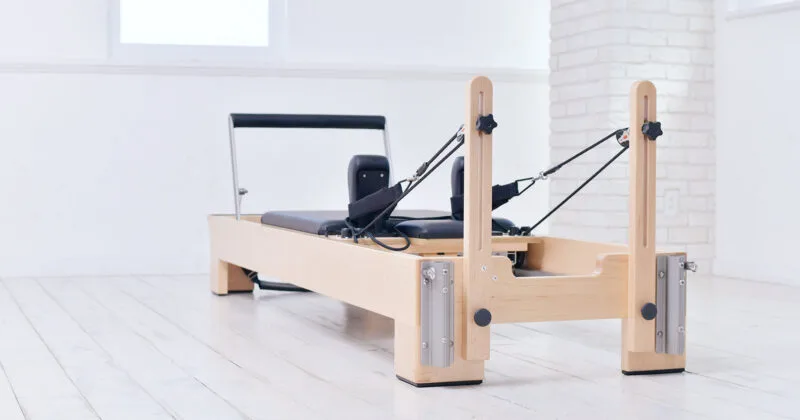
It is a hot yoga studio with heated lava-stone floors. It also offers room-temperature yoga, Pilates, women-only kickboxercise, boxercise, HIIT and personal training, with more than 25 kinds of yoga lessons.
It is open every day from 8:00 to 23:30. Even after the Manga Park closes at 18:00, there is plenty of time left.
For first-timers there is a trial yoga lesson for ¥1,980 including tax, with two bath towels, one face towel and mat rental included, so you can drop in with nothing but yourself.
Pregnant guests cannot join lava-stone hot yoga, but room-temperature maternity yoga is available. Many of our yoga instructors speak English, and the studio’s owner, Naomi Fujita, who holds Japan’s top English qualification (Eiken Grade 1) and a perfect TOEIC score and once worked as a translator and overseas interpreter at Nomura Securities, and who lived in Alaska for three years, often helps guests from the US bases in English herself (visitors from abroad have even left Google reviews about the care they received in English); if you would like an English-friendly lesson, just say so when you book.
- On the Shore: https://ontheshore.jp/
- Book a trial lesson: https://site.locaop.jp/C0aVK?_src=hp
On the second floor of the old city hall at the South Exit, someone is taking off their shoes today, and turning the next page deep inside a closet.
Cover photo: Tama Monorail’s Tachikawa-Minami Station and the South Exit streets, about a 12-minute walk from the Manga Park (Photo: Araisyohei / CC BY 4.0 / Wikimedia Commons)
Information as of October 2026.
More Tachikawa Walks
- Tachikawa Air Raids: WWII History and a Memorial Walk Guide
- Tachikawa Autumn Leaves Guide: Ginkgo, Zelkova and Where to Walk
- Tachikawa Base Town History: Cola Bottles, Yuming, the Laundry Gate
- Tachikawa Air Base History Walk: The Sunagawa Struggle and After
- Tachikawa Sento Guide: Public Baths, Their History and Bath Etiquette
- Tachikawa Disaster Base and Life Safety Learning Center: A Guide
- Tachikawa Bridges Walk: ‘Nameless Bridge’ to a Double-Deck Crossing
- Tachikawa Cinema City Guide: Tokyo’s First Multiplex and Its Big Sound
- Tachikawa Museums Guide: Art, 2,558 Instruments and Things to Do
- Tachikawa Cycling Guide: Showa Kinen Park’s 14 km and the Tama River
- Tachikawa Festivals Guide: Bon Dances, Flamenco, Nebuta and Yokai
- Tachikawa History Walk: Famous People, from Seiji Ozawa to a Comet
- Tachikawa History Walk: Famous People Who Passed Through the Town
- Tachikawa Public Art Walk: A Guide to the 109 Works of Faret Tachikawa
- Tachikawa Farms Guide: Farm Stands, Harvest Days and Tokyo’s Fields
- Tachikawa History: Japan’s Firsts, from Electric Cars to Sazae-san
- Tachikawa Folktales and Legends: A History Walk Through Old Stories
- Tachikawa Walk: Fusai-ji Temple’s National Treasure and Suwa Shrine
- Tachikawa Business Guide: Where West Tokyo Works and Starts Up
- Tachikawa Culture Guide: Ballet, Ice, Anime and Art Near the Station
- Tachikawa’s Green Future: Zero Carbon, Farmland and Springs Guide
- Tachikawa for Foreign Visitors: Haneda Bus, Things to Do, Future
- Tachikawa Population and Family Life: A Guide to the Town’s Future
- Tama Monorail Extension: When It Opens and Tachikawa’s Future Guide
- Tachikawa and Tokyo’s Next Big Earthquake: Disaster Base Guide
- Showa Kinen Park Guide: The Future of Tachikawa’s Unfinished Park
- Tachikawa Station Redevelopment: A Guide to the Future Station Area
- Tachikawa’s Next Decade: Tachihi, GREEN SPRINGS and a New Hotel Guide
- Tachikawa GREEN SPRINGS Guide: Goats, a Rooftop River, Things to Do
- Tachikawa Travel Guide: Things to Do, Walks and History West of Tokyo
- Tachikawa Walk: Slopes, River Terraces and a Flat City’s Hidden Tilt
- Tachikawa History Walk: How a Mulberry Village Became Tama’s Hub
- Tachikawa Airfield History: The 2:12 a.m. Flight to London, 1937
- Tachikawa Was Once in Kanagawa: A History Walk to the 1893 Transfer
- Tachikawa Keirin Velodrome: History, Guide and the Grand Prix’s Home
- Tachikawa Childhood History: Candy Shops, a Base Christmas, Showa Kids
- Tachikawa Aviation Shrine History: The First ‘Tokyo Airfield’ Walk
- Showa Kinen Park Guide: Komorebi Village, Japanese Garden and Bonsai
- Tachikawa Libraries Guide: Raccoon Dogs, Lucky Cats, Local History
- Tachikawa Live Music Guide: Basement Venues and Where TM Meant Tama
- Tachikawa Fireworks Festival Guide: History, Tips and Things to Do
- Akishima Day Trip from Tachikawa: Whale Fossil, Wisteria and History
- Fussa Day Trip from Tachikawa: Yokota Air Base History, Route 16 Walk
- Fussa Sake Brewery Walk: Day Trip from Tachikawa, Water and History
- Hachioji Castle Ruins from Tachikawa: History Walk and Silk Town Guide
- Mount Takao Day Trip from Tachikawa: Hiking Guide, History and Forest
- Hino Day Trip from Tachikawa: Shinsengumi History Walk and Guide
- Kokubunji Walk from Tachikawa: Otaka-no-Michi Springs and History
- Kunitachi Walk from Tachikawa: Daigaku-dori, History and Yaho Tenmangu
- Mount Mitake Day Trip from Tachikawa: Wolf Shrine, Valley Walk Guide
- Ome Day Trip from Tachikawa: Showa Retro Walk, Things to Do, History
- Tachikawa Walk: Nekawa Green Path to the Tama River, a Riverside Guide
- Tachikawa Cat-Return Shrine Guide: History, Ema and Suitengu
- Tachikawa Night Views and Mount Fuji at Dawn: A Walking Guide
- Tachikawa at Night: Bar Alleys, Black Markets and Cinema History Walk
- Tachikawa Ramen and Udon Guide: Ramen Square and Noodle History
- Tachikawa vs. Central Tokyo: Why the West Side Wins on Space and Sky
- Tachikawa Old Villages Walk: History Guide, Shibasaki to Nishisuna
- Tachikawa Oni Park Guide: A Red Demon Slide and Trains for Kids
- Tachikawa Parks Guide: Things to Do Beyond Showa Kinen Park, a Walk
- Tachikawa Place Names: A History Walk Through Its Town-Name Origins
- Tachikawa Antarctic and Arctic Science Museum: Free Guide and History
- Tachikawa on a Rainy Day: Indoor Things to Do, a Local Guide
- Tachikawa History Museum Guide: Local History and Folklore, Free
- Tachikawa Cherry Blossoms Guide: Where to See Sakura, and the History
- Tachikawa Schools Walk: History of Night Classes, Bells, Antarctica
- Tachikawa Filming Locations Guide: Anime Pilgrimage and TV Dramas
- Tachikawa Silk History Walk: Japan’s No.1 Mulberry Village, Sunagawa
- Tachikawa Shopping Guide: Why It Has Everything, a History Walk
- Showa Kinen Park, Tachikawa: A Walking Guide to Highlights and History
- Tachikawa and San Bernardino: The History of Tokyo’s First Sister City
- Tachikawa Souvenirs Guide: What to Buy, from Tokyo Sake to Paper
- Tachikawa Sports Guide: Things to Do for Fans, Runners and Walkers
- Tachikawa Station Guide: The History Walk of Tama’s Busiest Station
- Tachikawa in Summer: Things to Do, Water Play and Heat Tips Guide
- Tachikawa Sun Sun Road Walk: History, Festival and Winter Lights
- Tachikawa Tachihi History Walk: Aircraft, a Beach and Things to Do
- Tachikawa History: The Samurai Clan Behind the City’s Name, a Walk
- Tama Monorail from Tachikawa: A Guide to Views, Mt. Fuji and History
- Tachikawa Tama River History Walk: Floods, Ferries and Bridges
- Tachikawa Walk: Tamagawa Aqueduct and Sunagawa History Guide
- Tachikawa Udo Guide: History of Tokyo’s Underground White Vegetable
- Tachikawa Trains Guide: Railway History and Where to Watch Trains
- Tachikawa Water History: Where the Tap Water Comes From, and Wells
- Tachikawa History: Why Tokyo’s First IKEA and Cinema Complex Came Here
- Tachikawa Wildlife Guide: Birdwatching, Fireflies and Tanuki Walks
- Tachikawa Yagawa Green Space Walk: Springs, Hake Cliffs and History
- Tachikawa from Yokota Air Base: A Weekend Guide and Things to Do
初日の汗は、予約した人だけが持ち帰れる。
2

