

A timeline of Tachikawa history (with sources)
Full source titles and URLs are listed under “Sources” below. Years follow each source; Japanese era names were checked against the Western calendar and given alongside.
| Year (Western / Japanese era) | Event | Source |
|---|---|---|
| c. 13,000 years ago (Paleolithic) | Traces of human activity at the Mukogo site, Nishiki-cho / Hagoromo-cho | City timeline (to the 1700s) |
| Jomon period | Settlement remains confirmed at the Owada site, Shibasaki-cho, and the Mukogo site | City timeline (to the 1700s) |
| 811 (Konin 2) | Suwa Shrine welcomes its deity from Suwa in Shinshu | City timeline (to the 1700s) / Suwa Shrine “History” |
| 1252 (Kencho 4) | Hachiman Shrine built in Shibasaki-cho | City timeline (to the 1700s) |
| 1353 (Bunna 2) | The Tachikawa clan founds Fusai-ji as its family temple (by tradition) | City timeline (to the 1700s) / City walking course “Old villages” |
| 1361 (Enbun 6) | Fusai-ji’s six-sided stone pillar is made (National Treasure from 1953) | City timeline (to the 1700s) / Agency for Cultural Affairs database |
| 1455 (Kyotoku 4) | First Battle of Tachikawara | City timeline (to the 1700s) |
| 1504 (Eisho 1) | Second Battle of Tachikawara | City timeline (to the 1700s) |
| 1586 (Tensho 14) | A Musashino wildfire burns Suwa Shrine’s buildings and old records | Suwa Shrine “History” |
| 1596–1615 (Keicho era) | Murano San’emon of Kishi village begins clearing Sunagawa Shinden | City timeline (to the 1700s) |
| 1629 (Kan’ei 6) | Azusami Tenjin Shrine built in Sunagawa | City timeline (to the 1700s) |
| 1633 (Kan’ei 10) | Sunagawa Shinden becomes an Owari domain falconry ground | City timeline (to the 1700s) |
| 1653 (Joo 2) | Tamagawa Shoemon and Seiemon dig the Tamagawa Aqueduct | City “Tamagawa Aqueduct” / Tokyo Metropolitan Waterworks |
| 1654 (Joo 3) | The Tamagawa Aqueduct opens | City timeline (to the 1700s) |
| 1657 (Meireki 3) | Sunagawa branch channel opens | City timeline (to the 1700s) |
| 1689 (Genroku 2) | Land survey in Sunagawa: 175 households | City timeline (to the 1700s) |
| 1736 (Genbun 1) | Sunagawa Shinden becomes Sunagawa village | City timeline (to the 1700s) |
| 1737 (Genbun 2) | Shibasaki branch channel opens | City timeline (to the 1700s) |
| 1868 (Meiji 1) | Shibasaki and Sunagawa placed under Nirayama Prefecture (Kanagawa Prefecture from 1871) | City timeline (1800s–1924) |
| 1870 (Meiji 3) | Local school opens at Fusai-ji (today’s Municipal Daiichi Elementary). Boat traffic begins on the Tamagawa Aqueduct | City timeline (1800s–1924) |
| 1872 (Meiji 5) | Boat traffic on the aqueduct banned for hygiene reasons | City timeline (1800s–1924) |
| 1881 (Meiji 14) | Shibasaki village renamed Tachikawa village | City timeline (1800s–1924) / City “Overview” |
| 1889 (Meiji 22) | Kobu Railway (today’s JR Chuo Line) opens with a station at Tachikawa. Tachikawa becomes an independent village under the new municipal system | City timeline (1800s–1924) |
| 1893 (Meiji 26) | The three Tama districts move from Kanagawa to Tokyo Prefecture | City timeline (1800s–1924) |
| 1894 (Meiji 27) | Ome Railway opens | City timeline (1800s–1924) |
| 1901 (Meiji 34) | Tokyo Prefectural Second Middle School (today’s Tachikawa High School) opens | City timeline (1800s–1924) |
| 1910 (Meiji 43) | Silk reeling in Sunagawa closes | City timeline (1800s–1924) |
| Autumn 1921 (Taisho 10) | Decision to build an airfield in Tachikawa | City “History of Tachikawa Airfield” |
| November 1922 (Taisho 11) | Tachikawa Airfield opens; Army 5th Air Battalion moves from Kakamigahara | City “History of Tachikawa Airfield” / MIC “War damage” |
| September 1923 (Taisho 12) | Great Kanto Earthquake; Tachikawa’s civilian aircraft carry news and manuscripts | City “History of Tachikawa Airfield” / City timeline (1800s–1924) |
| 1 December 1923 (Taisho 12) | Tachikawa village becomes Tachikawa town | City timeline (1800s–1924) / Historical administrative boundaries dataset |
| September 1927 (Showa 2) | A Soviet aircraft arrives, the first foreign aircraft at Tachikawa | City “History of Tachikawa Airfield” |
| July 1929 (Showa 4) | Japan’s first scheduled civilian passenger service begins, Tachikawa–Osaka | City “History of Tachikawa Airfield” |
| 1929 (Showa 4) | Chuo Line electrified to Tachikawa; Nambu Railway opens | City timeline (1925–1949) |
| 1930 (Showa 5) | Ishikawajima Aircraft moves from Tsukishima to Tachikawa. Tachikawa Station South Exit opens | Tachihi Holdings “History” / City timeline (1925–1949) |
| September 1933 (Showa 8) | Civil aviation moves to Haneda | City “History of Tachikawa Airfield” |
| March 1934 (Showa 9) | Army Air Arsenal moves from Tokorozawa | City “History of Tachikawa Airfield” |
| April 1937 (Showa 12) | Kamikaze-go flies from Tachikawa to London | City “History of Tachikawa Airfield” / City timeline (1925–1949) |
| 1 December 1940 (Showa 15) | Tachikawa town becomes Tachikawa City | City “Overview” / Historical administrative boundaries dataset |
| 1942 (Showa 17) | District names Fujimi, Shibasaki, Nishiki, Hagoromo, Akebono, Takamatsu and Midori fixed | City timeline (1925–1949) |
| From 16 February 1945 (Showa 20) | 13 air raids; 340 confirmed dead | MIC “War damage” |
| 4 April 1945 (Showa 20) | A bomb hits the Yamanaka-zaka shelter, killing 42 | MIC “War damage” / City walking course “Old villages” |
| September 1945 (Showa 20) | US forces arrive; the airfield becomes a US base | City “History of Tachikawa Airfield” / Showa Kinen Park Office |
| 1951 (Showa 26) | City keirin track opens | City timeline (1950–1970) |
| 30 June 1954 (Showa 29) | Sunagawa village becomes Sunagawa town | City timeline (1950–1970) / Historical administrative boundaries dataset |
| May 1955 (Showa 30) | Base expansion plan notified; the Sunagawa struggle begins | City “History of Tachikawa Airfield” / NDL Collaborative Reference Database |
| 8 July 1957 (Showa 32) | Sunagawa Incident over the survey of private land inside the base | Tokyo District Court ruling (“The World and Japan” database) |
| 30 March 1959 (Showa 34) | Tokyo District Court acquits (Date ruling) | “The World and Japan” database |
| 16 December 1959 (Showa 34) | Supreme Court Grand Bench overturns the Date ruling | House of Representatives written question (169th Diet) |
| 1961 (Showa 36) | Japan’s first female city-council chair elected | City timeline (1950–1970) |
| 1 May 1963 (Showa 38) | Sunagawa town incorporated, forming today’s Tachikawa City | City timeline (1950–1970) / Historical administrative boundaries dataset / City history newsletter Tachikawa Monogatari vol. 4 |
| December 1968 (Showa 43) | US Air Force commander announces cancellation of runway extension | City “History of Tachikawa Airfield” / MIC “War damage” |
| October 1969 (Showa 44) | US forces announce end of flying at Tachikawa | City “History of Tachikawa Airfield” |
| December 1972 (Showa 47) | Ground Self-Defense Force moves into Tachikawa Base | City “History of Tachikawa Airfield” |
| 30 November 1977 (Showa 52) | Tachikawa Base fully returned | Showa Kinen Park Office / Cabinet Office “Tachikawa Disaster Prevention Base” |
| 1982 (Showa 57) | New station building, station complex and north–south passage completed | City timeline (1971–1985) |
| May 1983 (Showa 58) | Central Disaster Management Council decides to develop the Tachikawa Disaster Prevention Base | Cabinet Office “Tachikawa Disaster Prevention Base” |
| 26 October 1983 (Showa 58) | Showa Kinen Park opens its first phase, 70 hectares | Showa Kinen Park Office |
| 1 December 1985 (Showa 60) | Museum of History and Folklore opens | City “Museum of History and Folklore” |
| 1994 (Heisei 6) | Faret Tachikawa opens. Suwa Shrine’s main hall and other buildings burn down | City timeline (1986–1999) |
| 1995 (Heisei 7) | Fusai-ji burns down | City timeline (1986–1999) |
| 1995 (Heisei 7) | Hachioji–Tachikawa business core city plan approved by the National Land Agency and others | City timeline (1986–1999) |
| 1998 (Heisei 10) | Tama Toshi Monorail northern section opens | City timeline (1986–1999) |
| 2000 (Heisei 12) | Tama Toshi Monorail opens in full | City timeline (2000–2009) |
| 21 November 2003 (Heisei 15) | Cabinet understanding designates the Tachikawa backup facility as the alternative national disaster headquarters | Cabinet Office “Tachikawa Disaster Prevention Base” |
| 2008–2009 (Heisei 20–21) | National Institute of Japanese Literature and National Institute of Polar Research move to Tachikawa; court branches move onto former base land | NIJL / NIPR / City timeline (2000–2009) |
| 2015 (Heisei 27) | City begins compiling a new city history. Reported that the Tachikawa Fault does not exist in the city. LaLaport Tachikawa Tachihi opens | City timeline (2010–2024) / Tachihi Holdings “History” |
| April 2020 (Reiwa 2) | GREEN SPRINGS opens | Tachihi Holdings “History” |
| 1 April 2024 (Reiwa 6) | Population 186,076 | City “Overview” |
初日の汗は、予約した人だけが持ち帰れる。
Sources
All sources are in Japanese.
- Tachikawa City, “History of Tachikawa (to the 1700s)” https://www.city.tachikawa.lg.jp/shisei/gaiyo/1005930/1005948/1005962.html
- Tachikawa City, “History of Tachikawa (1800s to 1924)” https://www.city.tachikawa.lg.jp/shisei/gaiyo/1005930/1005948/1005963.html
- Tachikawa City, “History of Tachikawa (1925 to 1949)” https://www.city.tachikawa.lg.jp/shisei/gaiyo/1005930/1005948/1005964.html
- Tachikawa City, “History of Tachikawa (1950 to 1970)” https://www.city.tachikawa.lg.jp/shisei/gaiyo/1005930/1005948/1005965.html
- Tachikawa City, “History of Tachikawa (1971 to 1985)” https://www.city.tachikawa.lg.jp/shisei/gaiyo/1005930/1005948/1005966.html
- Tachikawa City, “History of Tachikawa (1986 to 1999)” https://www.city.tachikawa.lg.jp/shisei/gaiyo/1005930/1005948/1005967.html
- Tachikawa City, “History of Tachikawa (2000 to 2009)” https://www.city.tachikawa.lg.jp/shisei/gaiyo/1005930/1005948/1005968.html
- Tachikawa City, “History of Tachikawa (2010 to 2024)” https://www.city.tachikawa.lg.jp/shisei/gaiyo/1005930/1005948/1005969.html
- Tachikawa City, “Overview of Tachikawa City” (topography, elevation, area, population, origin of the name, main history) https://www.city.tachikawa.lg.jp/shisei/gaiyo/1005930/1005954.html
- Tachikawa City, “The History of Tachikawa Airfield” (PDF) https://www.city.tachikawa.lg.jp/_res/projects/default_project/page/001/004/905/7tatikawahikoujou.pdf
- Tachikawa City, “Walking Course 1: Old Villages” https://www.city.tachikawa.lg.jp/kanko/bunka/1004244/1004848/1004889.html
- Tachikawa City, “Walking Course 3: Modern Times” https://www.city.tachikawa.lg.jp/kanko/bunka/1004244/1004848/1004891.html
- Tachikawa City, “Walking Course 4: The Birthplace of Sunagawa Shinden” https://www.city.tachikawa.lg.jp/kanko/bunka/1004244/1004848/1004892.html
- Tachikawa City, “Walking Course 5: Sunagawa and the Tamagawa Aqueduct” https://www.city.tachikawa.lg.jp/kanko/bunka/1004244/1004848/1004893.html
- Tachikawa City, “National Historic Site: Tamagawa Aqueduct” https://www.city.tachikawa.lg.jp/kanko/bunka/1004244/1004847/1019994/1004854.html
- Tachikawa City, “Museum publications” https://www.city.tachikawa.lg.jp/kanko/bunka/1004244/1004851.html
- Tachikawa City, “Museum of History and Folklore” https://www.city.tachikawa.lg.jp/shisetsu/1008065/1008098.html
- Tachikawa City history newsletter Tachikawa Monogatari vol. 4 (2017) https://sitereports.nabunken.go.jp/files/attach/55/55346/132527_1_%E5%B8%82%E5%8F%B2%E7%B7%A8%E3%81%95%E3%82%93%E5%BA%83%E5%A0%B1%E7%B4%99%E3%81%9F%E3%81%A1%E3%81%8B%E3%82%8F%E7%89%A9%E8%AA%9Evol4.pdf
- Tachikawa City history newsletter Tachikawa Monogatari vol. 7 (2019) https://sitereports.nabunken.go.jp/ja/article/121458
- Tachikawa City Library, “Researching Tachikawa 3: The Sunagawa Struggle” (2020) https://www.library.tachikawa.tokyo.jp/images/upload/tachishira03_202007.pdf
- Ministry of Internal Affairs and Communications (MIC), “War damage in Tachikawa City (Tokyo)” https://www.soumu.go.jp/main_sosiki/daijinkanbou/sensai/situation/state/kanto_21.html
- Cabinet Office (Disaster Management), “Tachikawa Disaster Prevention Base: Backup Facility for the Disaster Headquarters” (as of 2014) https://www.bousai.go.jp/oukyu/kunren/yobishisetu/pdf/tachikawa.pdf
- Ministry of Land, Infrastructure, Transport and Tourism, Showa Kinen Park Office, “History of the park” https://www.ktr.mlit.go.jp/showa/purofile-history/history.htm
- Agency for Cultural Affairs, National Cultural Properties Database, “Sekito” https://kunishitei.bunka.go.jp/bsys/maindetails/201/846
- Tokyo Metropolitan Government Bureau of Waterworks, “Revision of the plan for the Tamagawa Aqueduct historic site” https://www.waterworks.metro.tokyo.lg.jp/documents/d/waterworks/01_setsumei
- Suwa Shrine, “History” https://suwajinja.or.jp/history.html
- Tachihi Holdings, “History” https://www.tachihi.co.jp/about/timeline/
- ROIS-DS Center for Open Data in the Humanities, “Historical Administrative Boundaries Dataset (beta)”: Tachikawa village https://geoshape.ex.nii.ac.jp/city/resource/13B0090041.html / Sunagawa town https://geoshape.ex.nii.ac.jp/city/resource/13B0090010.html / Tachikawa City https://geoshape.ex.nii.ac.jp/city/resource/13202A1968.html
- National Diet Library, Collaborative Reference Database, “I want to know about the Sunagawa struggle” https://crd.ndl.go.jp/reference/entry/index.php?id=1000325248&page=ref_view
- Database “The World and Japan” (GRIPS / University of Tokyo Institute for Advanced Studies on Asia), “First-instance ruling in the Sunagawa case (Date ruling)” https://worldjpn.net/documents/texts/JPSC/19590330.O1J.html
- House of Representatives, “Written question on judicial independence in the Supreme Court ruling on the Sunagawa case” (169th Diet) https://www.shugiin.go.jp/internet/itdb_shitsumon.nsf/html/shitsumon/a169550.htm
- Watanabe Ken, book review of The Sunagawa Case and Chief Justice Tanaka, Japan Society for Archival Science, Archival Science No. 20 (2014) https://www.jstage.jst.go.jp/article/archivalscience/20/0/20_137/_pdf
- Tachikawa Kyoiku Shinkokai blog, “Tachikawa History Walk” https://www.tachikawakyoikushinko.com/blog/categories/tachikawa-history
- Tama Tebako Net, “Was that Showa? Tachikawa back then (4): 1986” https://www.tamatebakonet.jp/town/detail/id=15223
- National Institute of Japanese Literature, “Profile” https://www.nijl.ac.jp/outline/profile/
- National Institute of Polar Research, Science Museum https://www.nipr.ac.jp/science-museum/

Quiz answer
Japan’s first scheduled passenger flight, which left Tachikawa Airfield in July 1929 (Showa 4), was bound for B, Osaka. The city’s “History of Tachikawa Airfield” states that Japan’s first scheduled civilian passenger service began between Tachikawa and Osaka in July 1929. Four years later, in September 1933, civil aviation moved to Haneda. Haneda’s senior, in other words, is Tachikawa.
Before you go
- Tachikawa City Museum of History and Folklore (立川市歴史民俗資料館), 3-12-34 Fujimi-cho, Tachikawa. Opened on 1 December 1985 (Showa 60). Check opening hours and closing days on the city’s facility page: https://www.city.tachikawa.lg.jp/shisetsu/1008065/1008098.html (Japanese)
- Fusai-ji Temple and Suwa Shrine, Shibasaki-cho. The shrine says it is a 10-minute walk from JR Tachikawa Station. Medieval and Edo-era Tachikawa sleeps on the South Exit side of the station. https://suwajinja.or.jp/access.html (Japanese). These are places of worship: walk quietly and follow posted rules.
- Showa Kinen Park. The former airfield became, more or less directly, a park. The Akebono Gate is about 10 minutes from Tachikawa Station’s North Exit. Check opening hours and admission on the official site: https://www.showakinen-koen.jp/
- The Tamagawa Aqueduct and Sunagawa. You can trace the shape of the Edo-era village using the maps for the city’s walking courses 4 and 5 (links in Sources above).
- Getting to Tachikawa: From Shinjuku or Tokyo Station, take the JR Chuo Line west to Tachikawa. From Tokyo Station it is 37.5 km, about 40 minutes by Special Rapid. Carry an IC card such as Suica or PASMO to save buying tickets, and check opening days on each official site before you set out.
- Other stories in this “Tachikawa Walks” series go deeper into each era of this timeline: Fusai-ji and Suwa Shrine, the Tamagawa Aqueduct and Sunagawa, Tachihi, Showa Kinen Park, Faret Tachikawa and the Tama Monorail.
After a walk through history, by the North Exit
Walk a thousand years of timeline and your head tires before your feet do. Each time you cross from one era to the next, you pick up more unfamiliar place names and dates. At the end of a day like that, you want some time to stop thinking and come back to your body.
A one-minute walk from the North Exit of JR Tachikawa Station, on the 3rd floor of the Etoile Building (2-14-10 Akebono-cho, Tachikawa), is On the Shore Tachikawa (オンザショア立川店), a lava-stone hot yoga studio. It is only a few steps beyond the North Exit plaza that was built on that wartime firebreak land.
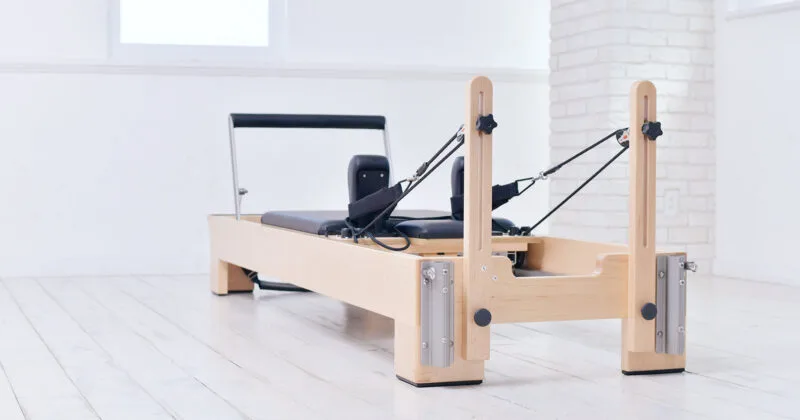
The studio floor is laid with lava-stone plates for hot yoga. There is also room-temperature yoga, Pilates, women-only kickboxercise, boxercise, HIIT and personal training, with more than 25 kinds of yoga lessons. It is open every day from 8:00 to 23:30.
First-timers can book a trial yoga lesson for ¥1,980 (tax included), with two bath towels, one face towel and a mat rental included. Pregnant guests cannot join lava-stone hot yoga, but room-temperature maternity yoga is available. Many of our yoga instructors speak English, and the studio’s owner, Naomi Fujita, who holds Japan’s top English qualification (Eiken Grade 1) and a perfect TOEIC score and once worked as a translator and overseas interpreter at Nomura Securities, and who lived in Alaska for three years, often helps guests from the US bases in English herself (visitors from abroad have even left Google reviews about the care they received in English); if you would like an English-friendly lesson, just say so when you book.
After reading a hundred years of the Capital of the Sky, an hour spent counting your own breaths is not a bad way to end the day.
- Studio website: https://ontheshore.jp/
- Book a trial lesson: https://site.locaop.jp/C0aVK?_src=hp
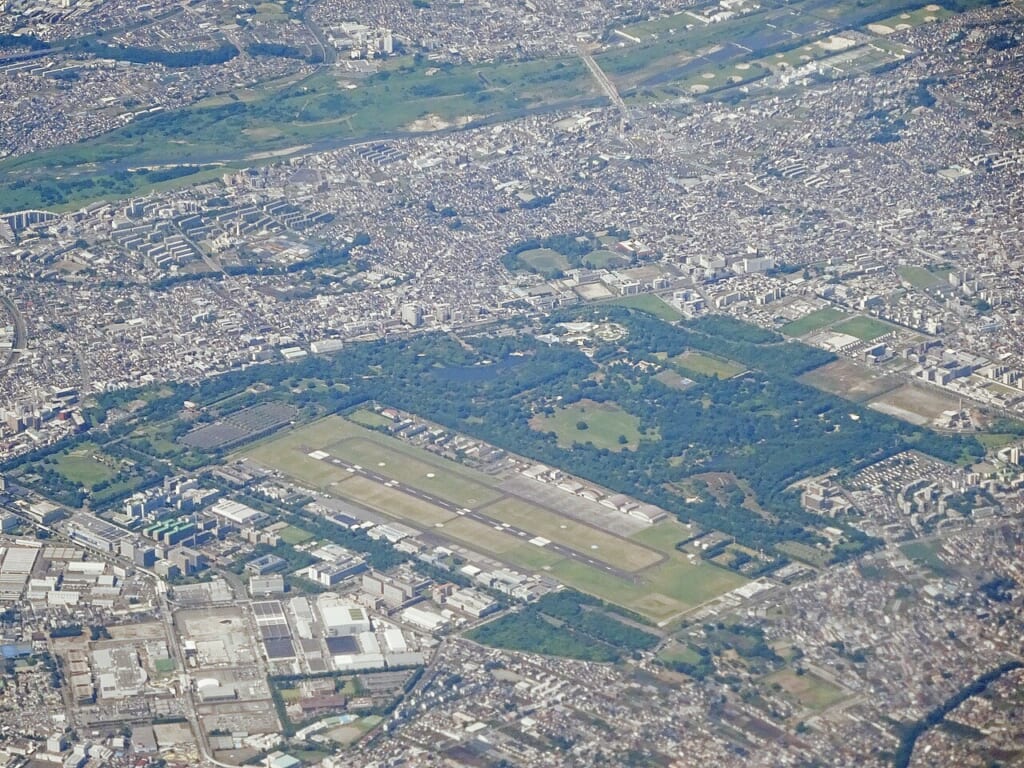
Cover photo: The Tachikawa Airfield area seen from the north in 2023, with the Tama River beyond the runway (Photo: ブルーノ・プラス / CC BY-SA 4.0 / Wikimedia Commons)
Information as of October 2026.
More Tachikawa Walks
- Tachikawa Air Raids: WWII History and a Memorial Walk Guide
- Tachikawa Autumn Leaves Guide: Ginkgo, Zelkova and Where to Walk
- Tachikawa Base Town History: Cola Bottles, Yuming, the Laundry Gate
- Tachikawa Air Base History Walk: The Sunagawa Struggle and After
- Tachikawa Sento Guide: Public Baths, Their History and Bath Etiquette
- Tachikawa Disaster Base and Life Safety Learning Center: A Guide
- Tachikawa Bridges Walk: ‘Nameless Bridge’ to a Double-Deck Crossing
- Tachikawa Cinema City Guide: Tokyo’s First Multiplex and Its Big Sound
- Tachikawa Museums Guide: Art, 2,558 Instruments and Things to Do
- Tachikawa Cycling Guide: Showa Kinen Park’s 14 km and the Tama River
- Tachikawa Festivals Guide: Bon Dances, Flamenco, Nebuta and Yokai
- Tachikawa History Walk: Famous People, from Seiji Ozawa to a Comet
- Tachikawa History Walk: Famous People Who Passed Through the Town
- Tachikawa Public Art Walk: A Guide to the 109 Works of Faret Tachikawa
- Tachikawa Farms Guide: Farm Stands, Harvest Days and Tokyo’s Fields
- Tachikawa History: Japan’s Firsts, from Electric Cars to Sazae-san
- Tachikawa Folktales and Legends: A History Walk Through Old Stories
- Tachikawa Walk: Fusai-ji Temple’s National Treasure and Suwa Shrine
- Tachikawa Business Guide: Where West Tokyo Works and Starts Up
- Tachikawa Culture Guide: Ballet, Ice, Anime and Art Near the Station
- Tachikawa’s Green Future: Zero Carbon, Farmland and Springs Guide
- Tachikawa for Foreign Visitors: Haneda Bus, Things to Do, Future
- Tachikawa Population and Family Life: A Guide to the Town’s Future
- Tama Monorail Extension: When It Opens and Tachikawa’s Future Guide
- Tachikawa and Tokyo’s Next Big Earthquake: Disaster Base Guide
- Showa Kinen Park Guide: The Future of Tachikawa’s Unfinished Park
- Tachikawa Station Redevelopment: A Guide to the Future Station Area
- Tachikawa’s Next Decade: Tachihi, GREEN SPRINGS and a New Hotel Guide
- Tachikawa GREEN SPRINGS Guide: Goats, a Rooftop River, Things to Do
- Tachikawa Travel Guide: Things to Do, Walks and History West of Tokyo
- Tachikawa Walk: Slopes, River Terraces and a Flat City’s Hidden Tilt
- Tachikawa Airfield History: The 2:12 a.m. Flight to London, 1937
- Tachikawa Was Once in Kanagawa: A History Walk to the 1893 Transfer
- Tachikawa Keirin Velodrome: History, Guide and the Grand Prix’s Home
- Tachikawa Childhood History: Candy Shops, a Base Christmas, Showa Kids
- Tachikawa Aviation Shrine History: The First ‘Tokyo Airfield’ Walk
- Showa Kinen Park Guide: Komorebi Village, Japanese Garden and Bonsai
- Tachikawa Libraries Guide: Raccoon Dogs, Lucky Cats, Local History
- Tachikawa Live Music Guide: Basement Venues and Where TM Meant Tama
- Tachikawa Manga Park Guide: 40,000 Manga in a Former City Hall
- Tachikawa Fireworks Festival Guide: History, Tips and Things to Do
- Akishima Day Trip from Tachikawa: Whale Fossil, Wisteria and History
- Fussa Day Trip from Tachikawa: Yokota Air Base History, Route 16 Walk
- Fussa Sake Brewery Walk: Day Trip from Tachikawa, Water and History
- Hachioji Castle Ruins from Tachikawa: History Walk and Silk Town Guide
- Mount Takao Day Trip from Tachikawa: Hiking Guide, History and Forest
- Hino Day Trip from Tachikawa: Shinsengumi History Walk and Guide
- Kokubunji Walk from Tachikawa: Otaka-no-Michi Springs and History
- Kunitachi Walk from Tachikawa: Daigaku-dori, History and Yaho Tenmangu
- Mount Mitake Day Trip from Tachikawa: Wolf Shrine, Valley Walk Guide
- Ome Day Trip from Tachikawa: Showa Retro Walk, Things to Do, History
- Tachikawa Walk: Nekawa Green Path to the Tama River, a Riverside Guide
- Tachikawa Cat-Return Shrine Guide: History, Ema and Suitengu
- Tachikawa Night Views and Mount Fuji at Dawn: A Walking Guide
- Tachikawa at Night: Bar Alleys, Black Markets and Cinema History Walk
- Tachikawa Ramen and Udon Guide: Ramen Square and Noodle History
- Tachikawa vs. Central Tokyo: Why the West Side Wins on Space and Sky
- Tachikawa Old Villages Walk: History Guide, Shibasaki to Nishisuna
- Tachikawa Oni Park Guide: A Red Demon Slide and Trains for Kids
- Tachikawa Parks Guide: Things to Do Beyond Showa Kinen Park, a Walk
- Tachikawa Place Names: A History Walk Through Its Town-Name Origins
- Tachikawa Antarctic and Arctic Science Museum: Free Guide and History
- Tachikawa on a Rainy Day: Indoor Things to Do, a Local Guide
- Tachikawa History Museum Guide: Local History and Folklore, Free
- Tachikawa Cherry Blossoms Guide: Where to See Sakura, and the History
- Tachikawa Schools Walk: History of Night Classes, Bells, Antarctica
- Tachikawa Filming Locations Guide: Anime Pilgrimage and TV Dramas
- Tachikawa Silk History Walk: Japan’s No.1 Mulberry Village, Sunagawa
- Tachikawa Shopping Guide: Why It Has Everything, a History Walk
- Showa Kinen Park, Tachikawa: A Walking Guide to Highlights and History
- Tachikawa and San Bernardino: The History of Tokyo’s First Sister City
- Tachikawa Souvenirs Guide: What to Buy, from Tokyo Sake to Paper
- Tachikawa Sports Guide: Things to Do for Fans, Runners and Walkers
- Tachikawa Station Guide: The History Walk of Tama’s Busiest Station
- Tachikawa in Summer: Things to Do, Water Play and Heat Tips Guide
- Tachikawa Sun Sun Road Walk: History, Festival and Winter Lights
- Tachikawa Tachihi History Walk: Aircraft, a Beach and Things to Do
- Tachikawa History: The Samurai Clan Behind the City’s Name, a Walk
- Tama Monorail from Tachikawa: A Guide to Views, Mt. Fuji and History
- Tachikawa Tama River History Walk: Floods, Ferries and Bridges
- Tachikawa Walk: Tamagawa Aqueduct and Sunagawa History Guide
- Tachikawa Udo Guide: History of Tokyo’s Underground White Vegetable
- Tachikawa Trains Guide: Railway History and Where to Watch Trains
- Tachikawa Water History: Where the Tap Water Comes From, and Wells
- Tachikawa History: Why Tokyo’s First IKEA and Cinema Complex Came Here
- Tachikawa Wildlife Guide: Birdwatching, Fireflies and Tanuki Walks
- Tachikawa Yagawa Green Space Walk: Springs, Hake Cliffs and History
- Tachikawa from Yokota Air Base: A Weekend Guide and Things to Do
初日の汗は、予約した人だけが持ち帰れる。

