

What early-frailty studies show, and what remains uncertain
The study of yoga in people over 65 in the early stages of frailty used twice-weekly sessions of 60 minutes for 12 weeks. The comparison group received lectures about physical activity in weeks 1 and 8. It was a quasi-experimental comparison; participants were not randomly allocated. This is particularly relevant evidence for the topic, because its participants were experiencing early frailty, but its design still matters when judging the strength of the conclusions. [8]
After the program, there were significant differences between groups in a grip-strength index and strength in both the right and left lower limbs. There were no significant between-group differences in physical activity level, balance, flexibility or mental health. Several outcomes improved within the yoga group from its own starting point, but the advantage over the comparison group was established for strength measures. [8]
The published summary did not report effect sizes or confidence intervals for those differences, and its account of participant losses gave unclear numbers and percentages. As a result, the report leaves questions about how large a practical change to expect and how readily participants maintained their involvement. The session schedule is clear enough to use as a discussion point; the amount of everyday improvement and the ease of continuing require further investigation. [8]
The broader yoga review has an equally important boundary. None of its 33 trials assessed frailty itself using a validated definition. The studies mainly examined individual markers associated with frailty. Better walking speed or stronger legs can be valuable, but the evidence does not establish that yoga improved frailty as an overall assessed state. This is the central distinction to keep in mind when a headline turns several physical benefits into a general claim about reversing frailty. [1]
Comparisons with other exercise give a mixed picture. A 2012 review of 18 studies and 649 participants suggested that yoga might outperform conventional physical activity for self-rated health, fitness and strength. The effects were modest, estimates lacked precision, and study quality varied. A 2019 analysis found advantages over active comparison groups in lower-body strength and flexibility. The 2023 frailty-related review, however, concluded that yoga might offer no additional benefit over active interventions such as exercise. [17][3][1]
A separate review of community-dwelling older adults found that conclusions about walking improvements and stress remained uncertain, with relatively large differences between studies. Taken together, the evidence supports considering yoga when adding movement to an inactive routine. Whether replacing an established activity with yoga would provide further benefit depends on the function examined and the people studied. Someone who already has a sustainable exercise habit has a different starting question from someone seeking a way to begin again. [4][1][3]
Exercise research outside yoga helps keep the options open. The review of multicomponent exercise included 28 randomized controlled trials and 4,857 adults aged 60 or older assessed as frail. It reported improvements in frailty status, strength, walking speed, balance and physical performance involving several movements. Considering yoga can therefore sit alongside discussion of other exercise programs. The evidence does not require a person to choose yoga as the sole route back to movement. [12]
In the multicomponent analysis, the standardized mean difference for frailty status was −1.40, with a 95% confidence interval of −2.05 to −0.75. This statistic combines results from different scales on a common basis; the negative direction here means less frailty. It does not represent the percentage of people who improved. Likewise, the community-exercise odds ratio of 2.74 compares the odds of moving to a healthy state; it does not mean the probability was 2.74 times as high. These are group comparisons, not personal forecasts. [12][11]
For multicomponent exercise, standardized mean differences for walking speed and balance were both 0.27. The Short Physical Performance Battery, or SPPB, combines short physical tasks; its result was 1.03. The Timed Up and Go, or TUG, assesses getting up, walking and returning; its result was −3.05. These values were also standardized differences, not raw points or seconds. The analysis examined the ability to move through tasks as well as strength alone. [12]
The duration analysis found greater effectiveness with a 12-week multicomponent intervention, and effects were greater in hospital than outside hospital. These findings apply to multicomponent exercise in its research settings and cannot promise results for a community yoga class. They nevertheless give people already assessed as frail a reason to discuss exercise content with a healthcare professional. The assessment can guide a discussion of which exercise program fits the person’s needs. [12]
A longer study followed 112 community-dwelling adults aged 65 or older with prefrailty. In this randomized controlled trial, 57 took part in a home-based program targeting physical function and 55 joined the comparison group. Assessments occurred at the start and at 6, 12 and 18 months. This was a physical-function exercise program, not yoga. Its longer follow-up offers a different perspective from a short yoga intervention. [13]
The exercise group improved in balance, performance across several physical tasks, mobility involving rising and walking, and concerns about falling, compared with the comparison group and its own starting point. At 18 months, 12.3% of the exercise group were classified as nonfrail, compared with 2.0% of the comparison group. In the comparison group, 14.5% moved into frailty; none of the exercise group did. These findings connect function with assessed frailty status over a longer period. [13]
The trial measured concerns about falling, physical function and frailty status. It did not establish a reduction in the actual number of falls. Its contribution is the longer view of people beginning with prefrailty, with changes in function and status considered together. Alongside the yoga research, it provides evidence about continued physical activity from a home-based exercise program. [13]
初日の汗は、予約した人だけが持ち帰れる。
Common misconceptions
“Frailty just means needing more muscle” narrows the question too far. The yoga reviews examined walking speed, leg strength, balance and flexibility, and the multicomponent exercise review also measured walking and combined physical tasks. Muscle quantity and usable movement are different interests. The companion material on muscle mass and protein belongs in the science of weight management feature; here, the concern is how a person’s abilities work together in the movements they want to keep doing. [1][3][12]
For families, this changes the conversation from a general instruction to get stronger into a shared practical goal. Ask about getting up, walking or the movements the person finds troublesome. That provides a way to relate the person’s priorities to the functions researchers measured. The person’s own account of difficult movements can help the family agree on the purpose of exercise.
A trial combining yoga with a Mediterranean diet reported improved physical function with the combined intervention, not yoga alone; the companion feature on getting up from a chair discusses it in more detail. [10]
“People who are stiff cannot participate” overlooks the methods used in research. The review of chronic muscle and joint conditions supported props and movement changes for physical limitations. In the early-frailty yoga study, participants’ impressions of difficult bending and kneeling also changed through experience. Start by asking whether the content is suitable and how movements can be adapted. Adaptability in the research makes that a reasonable question to ask. [7][8]
In the early-frailty study, mental health did not differ significantly between groups. Within the yoga group, however, attitudes toward exercise and perceived ability to carry it out changed from the starting assessment. Attitude had the strongest association with behavioral intention, followed by perceived control over carrying out the activity. Confidence about participation and a measured mental-health advantage over a comparison group were therefore separate findings. [8]
The barriers survey involved 37 people with frailty or prefrailty, with a mean age of 72.81. Participants could hold positive beliefs about yoga while having little experience and little intention of joining. The main barriers were perceived difficulty, lack of motivation and fear of injury. This was a cross-sectional study, capturing circumstances at the time of questioning. It did not test how much a particular explanation or invitation would increase participation. [14]
Practical uncertainty was also substantial: 61.8% did not know where classes were offered, 82.4% were unsure of the cost, and 56.3% reported having transportation. Flexibility alone could not explain access. A clear location, understandable price and workable journey belong in the same conversation as physical suitability. For an adult child helping a parent, gathering those details can make a vague suggestion to try yoga into something the parent can actually consider. [14]

What you can do today
- After checking participation conditions with a healthcare professional, consider yoga whose instructor can adapt movements to your body. The early-frailty study used two 60-minute sessions weekly for 12 weeks. Practice changing position within a manageable range; use the schedule as a reference, without expecting to complete everything from the outset. [8]
- At home, repeat movements learned in class and checked by the instructor. The review reported an average of four 30-minute home sessions weekly in effective trials. Use appropriate props and movement changes for physical limitations, and rest according to how you feel. [7]
- Before a first visit, establish whether movement changes are possible and check the location, cost and transport. Family members can help by listening to concerns that yoga looks difficult or might cause injury, and by working through the practical conditions together. [7][14]
- If you have a chronic condition or take medication, consult your doctor before starting. If you have fallen or feel unsteady, check with your doctor and instructor before standing practice, and work where a wall or chair is within reach. Stop if pain or dizziness develops.
A weekly movement plan for early frailty at On the Shore Tachikawa
For someone returning to movement at the early stages of frailty, On the Shore Tachikawa is a place to consider a fixed weekly time to keep moving.
A 60-minute trial yoga lesson costs ¥1,980 including tax and includes two bath towels, one face towel and mat rental. The prices page and trial booking page provide the details for planning a visit.
On the Shore Tachikawa is a lava-stone hot yoga studio a 1-minute walk from the North Exit of JR Tachikawa Station. Its address is 3F Etoile Bldg, 2-14-10 Akebonocho, Tachikawa, Tokyo, and it opens every day from 8:00 to 23:30.
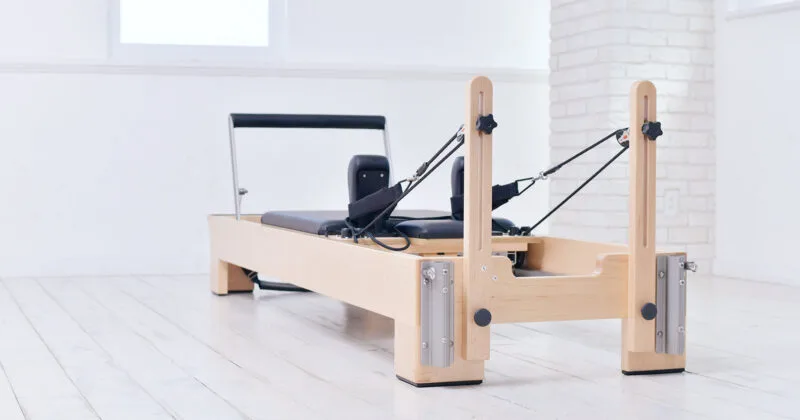
Alongside lava-stone hot yoga, it offers room-temperature yoga within its more than 25 kinds of yoga lessons, plus Pilates, women-only kickboxercise, boxercise, HIIT and personal training. Many of our yoga instructors speak English, and the studio’s owner often helps guests from the US bases in English herself.
Older guests should start by considering room-temperature yoga. Anyone sensitive to heat or living with a chronic condition should check with their doctor before participating. Guests whose doctor has told them not to exercise cannot join. Pregnant guests cannot take lava-stone hot yoga; room-temperature maternity yoga is available.
References
- Effect of Yoga on Frailty in Older Adults — Julia V. Loewenthal et al., 2023, Annals of Internal Medicine. DOI: 10.7326/m22-2553
- The effects of yoga compared to active and inactive controls on physical function and health related quality of life in older adults- systematic review and meta-analysis of randomised controlled trials — D. Sivaramakrishnan et al., 2019, The International Journal of Behavioral Nutrition and Physical Activity. DOI: 10.1186/s12966-019-0789-2
- Effects of yoga on physical and psychological health among community-dwelling older adults: A systematic review and meta-analysis. — Ka-Yan Ko et al., 2023, International journal of older people nursing. DOI: 10.1111/opn.12562
- A systematic review of the effectiveness of yoga on pain, physical function, and quality of life in older adults with chronic musculoskeletal conditions. — Laura Denham-Jones et al., 2021, Musculoskeletal care. DOI: 10.1002/msc.1576
- Effectiveness of Applying the Theory of Planned Behavior with Yoga Program on the Physical Activity and Mental Health of the Prefrailty Older Adults — Ya-Ting Wu et al., 2025, International Journal of Yoga. DOI: 10.4103/ijoy.ijoy_190_24
- Adapted yoga to improve physical function and health-related quality of life in physically-inactive older adults: a randomised controlled pilot trial — G. Tew et al., 2017, BMC Geriatrics. DOI: 10.1186/s12877-017-0520-6
- Effects of a Yoga Program Combined with a Mediterranean Diet on Nutritional Status and Functional Capacity in Community-Dwelling Older Adults: A Randomized Controlled Clinical Trial — María del Carmen Carcelén-Fraile et al., 2024, Nutrients. DOI: 10.3390/nu16111601
- Community-based exercises improve health status in pre-frail older adults: A systematic review with meta-analysis — H. Lim et al., 2024, BMC Geriatrics. DOI: 10.1186/s12877-024-05150-7
- Effects of multicomponent exercise on frailty status and physical function in frail older adults: A meta-analysis and systematic review. — Xinyu Yang et al., 2024, Experimental gerontology. DOI: 10.1016/j.exger.2024.112604
- Targeted Physical Function Exercises for Frailty and Falls Management in Pre-Frail Community-Dwelling Older Adults: A Randomized Controlled Trial — Ioannis Savvakis et al., 2025, Healthcare. DOI: 10.3390/healthcare13192486
- Yoga for seniors: understanding their beliefs and barriers to participation — R. Perkins et al., 2020, Educational Gerontology. DOI: 10.1080/03601277.2020.1765274
- The Effects of Yoga on Physical Functioning and Health Related Quality of Life in Older Adults: A Systematic Review and Meta-Analysis — Neela K. Patel et al., 2012, The Journal of Alternative and Complementary Medicine. DOI: 10.1089/acm.2011.0473
Cover photo: A woman rests her hands on a walking frame while supporting her body. (Photo: rawpixel.com / CC0 / Wikimedia Commons)
Information as of October 2026. For your own health, consult a doctor.
More from Senior Yoga Science (English)
- Yoga for older adults: better balance, but what about falls?
- Yoga for fear of falling: rebuilding confidence in later life
- Yoga for older adults: flexibility beyond the forward bend
- Yoga for older adults: leg strength and getting out of a chair
- Yoga for seniors and gait speed: what walking studies show
- Yoga for knee osteoarthritis: pain, stiffness and daily movement
- Yoga for chronic low back pain: moving better in later life
- Yoga for bone density after 60: what the research tells us
- Yoga for blood pressure in older adults: breathing and rest
- Yoga for older adults: what heart and blood vessel tests show
- Yoga and blood sugar after 60: what type 2 diabetes studies show
- Yoga for seniors and sleep: looking beyond hours in bed
- Yoga for older adults with depression: scores over 6 months
- Yoga for seniors with anxiety: chair trials and stress signals
- Yoga for older adults: memory, attention and mental flexibility
- Yoga for MCI and dementia: memory, planning and daily life
- Yoga for older adults and loneliness: finding social connection
- Yoga and quality of life after 60: modest gains, with limits
- Yoga breathing for seniors: what lung function studies show
- Yoga for a rounded upper back after 60: what changed in trials
- Chair yoga for seniors: pain, walking and staying with it
- Yoga for urinary incontinence: evidence for older women
- Yoga for older adults: how often to practice and keep going
- Yoga for Parkinson’s disease: movement and mood in later life
- Yoga for older cancer survivors: fatigue, sleep and daily life
- Yoga for neck and shoulder pain: what older adults should know
- Yoga safety for older adults: injuries, pain and safer practice
- Yoga for older adults compared with tai chi and walking
- Hot yoga for older adults: choosing a room that suits you
All Senior Yoga Science articles (English)
初日の汗は、予約した人だけが持ち帰れる。
2


