

Lung tests measure the volume and speed of exhaled air
Lung function studies often use forced vital capacity, forced expiratory volume in one second, and peak expiratory flow.[5] Forced vital capacity, usually shortened to FVC, is the amount of air forcefully exhaled after a full inhalation. Forced expiratory volume in one second, or FEV1, is the amount exhaled during the first second. Peak expiratory flow describes the fastest flow of the exhaled breath. These tests concern air volume or flow, rather than the pressure used to assess respiratory muscle strength.
A systematic review and meta-analysis in healthy adults brought together 11 studies containing 14 yoga breathing intervention groups. Study quality was assessed as moderate to good. Programs lasted from 4 weeks to 4 months, with sessions of at least 10 minutes.[5] The analysis included different breathing practices. Its conclusion concerns that collected evidence, rather than demonstrating that one named technique is the appropriate choice for every older reader.
The pooled effect size was 0.53 for FVC, 0.60 for FEV1, and 0.56 for peak expiratory flow, all in the direction of improvement. The corresponding confidence intervals were 0.10–0.96, 0.19–1.01, and 0.31–0.82.[5] An effect size is a scale for comparing change across research. A value of 0.53 does not mean that participants exhaled 53% more air, and these figures cannot be read as a percentage improvement someone should expect from attending a class.
Confidence intervals express the range around an estimate. Another important feature was the considerable variation between studies. The measure of between-study heterogeneity was 99% for both FVC and FEV1.[5] The positive direction of the pooled results is encouraging, but the studies did not produce a uniform answer about the size of change. The pooled average needs to be read alongside differences in participants and breathing programs.
For someone choosing a class, this is a reason to look for a clear description of the evidence rather than a promise of the same improvement for everyone. The review studied healthy adults and several breathing interventions over repeated sessions.[5] It cannot by itself predict the response of a particular older person with a chronic condition. Asking which population and outcome underlie a claim is a practical way to use the review’s findings without making them more certain than they are.
An earlier systematic review of healthy individuals also found improved pulmonary function in most of the selected studies. It concluded that improvement appeared with at least 10 weeks of regular yoga practice, with the size of improvement related to fitness level and/or the time devoted to breathing practice.[8] This is evidence about sustained programs. It is different from showing that a single deep breath immediately changes lung function, or establishing an exact minimum duration that applies to every participant.
The outcomes considered in that review included inspiratory and expiratory pressure, maximum voluntary ventilation, FVC, FEV1, and peak expiratory flow.[8] The broad term “pulmonary function” therefore covered both the muscular work of breathing and measures of air movement. When an article says yoga improved breathing, identifying the test makes the finding more understandable. A pressure result and a flow result may both be useful, but they answer different questions.
One study helps examine what adding breathing instructions might contribute to posture practice. It involved 28 healthy, inactive middle-aged people with an average age of 52.7 years. In this nonrandomized study, one group practiced basic postures without specific breathing instructions, while the other practiced postures with pranayama. They attended a 70-minute session once per week for 8 weeks.[10] This was a comparison of two combinations of yoga practice, not an older-adult trial.
Overall respiratory function improved in both groups. Maximum inspiratory pressure improved only in the group that combined postures and breathing instructions.[10] For an older reader, this is supporting evidence about the possible relevance of the breathing component. It does not remove the age difference between the participants and the intended reader. It does, however, make a sensible class question more concrete: does the program focus only on posture, or does it also teach the use of the breath?
Asthma has also been examined separately. A meta-analysis included 15 papers on adults aged 18–60 with mild to moderate asthma. It compared yoga involving postures, breathing exercises, and meditation with usual care. The standardized mean difference for FEV1 was 0.96, with a confidence interval of 0.77–1.14. For peak expiratory flow, it was 0.38, with a confidence interval of 0.18–0.58.[7] These results favored yoga, but the included age range did not extend beyond 60.
The asthma analysis also assessed asthma control and health-related quality of life. Its authors concluded that there was moderate evidence for yoga as complementary care for mild to moderate asthma.[7] For adults over 60, it is relevant background rather than direct evidence in their age group. The comparison with usual care supports discussing yoga alongside treatment; it does not support replacing an inhaler with yoga or changing medication because of a class experience.
初日の汗は、予約した人だけが持ち帰れる。
Some tests improve while others show no significant effect
A meta-analysis of people receiving care for respiratory diseases combined 10 randomized controlled trials involving 1007 patients. Compared with control groups, yoga significantly improved FEV1 and the percentage-based measures FVC% and FEV1%.[6] In the same analysis, there was no significant effect on absolute FVC, peak expiratory flow, maximum voluntary ventilation, or the FEV1/FVC ratio.[6] An improvement in one outcome is not proof that all lung function measures improve together.
That pattern differs from the healthy-adult review, which reported improvements in FVC and peak expiratory flow as well as FEV1.[5] The difference is not resolved by using the general phrase “better breathing.” The populations and outcomes need to remain visible. Research in healthy adults and research in patients with respiratory disease describe different circumstances, and each gives its own answer for the measures tested.[5][6] A person’s health situation matters when deciding which evidence is most relevant.
Study design also affects what can be concluded. The small study of 20 older volunteers found improvements after yoga, but without a control group it could not isolate yoga from every other influence.[1] In the older-women study, the pressure figures given here are before-and-after values within the yoga group.[3] These within-group changes are not numerical differences between the yoga and control groups.
The most direct encouraging evidence for older adults in these papers concerns the possibility of training respiratory muscle strength.[2][3] Questions about the size of broader lung function changes and whether benefits persist over the longer term remain less settled. The clinical-population meta-analysis called for further rigorous research with larger samples to confirm long-term benefits.[6]
You may be concerned about how often you stop on the stairs. That is useful information to bring to a medical appointment, but changes in respiratory pressure or exhaled volume cannot be converted into a predicted change in stair-climbing difficulty from these results alone.[2][3][5] Put the measured finding beside the everyday goal: one describes what researchers tested, while the other describes what matters to you. Keeping both visible gives a clinician a clearer discussion to work with.
The studies offer material for deciding whether an activity can be continued alongside care. They do not provide a basis for deciding how to treat breathlessness or change medication. A useful expectation is specific: a supervised breathing or combined yoga program may be worth discussing because some studies found improvements in particular measures. It remains necessary to match that discussion to health, ability, and the kind of supervision available.

Common misconceptions
“Improved lung function means the lungs themselves became younger.” The older-adult trial measured respiratory muscle pressure and ventilation capacity; the study in older women also measured changes in specific tests.[2][3] Those results do not demonstrate rejuvenation of lung tissue. Describing the actual outcome preserves the value of an improvement without adding a claim that the research did not establish. Stronger inhaling pressure is meaningful on its own terms.
“Slower breathing means every lung test will improve.” The older-women study reported a lower breathing rate alongside increased respiratory muscle strength.[3] However, the clinical-population meta-analysis found no significant effect on several lung function outcomes.[6] Breathing rate is one part of the picture, not a substitute for all the others. Trying to make it lower should not become the sole goal of practice or a personal test of whether yoga is working.
“More sessions must produce a bigger effect.” The 5-day schedule came from supervised breathing training in care-home residents; the 3-session schedule came from the older-women program; the weekly schedule came from a middle-aged population.[2][3][10] Participants and activities differed. These schedules were not a direct test of which frequency works best. Comparing them as though all other conditions were identical would create a conclusion the studies did not provide.
“Breathing research proves the benefits of hot yoga.” The older-adult studies discussed here did not test the effect of exercising in a hot room.[1][2][3] Temperature should be considered separately from the breathing findings. This feature’s discussion of heat and safety addresses exercise in warmer conditions. Interest in breathing practice does not itself give a reason to choose a heated class, especially when deciding how to start later in life.
What you can do today
- With instruction, practice yoga combining basic postures and breathing directions, using the middle-aged study’s schedule of one 70-minute session per week for 8 weeks as a reference. Maximum inspiratory pressure improved in the combined-practice group.[10] Rest according to your condition; do not force yourself to fill the session time.
- If continued posture and breathing practice is suitable for you, practice under supervision using the older-women study’s schedule as a reference: 65 minutes per session, 3 times per week, for 12 weeks.[3] This was the duration of the whole yoga session, not 65 minutes of breathing exercises alone.
- If you have a chronic condition or take medication, consult your doctor before starting. If you have COPD or asthma, continue treatment, including prescribed inhalers. Do not independently try forceful, rapid exhalation techniques or breath-holding exercises; check with your doctor whether they are appropriate for you.
- Stop and rest if practice causes breathlessness or pain. Maximum effort during a test is different from inhaling or exhaling to your limit in everyday practice. Do not add strong breathing techniques you have not been taught, and do not continue through pain to meet a research schedule.
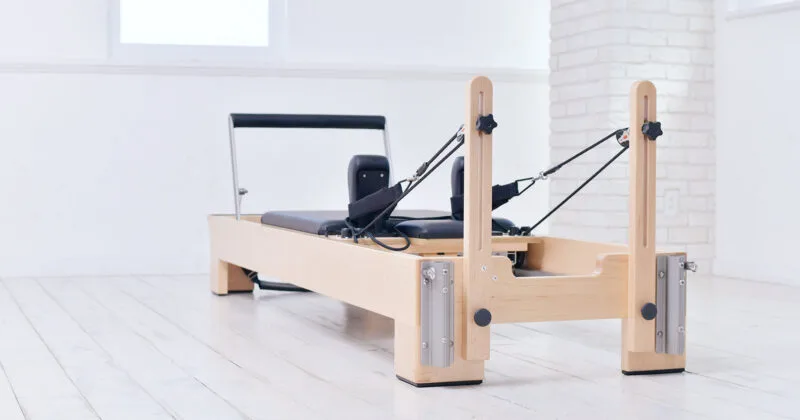
Plan a week for breathing practice at On the Shore Tachikawa
An interest in breathing practice can be a starting point for choosing a fixed weekly time to keep moving at On the Shore Tachikawa (オンザショア立川店).
The studio opens every day from 8:00 to 23:30. It is a 1-minute walk from the North Exit of JR Tachikawa Station, at 3F Etoile Bldg, 2-14-10 Akebonocho, Tachikawa, Tokyo. Many of our yoga instructors speak English, and the studio’s owner often helps guests from the US bases in English herself.
Alongside lava-stone hot yoga, its more than 25 kinds of yoga lessons include room-temperature yoga. Other activities include Pilates, women-only kickboxercise, boxercise, HIIT, and personal training. Older guests should start with room-temperature yoga. Anyone sensitive to heat or living with a chronic condition should check with their doctor first. Guests told by a doctor not to exercise cannot join. Pregnant guests cannot join lava-stone hot yoga.
A 60-minute trial yoga lesson costs ¥1,980 including tax, with rental of 2 bath towels, 1 face towel, and a yoga mat included. Read the studio information, check the prices, and use the trial booking page to plan a visit.
References
- Effects of Yoga on Respiratory Parameters, Functional Exercise Capacity, Dynamic Balance, and Quality of Life in Older Adults: Single Group Pretest/Posttest Experimental Study — Canan EREN YURDAKUL et al., 2026, Turkiye Klinikleri Journal of Health Sciences. DOI: 10.5336/healthsci.2025-114617
- Effects of Inspiratory Muscle Training and Yoga Breathing Exercises on Respiratory Muscle Function in Institutionalized Frail Older Adults: A Randomized Controlled Trial — D. Arnall et al., 2014, Journal of Geriatric Physical Therapy. DOI: 10.1519/jpt.0b013e31829938bb
- Do 12-Week Yoga Program Influence Respiratory Function of Elderly Women? — L. Bezerra et al., 2014, Journal of Human Kinetics. DOI: 10.2478/hukin-2014-0103
- Yogic Breathing Practices a Non-Pharmacological Alternative Medicine for Managing Pulmonary Functions of Healthy Adults: A Systematic Review and Meta-analysis — Nita Bandyopadhyay et al., 2026, Indian Journal of Community Medicine: Official Publication of Indian Association of Preventive & Social Medicine. DOI: 10.4103/ijcm.ijcm_929_24
- Impact of yoga on pulmonary functions in clinical population: A systematic review and meta-analysis of randomized controlled trials (RCTs) — Vipin Rathore et al., 2025, Journal of Ayurveda and Integrative Medicine. DOI: 10.1016/j.jaim.2025.101189
- The effect of yoga on pulmonary function in patients with asthma: A meta-analysis. — Anshu et al., 2022, Complementary therapies in clinical practice. DOI: 10.1016/j.ctcp.2022.101682
- The Effects of Regular Yoga Practice on Pulmonary Function in Healthy Individuals: A Literature Review — Allison N Abel et al., 2013, The Journal of Alternative and Complementary Medicine. DOI: 10.1089/acm.2011.0516
- Positive Effects of Yoga on Physical and Respiratory Functions in Healthy Inactive Middle-Aged People — Kuniko Yamamoto-Morimoto et al., 2019, International Journal of Yoga. DOI: 10.4103/ijoy.ijoy_10_18
- Effect of comprehensive yoga therapy on pulmonary function among various groups with chronic obstructive pulmonary disease — J. John et al., 2022, Biomedicine. DOI: 10.51248/.v42i2.1267
Cover photo: A partially opened anatomical lung model displays structures inside the lungs. (Photo: John Campbell / CC BY 2.0 / Wikimedia Commons)
Information as of October 2026. For your own health, consult a doctor.
More from Senior Yoga Science (English)
- Yoga for older adults: better balance, but what about falls?
- Yoga for fear of falling: rebuilding confidence in later life
- Yoga for older adults: flexibility beyond the forward bend
- Yoga for older adults: leg strength and getting out of a chair
- Yoga for seniors and gait speed: what walking studies show
- Yoga for knee osteoarthritis: pain, stiffness and daily movement
- Yoga for chronic low back pain: moving better in later life
- Yoga for bone density after 60: what the research tells us
- Yoga for blood pressure in older adults: breathing and rest
- Yoga for older adults: what heart and blood vessel tests show
- Yoga and blood sugar after 60: what type 2 diabetes studies show
- Yoga for seniors and sleep: looking beyond hours in bed
- Yoga for older adults with depression: scores over 6 months
- Yoga for seniors with anxiety: chair trials and stress signals
- Yoga for older adults: memory, attention and mental flexibility
- Yoga for MCI and dementia: memory, planning and daily life
- Yoga for older adults and loneliness: finding social connection
- Yoga and quality of life after 60: modest gains, with limits
- Yoga for a rounded upper back after 60: what changed in trials
- Chair yoga for seniors: pain, walking and staying with it
- Yoga for frailty in older adults: walking, strength and limits
- Yoga for urinary incontinence: evidence for older women
- Yoga for older adults: how often to practice and keep going
- Yoga for Parkinson’s disease: movement and mood in later life
- Yoga for older cancer survivors: fatigue, sleep and daily life
- Yoga for neck and shoulder pain: what older adults should know
- Yoga safety for older adults: injuries, pain and safer practice
- Yoga for older adults compared with tai chi and walking
- Hot yoga for older adults: choosing a room that suits you
All Senior Yoga Science articles (English)
初日の汗は、予約した人だけが持ち帰れる。
2


