


Walking and cycling to work can add movement to your day. Research shows fat loss in some settings, smaller weight gains in others, and no change.
Outside the ticket gates, the stairs and escalator wait side by side. You had planned to exercise after work, but the working day is still running through your head. Could choosing the stairs recover a little of the movement you missed today? Or is a commute too ordinary to make any difference to the bathroom scale?
Before setting aside extra time for exercise, it helps to look at a journey already in your calendar. People who walk or cycle to work tend to have lower weight or body fat than people who travel only by car. That does not mean switching tomorrow will reproduce the difference. A systematic review of adult research found limited evidence of an association, while differences between studies and the predominance of cross-sectional designs prevented a firm numerical conclusion about weight change.[20]
The question is where movement can fit into a commute, and what the research allows us to expect from it. We will distinguish studies comparing different commuters, studies following changes in travel, and trials that assigned people to cycle. Wider daily activity and step targets belong to other articles in this series. A train pass is not an exercise membership, but the journey attached to it may offer somewhere to put a repeatable habit.
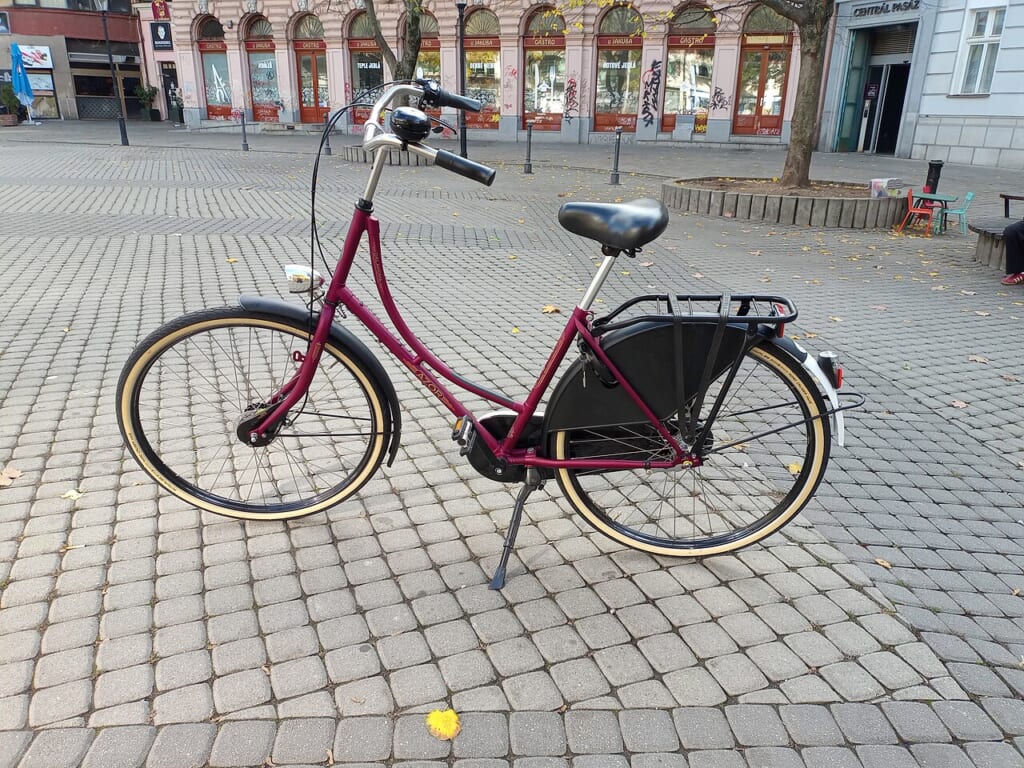
An active commute can include public transport
Walking and cycling are the obvious forms of active commuting. Research also considers journeys combining public transport with walking. In a British cross-sectional study, researchers grouped travel to work into private transport, public transport and active transport. Public transport users, as well as walkers and cyclists, had lower body mass index and body fat than private transport users. Body mass index, or BMI, is weight divided by height squared.[2]
The BMI analysis included 7,534 people; the body fat analysis included 7,424. Researchers measured height and weight, while participants reported how they commuted. Among women, BMI was 0.72 lower for public transport users and 0.87 lower for active commuters than for private transport users. Among men, the corresponding differences were 1.10 for public transport and 0.97 for active transport. The 95% confidence interval for the men’s public transport difference was 0.53–1.67.[2]
Those intervals matter alongside the averages. For women using public transport, the confidence interval for the BMI difference was 0.06–1.37. The estimate therefore comes with a range, even within the same survey. Reading only the headline difference makes the result look more fixed than it is. These figures describe differences between groups in this study; they are not amounts of BMI each passenger lost after starting to use a train.[2]
Nor did the researchers test the exercise effects of sitting in a carriage. They compared reported travel categories with measured bodies. The analysis did not isolate which part of each journey explained the association. A public transport journey can include getting from home to a station and from a station to work. For someone commuting in Tokyo, the useful question is therefore how those connecting stretches are traveled, rather than whether the train ride itself counts as a workout.[2]
Distance from work does not make this an all-or-nothing choice. Another British cross-sectional study separated commuters according to how far they lived from their workplace. Among those living farther away, it also considered journeys combining a car with active travel. These commuters had lower body fat than those using only a car. That gives a reason to consider the movable part of a journey even when walking or cycling the full distance is impractical.[6]
For example, if someone usually drives you to the station, you can examine whether walking that stretch fits the route and the day. If you use a bus between the station and your workplace, consider the sidewalks, bags and arrival time before deciding whether that part could be walked. These are ways of applying the travel categories to daily life, rather than exercise prescriptions tested by the studies. Naming a feasible stretch makes the idea more concrete than deciding to become an entirely different kind of commuter.
初日の汗は、予約した人だけが持ち帰れる。
Large surveys compare people, not their weight-loss journeys
A large British study used UK Biobank data to compare commuting methods with measured BMI and body fat in people aged 40–69. The BMI analysis included 72,999 men and 83,667 women. Women who cycled, or combined cycling with walking, had a BMI 1.65 lower than women who traveled only by car. The 95% confidence interval indicated a difference of 1.38–1.92 lower. Their body fat percentage was 3.26 percentage points lower, with an interval of 2.71–3.80 percentage points lower.[1]
Women combining public and active transport also had lower values: BMI was 0.67 lower and body fat was 1.10 percentage points lower than in car-only commuters. Men showed associations in the same direction. Among men cycling or combining cycling and walking, BMI was 1.71 lower. Across the commuting categories, the pattern suggested stronger associations with more physically active forms of travel.[1]
It is tempting to turn those numbers into a promise attached to a bicycle. But the researchers did not measure the same people before and after a change of commute. They compared people using different travel methods at one point in time. Someone already comfortable with physical activity may be more likely to choose cycling. Housing and work conditions can also shape the choices available. The result cannot tell an individual how much fat they would lose by changing their route.[1]
The association remained after the analysis accounted for factors including income, education, residential area, smoking, alcohol use, leisure activity and health. That makes the finding more informative than a comparison that ignores those differences. Statistical adjustment still cannot remove every possible difference between commuters. An observational study with adjustment remains different from a trial in which chance determines which group a participant joins.[1]
A separate British study examined body fat in 7,680 commuters aged 29–65. Among women living near work, those regularly cycling had body fat 1.74 percentage points lower than women using only a car. Among women farther from work, combining car use with active travel was associated with body fat 1.18 percentage points lower. The 95% confidence interval for that difference was 0.13–2.23 percentage points lower.[6]
This study used DXA, an imaging method for measuring body composition, and reported similar findings for visceral fat. Results were also similar when researchers accounted for activity measured by a device rather than activity reported in a questionnaire. The findings extend the association beyond body weight alone. They still do not establish that changing a commute will reliably reduce an individual’s visceral fat.[6]
A large sample can make a comparison compelling without supplying the missing passage of time. If your question is whether your own weight will change between this morning and a later month, a survey of different people cannot answer it directly. Its value is in identifying a pattern worth investigating. To understand change, we next need studies that follow people as their travel habits change or remain the same.[1][6]
Japanese studies often show less gain rather than weight loss
A Japanese longitudinal study followed 29,758 working adults for 5 years. Participants were aged 30–64 at the start, and the sample included 25,808 men and 3,950 women. That balance matters for women considering how closely the results fit them. Height and weight were measured, and researchers compared changes in commuting mode with changes in BMI over the follow-up period.[5]
People who switched from inactive commuting to walking, cycling or public transport tended to gain less weight than people who remained inactive commuters. The tendency was particularly apparent among those maintaining active or public transport commuting. Similar patterns appeared when participants were grouped according to changes in leisure exercise or physical activity at work. The association was therefore not confined to a group already exercising in their spare time.[5]
Among the 16,087 people who continued to do no leisure exercise, the adjusted average increase in BMI was 0.27 for those maintaining inactive commuting. It was 0.20 among those switching to active or public transport commuting, and 0.09 among those maintaining those forms of travel. The respective 95% confidence intervals were 0.24–0.30, 0.18–0.22 and 0.06–0.13. These are changes over the study’s 5 years, not annual changes or kilograms lost.[5]
All of those averages increased. Even the group with the more favorable result did not, on average, finish with a lower BMI than it started with. Someone saying, “I kept walking to work and still gained weight,” would therefore not contradict this finding. Gaining less than a comparison group and losing weight from your own starting point are different outcomes. If weight management is judged only by weight loss, the possible contribution to limiting gain disappears from view.[5]
Another Japanese longitudinal study used personnel records to identify commuting methods in 6,551 workers and measured weight during health examinations. Their average age was 42.8, and 86.8% were men. Across the sample, weight tended to rise by 0.40 kg per year. Among those switching from a car or motorcycle to walking, the change was −0.13 kg per year. Switching from a car or motorcycle to public transport was associated with +0.10 kg per year, and switching from public transport to walking with −0.07 kg per year.[18]
Those changes are small, and they should remain small in the telling. This was a study of changes people made within working life, not a tightly controlled weight-loss program. The abstract did not give confidence intervals for these weight changes. Although the averages are written to decimal places, that precision does not make them a precise forecast of your next year. The public transport switch also illustrates how a favorable comparison can involve a gain rather than a loss.[18]
Commuting was not randomly assigned. A transfer at work or a change in living circumstances could affect both travel and weight. Nevertheless, combining personnel records with health examinations is useful because the analysis did not depend only on participants remembering their travel or weight. These studies offer evidence from Japanese working life while retaining two clear limits: they are observational, and their participants were predominantly men.[5][18]
Numbers: commuting and weight management
A systematic review included 36 adult studies; differing methods prevented a single quantitative conclusion about weight loss.[20]
Women cycling or combining cycling and walking in a British survey had BMI 1.65 lower than car-only commuters, a cross-sectional comparison.[1]
Among Japanese adults doing no leisure exercise, BMI rose by 0.27 over 5 years with continued inactive commuting and by 0.09 with continued active or public transport commuting.[5]
In a study of 6,551 Japanese workers, switching from car or motorcycle travel to walking was associated with a weight change of −0.13 kg per year.[18]
In a cycling trial, the difference in fat mass after 6 months was −4.2 kg compared with controls, with a 95% confidence interval of −6.6 to −1.9 kg.[11]
A different cycling trial found no change in weight or body fat after 10 weeks.[13]
初日の汗は、予約した人だけが持ち帰れる。
1
2


