

In weight-loss studies, “late” did not always mean dinner
Garaulet and colleagues studied 420 people undergoing a 20-week weight-loss treatment. Their average age was 42, and lunch was the main meal in this population. Researchers divided participants according to whether lunch was before or after 15:00. The later-lunch group lost less weight and had a slower rate of weight loss.[9] The abstract does not report the specific difference in kilograms lost, so that difference should not be invented or converted into a personal target.
Energy intake, dietary composition, estimated energy expenditure, appetite-related hormones and sleep duration were similar between the groups. At the same time, later eaters were more often evening types, consumed less energy at breakfast and skipped breakfast more frequently.[9] The timing groups therefore also differed in aspects of eating behavior. Similarity in some measurements does not mean the groups were identical in every feature that could matter for weight loss.
The 15:00 boundary classified the timing of a main lunch in this study. It is not a dinner deadline for people in Tachikawa, nor a tested hour after which food becomes fat. The participants were not randomly assigned to early or late lunch. The result is best read as an association between the characteristics of later eaters and outcomes during a weight-loss program.[9] A numerical dividing point can be useful for analysis without becoming an instruction for every household.
Dashti and colleagues used a different definition in a Spanish weight-loss program involving 3,362 adults. The average age was 41, and 79.2% were women. They calculated the midpoint between breakfast and dinner, then classified people using the population median of 14:54.[16] Someone was a later eater when that midpoint fell after the dividing time. Dinner time alone did not determine the category, and the midpoint was not an additional meal that participants ate.
During the approximately 19-week program, average weekly weight loss was 585 g in the earlier group and 505 g in the later group, a difference of 80 g. At baseline, energy intake and physical activity levels did not differ between groups. Later eaters had higher BMI and triglyceride levels and lower insulin sensitivity. They also had higher odds of encountering weight-loss barriers and lower odds of motivation for weight loss.[16] These accompanying findings help describe the groups being compared.
The average 80 g difference is not an amount you can assume you will recover each week by advancing dinner. This was a comparison between groups with other differing characteristics, not a guaranteed response to changing one meal.[16] It would also be misleading to use the motivation finding to judge a reader’s character. The study describes associations within a program; it does not turn a meal schedule into a measure of personal worth or explain every obstacle a participant faced.
The midpoint approach does offer a useful way to think beyond dinner. It asks where the day’s eating sits between its beginning and end. Drawing that span in your own routine may reveal a possible change elsewhere in the day, even if the evening commute is fixed. That planning exercise does not reproduce the study’s outcome, but it respects the fact that the research classified a daily pattern rather than a single plate of food after dark.
初日の汗は、予約した人だけが持ち帰れる。
Being an evening person is not a test of willpower
Chronotype describes a person’s preferred timing of sleep, eating and activity. A systematic scoping review of 24 studies in healthy adults found that evening types were more likely than morning types to have overweight or obesity and less favorable metabolic health. Total energy and macronutrient intakes were similar, while evening types distributed more intake toward the night and showed differences in eating behavior.[3] The pattern concerned when and how people ate as well as their chronotype.
A separate systematic review included 43 studies. Approximately 95% reported an association between eveningness and at least one unhealthy eating habit, but about 47% reported a stronger association between late types and obesity.[6] Those percentages express different findings. A link with eating habits is not the same as a uniform finding of obesity across all studies. Keeping both figures prevents a broad pattern from being described as an inevitable outcome for every evening person.
Late eating, frequent breakfast skipping and food choices can overlap around an evening chronotype.[6] Reducing that cluster to weak willpower would overlook the behaviors and schedules researchers were examining. It would also make practical planning harder: the question would shift from identifying a changeable eating opportunity to assessing someone’s personality. The research supports looking at patterns, while leaving individual circumstances visible.
Neither review’s abstract gives an effect size in kilograms for changing from an evening person to a morning person.[3][6] Copying a morning person’s entire routine therefore cannot be presented as a proven weight-loss prescription. A more grounded question is whether an earlier eating opportunity or a more stable meal plan is possible within your existing life. If your return-home time cannot move, preparation might still be something you can arrange. That is a planning option, not a quantified treatment effect.
A Spanish population study adds another view of the daily pattern. Its cross-sectional analysis included 7,074 adults aged 40–65. A first meal 1 hour later was associated with a BMI difference of +0.32, with a 95% confidence interval of 0.18–0.47. A nighttime fasting period 1 hour longer was associated with a BMI difference of −0.27, with a 95% confidence interval of −0.41 to −0.13.[18] These estimates describe associations measured across a population at a given point in time.
They are not the changes in BMI experienced by people who moved their first meal or extended fasting by 1 hour. The follow-up analysis involved 3,128 people, and the pattern of associations differed by sex.[18] Retaining the distinction between the cross-sectional estimates and changes within individuals is essential. Otherwise, numbers that describe differences between people can become instructions claiming that a specific adjustment will deliver a specific bodily result.
Neither the first meal nor the nighttime interval without food is determined by dinner alone. These findings cannot establish that advancing dinner is sufficient, or that delaying breakfast would be an equivalent adjustment.[18] A single summary number can conceal different changes at either end of the day. The detailed comparisons of time-restricted eating belong elsewhere in this series; here, the useful point is to keep the beginning and ending of eating visible as separate parts of a routine.

Common misconceptions
“After a fixed hour, any meal causes weight gain.” The studies did not use a shared universal boundary. One examined intake relative to melatonin onset and found no difference in ordinary clock time between higher- and lower-body-fat groups. Others classified people by lunch time or the midpoint between breakfast and dinner.[5][9][16] Combining these measures into a single forbidden dinner hour would create a rule the research did not test. The precision of a clock display does not make such a rule scientifically precise.
“With the same calories, timing can never matter.” This is also too strong. The controlled comparison provided food with comparable energy and macronutrient contents, yet found differences in weight and metabolism between daytime and delayed eating schedules. Its participants were 12 healthy adults, and the intervention changed the whole eating window.[17] It provides evidence for a role of timing under those conditions, while leaving the size of any effect from changing your dinner alone unanswered.
“Eating earlier means I no longer need to consider quantity.” The timing trial kept the provided food comparable.[17] Adding a daytime meal while eating the same late meal as before changes the amount as well as the timing. That is a different experiment. When adapting a research idea to home life, ask whether you moved food or added it. A practical plan becomes easier to assess when its intended change is written plainly instead of hidden behind the word “earlier.”
“Tomorrow’s weight will tell me whether tonight’s dinner time worked.” The eating conditions each lasted 8 weeks, and the weight-loss program described above lasted approximately 19 weeks.[16][17] An isolated late evening is not a miniature version of those studies. Their average outcomes cannot be used to score one dinner the next morning. The useful task is to create a meal arrangement you can describe and maintain, then understand what you actually changed rather than demand an immediate verdict from the clock.
What you can do today
- Map meal starts and finishes alongside bedtime and waking for 7 days, distinguishing workdays from days off. Look for a meal you can move within your actual routine. This is a planning record, not a measurement of your body clock or a test of a weight-loss effect. The young-adult study used 7 consecutive days of food photographs alongside laboratory assessment; a home diary does not reproduce that assessment.[5]
- On days when an earlier opportunity exists, move 1 usually late meal earlier, using the trial’s 08:00–19:00 daytime schedule as a reference rather than a mandatory deadline. Keep the day’s quantity and contents steady instead of eating the same meal again at its original time. The trial compared 3 meals and 2 snacks across whole schedules for 8 weeks; it did not test whether moving one meal produces the same result.[17]
- If you add a midnight snack after dinner, start by reducing that 1 additional occasion. Keep a needed dinner in the plan. This adapts the cohort’s association with midnight snacking to daily life; it is not a trial-tested dose, and no specific weight-loss effect from removing 1 snack was established.[14]
- Prepare food the previous day when you expect to return late. If work allows an earlier eating opportunity, move the planned food to that time. Divide what you take with you from what remains at home so the earlier meal does not become an addition.
- When continuing exercise, choose a meal arrangement that lets you change eating time without simultaneously changing exercise volume. The timing trial held exercise levels and sleep–wake cycles constant, so its results should not be attributed to a simultaneous increase in exercise.[17]
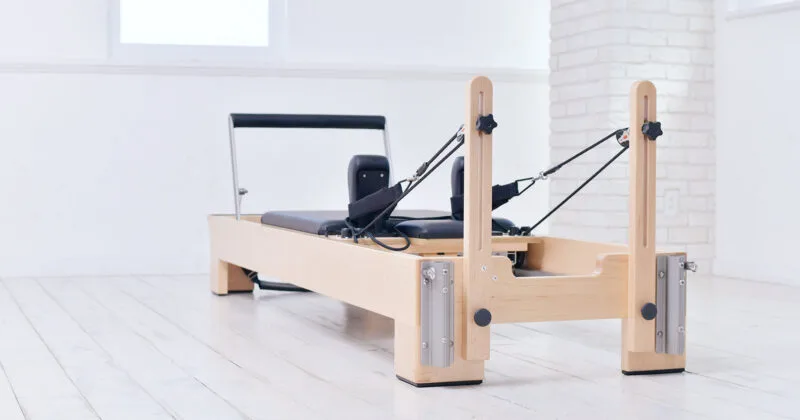
Dinner and a fixed weekly class at On the Shore Tachikawa
Before an evening visit to On the Shore Tachikawa, look for an opportunity to eat dinner so the meal need not wait until you return home.
The studio is open every day from 8:00 to 23:30, so consider the sequence of work, dinner, a lesson and returning home when choosing a time. It is a 1-minute walk from the North Exit of JR Tachikawa Station, on the third floor of the Etoile Bldg at 2-14-10 Akebonocho, Tachikawa, Tokyo.
Before fitting a lesson around dinner, check the participation restrictions. Pregnant guests cannot join lava-stone hot yoga; room-temperature maternity yoga is available. Guests told by a doctor not to exercise cannot join. Many of our yoga instructors speak English, and the studio’s owner often helps guests from the US bases in English herself.
A yoga trial is a 60-minute lesson costing ¥1,980 including tax, with 2 bath towels, 1 face towel and mat rental included. The lava-stone hot yoga studio also offers room-temperature yoga, Pilates, women-only kickboxercise, boxercise, HIIT and personal training. There are more than 25 kinds of yoga lessons. Use the studio information, prices and trial booking to arrange a visit around your meal schedule.
References
- Chrononutrition and Energy Balance: How Meal Timing and Circadian Rhythms Shape Weight Regulation and Metabolic Health — C. Reytor-González et al., 2025, Nutrients. DOI: 10.3390/nu17132135
- Chronotype Differences in Body Composition, Dietary Intake and Eating Behavior Outcomes: A Scoping Systematic Review — C. van der Merwe et al., 2022, Advances in Nutrition. DOI: 10.1093/advances/nmac093
- Later circadian timing of food intake is associated with increased body fat. — A. McHill et al., 2017, The American journal of clinical nutrition. DOI: 10.3945/ajcn.117.161588
- Role of chronotype in dietary intake, meal timing, and obesity: a systematic review. — G. P. Teixeira et al., 2022, Nutrition reviews. DOI: 10.1093/nutrit/nuac044
- Circadian nutrition and obesity: timing as a nutritional strategy — E. U. Alum, 2025, Journal of Health, Population, and Nutrition. DOI: 10.1186/s41043-025-01102-y
- Timing of food intake predicts weight loss effectiveness — M. Garaulet et al., 2013, International journal of obesity (2005). DOI: 10.1038/ijo.2012.229
- Associations of meal timing and sleep duration with incidence of obesity: a prospective cohort study — J. Lyu et al., 2024, The Journal of Nutrition, Health & Aging. DOI: 10.1016/j.jnha.2024.100220
- Late eating is associated with cardiometabolic risk traits, obesogenic behaviors, and impaired weight loss. — H. Dashti et al., 2020, The American journal of clinical nutrition. DOI: 10.1093/ajcn/nqaa264
- Prolonged, Controlled Daytime Versus Delayed Eating Impacts Weight and Metabolism — K. Allison et al., 2020, Current biology : CB. DOI: 10.1016/j.cub.2020.10.092
- Sex-specific chrono-nutritional patterns and association with body weight in a general population in Spain (GCAT study) — Luciana Pons-Muzzo et al., 2024, The International Journal of Behavioral Nutrition and Physical Activity. DOI: 10.1186/s12966-024-01639-x
Cover photo: People sit at outdoor tables beneath bright signs, with colorful bowls in the foreground. (Photo: PattayaPatrol / CC BY-SA 4.0 / Wikimedia Commons)
Information as of October 2026. For your own health, consult a doctor.
初日の汗は、予約した人だけが持ち帰れる。
2


