

The influence can start before the first bite
Social influence is not limited to the moment when you reach for another shared dish. Two studies involving adult women found that expecting to eat socially led participants to serve themselves larger portions than expecting to eat alone. The studies involved 98 and 120 participants respectively. The difference occurred even though participants were alone when they decided on their portions.[18]
No dining companion had yet supplied an example by eating in front of them. The expectation of a shared meal was already associated with a change in selection. This moves the point of interest earlier: from watching other people eat to deciding how much food to put on a plate. A social meal can shape the amount available before there is any conversation at the table.[18]
Imagine preparing dinner for friends at home. You may decide that a shared evening calls for more food before serving anything. At a restaurant, you may order the additional dishes before the conversation gets going. These familiar situations give you a reason to look at ordering and serving before the meal begins.[18]
That makes the first serving a useful practical focus. Setting out the amount you initially plan to eat allows you to see it before a succession of shared plates blurs the boundaries. The practical focus is the amount you choose before eating begins.[18]
The distinction between selection and consumption also helps when reflecting on a meal. Did the evening begin with a larger portion already planned, or did the amount change while everyone was eating? Both can be described vaguely as “I ate more with friends,” but they direct your attention to different choices. An ordering decision calls for a different review than automatically matching someone else’s second helping.[5][18]
初日の汗は、予約した人だけが持ち帰れる。
Later meals do not necessarily cancel the difference
It is tempting to assume that eating more at dinner will naturally be balanced by eating less afterward. A 2022 paper examined that question over a short period. In one laboratory experiment, 26 adult women ate all their meals for 3 days with a friend or alone, switching between the conditions in a crossover design. That design allowed the researchers to compare conditions within the same participants.[6]
Average intake totaled 7310 kcal over 3 days in the social condition and 6770 kcal in the alone condition. These are totals across the study period, not amounts eaten at one meal. The difference was statistically significant, with a reported effect size of d = 0.51. The participants and the laboratory setting still limit how broadly the result can be applied: a crossover design does not turn a small sample of adult women into a representation of all diners.[6]
Another experiment in the paper involved 63 adult women. They ate a laboratory meal alone or with two friends and then recorded everything they ate and drank over the next 3 days using electronic diaries. Average energy intake at the laboratory meal was 1209 kcal with friends and 962 kcal alone. This experiment followed eating after a particular social meal, whereas the first experiment compared all meals under different conditions over 3 days.[6]
When the laboratory meal and the subsequent diary records were combined, average totals over 4 days were 6396 kcal in the social condition and 5776 kcal in the alone condition. A statistically significant difference remained. However, the paper reported d = 0.77 for the laboratory meal and d = 0.05 for the 4-day comparison. The reported effect size for the 4-day comparison was very small.[6]
The measure d describes a difference relative to variability. The statistically significant difference and the very small reported 4-day effect size describe different aspects of the result. The first concerns evidence for a difference between conditions; the second concerns its size relative to variability.[6]
These findings suggest that increased intake during social eating is not necessarily fully compensated for afterward. The subsequent intake in the second experiment came from diary records, and neither experiment measured long-term weight change. The paper therefore does not establish that every larger social meal adds lasting body fat. It also does not support the reassuring rule that the next day’s eating always cancels the difference.[6]
The study totals are not an allowance to add to, or subtract from, each dinner in ordinary life. The food, companions, and experimental setting may differ from yours. A group average does not predict an individual’s intake, and energy consumed is not a measurement of fat gained. Keeping the unit and time period attached to each number prevents the laboratory findings from becoming an invented personal calorie rule.[6]
The 2021 review similarly called for research into the longer-term effects of social eating on energy balance and weight gain. Short-term intake and long-term body weight are outcomes that need to be examined separately. The short-term findings leave the long-term weight question open.[2]
Rather than assigning blame to one evening, you can look at what happened through the following meals. Did the amount return to its usual pattern, or did additional eating continue? That is an observation suggested by the research question, not a demand to skip meals as compensation. Looking beyond dinner is different from treating the following day as a punishment for it.[6]
Even a note about who was present cannot explain everything. Anticipating the event, staying at the table longer, and matching someone else’s amount identify different moments. Your dining room is not a laboratory, but the distinctions made in the studies help give detail to the vague memory of having “kept eating.” That detail can guide which everyday choice you want to reconsider.[3][5][18]

Common misconceptions
“Eating alone always means eating less” is not the conclusion of the entire literature. A systematic review published in 2023 included 17 studies. For social facilitation, it reported 7 studies finding increased intake when alone, 5 finding increased intake with others, and 1 reporting increases in both situations. Its overall conclusion also described a tendency toward higher intake when eating alone.[4]
That differs from the broad message of the 2019 meta-analysis showing increased intake with friends. The included studies and the way they were summarized were different, however. The 2023 review applied eligibility conditions including English-language, openly accessible experimental papers and presented counts of individual findings. The 2019 review statistically combined experiments while distinguishing friends from strangers or acquaintances. Counting findings and pooling their measured effects are different approaches.[1][4]
The question is therefore not which paper wins. Ask which meals were compared, which studies were eligible, and how the results were brought together. The later review gives a different overall picture of eating alone and eating with others. The distinction involving familiar companions is useful, but it should not be stretched into a universal claim that solitude protects everyone from larger meals.[1][4]
“Someone who eats less in company is unaffected by other people” is another mistake. Impression management can reduce intake, and modeling can work in the same direction when a companion eats less. Being influenced and overeating are not interchangeable descriptions. A reduction in meal size does not establish that the amount was appropriate for that person’s needs.[5][10]
“Enjoying conversation is the cause, so silent meals are the answer” also goes beyond the findings. In the experiment involving 37 participants, strangers diverted attention without increasing intake. In the serving studies, portions differed before eating began. Blaming conversation alone misses both the relationship with companions and the earlier decision about the food. The evidence does not require a silent table.[7][18]
Finally, matching someone’s food intake and receiving support to maintain a habit are different questions. The companion article on social support examines support and group weight-loss interventions. The studies discussed here establish neither that friends are enemies of weight management nor that having companions guarantees weight-loss success. Their focus is how the social setting can affect selection and consumption.[2][5]
What you can do today
- Before ordering or serving, decide what you will eat initially and put shared food on your own plate. In studies of 98 and 120 adult women, portions were larger when a social meal was expected, even when chosen alone before eating. Check your serving at that stage; the studies provide no portion benchmark.[18]
- When taking more from a shared dish, choose the food you still want rather than automatically matching your companion’s next serving. Do not use their intake as your only portion guide.[5]
- Once you have finished eating, pause additional orders and separate time spent talking from time spent eating. Lunch energy intake was 18% higher with friends in the comparison experiment; use that finding to notice additional orders, not as a personal reduction target.[7]
- Note your companions and the dishes you eat for 7 days, then review meals with friends, family, and acquaintances separately. Use the recording period from the observational study of 515 adults as a window onto your own meals.[3]
- Record meals and snacks for the 3 days after a social meal, and review occasions when additional eating continued. The study tracking intake after a social meal suggested that natural compensation is not necessarily sufficient.[6]
These are practical ideas drawn from the research conditions, not prescriptions with demonstrated weight-loss effects.
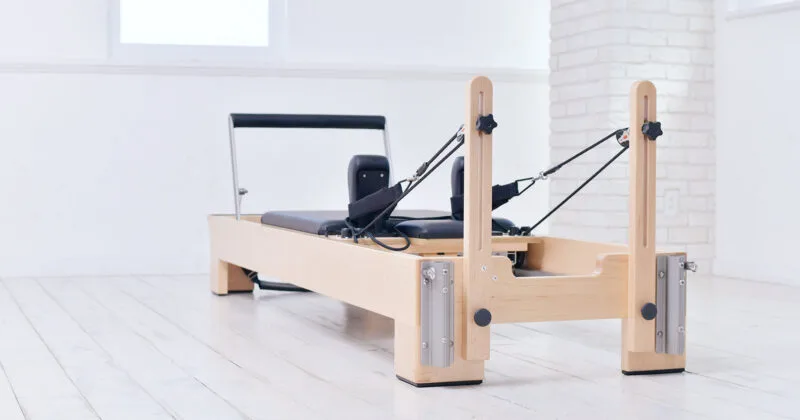
Make space between social meals for movement at On the Shore Tachikawa
While you reconsider ordering, serving, and additional food at social meals, you can also keep your usual movement plans in the calendar. On the Shore Tachikawa offers a place to maintain that habit during weeks with dinner invitations.
For yoga, the trial is a 60-minute lesson priced at ¥1,980 including tax; mat rental, 2 bath towels, and 1 face towel are included. Booking details are on the trial booking page, with charges listed on the prices page.
Guests who have been told by a doctor to refrain from exercise cannot use the studio. Pregnant guests can choose room-temperature maternity yoga, but cannot join the lava-stone hot yoga lessons.
Find the studio on 3F of Etoile Bldg, 2-14-10 Akebonocho, Tachikawa, Tokyo, a 1-minute walk from JR Tachikawa Station’s North Exit. For fitting movement around your social calendar, it is open every day 8:00–23:30.
The lava-stone hot yoga studio has 25+ kinds of yoga lessons. Alongside hot yoga, its options are room-temperature yoga, Pilates, personal training, HIIT, boxercise, and women-only kickboxercise. Consult the studio website when planning a visit. Many of our yoga instructors speak English, and the studio’s owner often helps guests from the US bases in English herself.
References
- A systematic review and meta-analysis of the social facilitation of eating — Ruddock et al., 2019
- The social facilitation of eating: Why does the mere presence of others cause an increase in energy intake? — H. Ruddock et al., 2021. Physiology & behavior. DOI: 10.1016/j.physbeh.2021.113539
- Family and friends produce greater social facilitation of food intake than other companions. — J. de Castro, 1994. Physiology & behavior. DOI: 10.1016/0031-9384(94)90286-0
- The Effect of Eating Alone and Eating with Familiar or Unfamiliar Others on Food Intake: A Systematic Review — Noraishah Mohamed Nor et al., 2023. JANUARY 2023. DOI: 10.47836/mjmhs.19.1.35
- Modeling of food intake: a meta-analytic review — S. Spanos et al., 2015. Social Influence. DOI: 10.1080/15534510.2015.1008037
- Social facilitation of energy intake in adult women is sustained over three days in a crossover laboratory experiment and is not compensated for under free-living conditions. — H. Ruddock et al., 2022. Appetite. DOI: 10.1016/j.appet.2022.106141
- Situational effects on meal intake: A comparison of eating alone and eating with others. — M. Hetherington et al., 2006. Physiology & behavior. DOI: 10.1016/j.physbeh.2006.04.025
- Effects of the presence of others on food intake: a normative interpretation. — C. Herman et al., 2003. Psychological bulletin. DOI: 10.1037/0033-2909.129.6.873
- People serve themselves larger portions before a social meal — H. Ruddock et al., 2021. Scientific Reports. DOI: 10.1038/s41598-021-90559-y
Cover photo: Several people sit at restaurant tables and eat together in the same dining space. (Photo: Les Anderson lesanderson / CC0 / Wikimedia Commons)
Information as of October 2026. For your own health, consult a doctor.
More from Diet Science (English)
- Metabolic adaptation and why your weight loss can slow down
- Body composition and weight loss beyond the bathroom scale
- Food logging and weight loss: what matters beyond perfect records
- Protein and weight loss beyond fullness and the bathroom scale
- Dietary fiber and weight loss: what gut research really shows
- Low-carb vs low-fat diets: what long-term weight loss shows
- Time-restricted eating and weight loss: what trials reveal
- Breakfast and weight loss: what eating or skipping really changes
- Sleep deprivation and appetite: why nighttime snacks add up
- Stress and emotional eating beyond the cortisol explanation
- Aerobic vs resistance training for fat loss and lean mass
- HIIT and body fat loss: what shorter workouts can really offer
- Strength training, metabolism and the science of weight regain
- Yoga and weight loss: what body composition research shows
- Hot yoga calories and sweat: what a lighter scale really means
- Pilates and body composition: what posture and fat studies show
- NEAT and weight loss: what everyday movement can really do
- Daily steps and weight loss: what 8,000 steps really tells us
- Keeping weight off: what long-term maintainers do and how they recover
- Daily self-weighing and weight loss: how to use the numbers
- Water before meals and weight loss: what 500 ml trials show
- Sugary drinks and sweeteners: what replacement means for weight
- Alcohol and weight loss through calories, appetite and fat use
- Ultra-processed foods and overeating through the trial evidence
- Eating rate and weight loss: what slower chewing can change
- Menopause weight gain and why your waist can change first
- Postpartum weight loss through diet, exercise and support
- Sarcopenia and protein: protecting muscle as you grow older
- Visceral fat in men and what exercise changes beyond weight
- Supervised exercise and weight loss: building lasting habits
- GLP-1 drugs and exercise for muscle and weight maintenance
- Weight cycling and metabolism: what 23 studies actually found
- Low GI diets and weight loss: blood sugar is only part of the story
- Mediterranean diet trials separate weight loss from fat loss
- Plant-based diets and weight loss depend on what trials compare
- Snacking frequency alone cannot tell you how weight will change
- Late eating and weight gain: what meal timing trials show
- Portion size and weight loss: change the serving before the plate
- Eating out and weight loss: what meal frequency really tells us
- Menu calorie labeling changes some orders, but results vary
- Coffee and caffeine affect metabolism more clearly than weight
- Green tea catechins and weight loss: what the numbers mean
- Fat burner supplements can raise metabolism without fat loss
- Meal replacements for weight loss and the return to regular food
- Probiotics show small weight differences, not a uniform effect
- Genetics and obesity: what FTO studies say about weight loss
- Weight stigma and self-criticism can accompany daily barriers
- Exercise and appetite: why hunger and eating back calories differ
- Weekend warrior exercise and what it means for weight loss
- Exercise timing and weight loss: morning or evening workouts?
- Fat-burning zone measures fuel use, not future weight loss
- Interval walking for weight loss: what the trials really show
- Stair climbing for weight loss: what fitness studies really show
- Holiday weight gain and why it may still be there in spring
- Menstrual cycle and weight loss: reading hunger and the scale
- Energy density and weight loss without shrinking every meal
- Whole grains and weight loss depend on more than a staple swap
- Nuts and weight loss: why high fat does not mean weight gain
- Body fat measurement accuracy in home scales and DXA scans
- Wearables and weight loss: why more steps may not move the scale
- Alternate-day fasting and 5:2 compared with daily dieting
- Ketogenic diets and weight loss beyond the first few months
- Dairy and calcium have different results in weight-loss trials
- Legumes and weight loss: what fullness can and cannot tell us
- Fish and omega-3 offer no consistent shortcut to weight loss
- Fruit and vegetables for weight loss: what adding more changes
- Meal sequence and blood sugar: what vegetables first can change
- Distracted eating and why lunch can affect your next snack
- Home food environment connects shopping, meals and weight
- Mindful eating and weight loss: what changes beyond the scale
- Implementation intentions can help diet and exercise plans work
- Financial incentives for weight loss and what happens afterward
- Social support and weight loss depend on what a partner does
- Rapid versus gradual weight loss and what happens afterward
- Food diary underreporting and why calorie totals can mislead
- BMR estimation equations can miss your individual metabolism
- Sedentary breaks change blood sugar without proving weight loss
- Active commuting may mean smaller weight gains over the years
- Swimming and weight loss: what changes beyond the scales?
- Running vs walking changes the comparison for weight loss
- Resistance training volume and frequency for muscle and fat
- Cold exposure activates brown fat but may not reduce weight
- Sauna and bathing for weight loss: what the scale cannot tell
- Weight loss and bone density depend on diet and exercise
- Weight loss and mood: why mental health follows its own path
- Shift work and weight gain beyond the late-night snack story
- Remote work changes meals, but weight gain is not inevitable
- Weekly weight fluctuations and what a Monday gain really means
- High-protein diet types and what their weight-loss results mean
All Diet Science articles (English)
初日の汗は、予約した人だけが持ち帰れる。
2


