


Does higher resting metabolism justify eating more?
Resting energy expenditure is the energy the body uses at rest. It matters to discussions of food intake, but it is distinct from total daily expenditure, which also includes exercise and everyday activity. The 2024 study used indirect calorimetry, which estimates expenditure through respiratory measurements, to compare phases. Its result concerns resting expenditure under the study’s measurement conditions, rather than the total energy someone uses during a busy day.[9]
In the 38 naturally menstruating women, luteal-phase resting expenditure averaged 40 kcal per day higher than follicular-phase expenditure. The 95% confidence interval ranged from −2 to 82 kcal per day, and the difference was not statistically significant. For this resting-expenditure comparison, the interval spanned a small decrease as well as an increase, including no difference. Reporting only the positive average would hide that uncertainty and overstate what the full-group analysis established.[9]
The researchers also performed a secondary analysis excluding 4 women with unusually large differences between measurements. In that analysis, the luteal-phase difference was 44 kcal per day, with a 95% confidence interval of 12–76 kcal per day, and was significant. Both analyses should remain visible. The estimate depended on the analysis used; choosing only one result would hide that uncertainty.[9]
The same study measured blood hormones and assessed diet during the 3 days after measurement. In the naturally menstruating group, luteal-phase fat intake, leptin and one thyroid hormone were higher, while another thyroid hormone was lower. In the oral-contraceptive group, the mean resting expenditure difference was −2 kcal per day, with a 95% confidence interval of −82 to 79 kcal per day. Measuring food, hormones and expenditure together produced several findings, rather than one universal metabolic rule.[9]
A 2026 systematic review assembled 7 studies of resting metabolic rate in healthy, naturally menstruating women. Of these, 5 reported a tendency toward higher luteal-phase metabolism and 4 reported statistically significant increases. Estimated increases were approximately 30–120 kcal per day, or about 3–5%. The authors described the shift as small and potentially overlapping with ordinary day-to-day biological variation, methodological limitations or measurement error. The number of positive findings and the modest size of those findings both matter.[15]
The review searched papers published from January 2020 to September 2025, selecting 7 eligible studies from 331 records. Its authors called for longitudinal studies that repeatedly measure the same people and confirm ovulation. That recommendation follows from the uncertainty in the existing comparisons. A small average difference is difficult to interpret confidently when ordinary variation and measurement limitations may occupy similar ground. Better phase confirmation and repeated measurements would help distinguish those possibilities.[15]
Other results remain less clear. The 18-person appetite study found no significant resting metabolic rate difference, although the mid-luteal average tended to be 104 kcal per day higher, with substantial variation. The observational study of 21 active women also found no significant phase differences in resting metabolic rate. A positive average can coexist with a nonsignificant comparison; describing the direction of the average is not the same as claiming a reliably detected increase.[3][6]
It is tempting to subtract the 40 kcal expenditure difference from the 168 kcal intake difference and call the remainder a premenstrual surplus. Those averages came from different people, different timings and different methods. They are not a paired account of one person’s intake and expenditure. Combining them cannot establish how much fat anyone gains before a period. Keeping the figures attached to their original studies prevents an apparently simple calculation from implying evidence the research did not provide.[1][9]
初日の汗は、予約した人だけが持ち帰れる。
Is a higher scale reading the same as more body fat?
An experience of gaining weight before menstruation is different from a rule that weight always rises in the luteal phase. A 1983 study of 34 women compared the middle of the follicular and luteal phases and found significantly higher body weight and reported food intake in the luteal phase. The paper’s abstract does not report how many kilograms weight increased or whether body fat increased.[14]
The recent observational study of 21 physically active women found the opposite direction in its comparison: mean weight fell significantly from 65.2 kg in the early follicular phase to 64.9 kg in the mid-luteal phase. Its participants and measurement windows differed from those in the older study. Both concern menstrual-cycle weight, but the phrase alone does not make their starting points and endpoints equivalent. The comparison period must travel with the result.[6][14]
The newer study also assessed body composition using bioelectrical impedance, a method based on the body’s electrical properties. The extracellular water ratio decreased between the early follicular and mid-luteal phases. Estimates of fat-free mass and body fat percentage showed no significant differences. The authors interpreted the weight and impedance fluctuations as more likely reflecting hydration shifts than changes in tissue composition. Weight, water-related measurements and estimated body composition offered different pieces of the same observation.[6]
That interpretation came from measuring those outcomes together. It does not determine the exact composition of your own weight change this morning.[6]
Before connecting last night’s hunger to today’s weight, consider actual intake, menstrual timing and measurement circumstances separately. The point is to identify a recurring situation without forcing unrelated numbers into one explanation. The review describes intake variation even between cycles in the same person, while the body-composition study shows why weight need not track changes in estimated fat. An observation can be useful while its precise cause remains unresolved.[2][6]

Common misconceptions
“The luteal phase makes overeating inevitable.” The pooled evidence supports a tendency toward greater intake, but it does not establish the same response in everyone. The detailed comparison found no significant difference in either appetite or consumption. Feeling hungry, craving a food and eating more are separate measurements. A phase label cannot substitute for finding out which of those, if any, changed for you. Neither stronger hunger nor the absence of it needs to be judged against a compulsory monthly script.[1][3]
“Cutting food sharply in the follicular phase is a proven way to lose weight faster.” A 2007 review considered tailoring dietary advice and the degree of energy restriction to menstrual phases. Its conclusion called for studies testing weight-loss outcomes from that approach. It presented a possible use of the physiology, rather than evidence that a phase-based program had already improved long-term results. Explaining why a strategy might be plausible does not establish that the strategy works.[19]
“Before a period, exercise will always make you eat more afterward.” A comparison in 13 young women tested 30 minutes of moderate-intensity running in the follicular, ovulatory and luteal phases. Postexercise appetite-regulating measures and perceived hunger did not differ significantly by phase. Intake recorded across a 3-day window: the day before, the day of and the day after each exercise session also showed no phase effect. The result gives no support to inevitable phase-related overeating after that tested activity.[17]
The participants had regular menstrual cycles and did not use oral contraceptives. The exercise comparison involved a single running session in each phase. It did not establish responses to other activities or outcomes from a long-term weight-loss program. This is a useful limit when deciding what the finding means for a workout: it addresses the tested running sessions and appetite response, rather than guaranteeing that every form of exercise has the same result.[17]
What you can do today
- Prepare meals according to your own hunger and actual intake, rather than adding a snack just because it is the luteal phase. The observed 168 kcal per day difference describes average intake; it is not an automatic addition to your menu.[1][3]
- If you already run, consider 30 minutes of moderate-intensity running according to how you feel that day. The study found no phase difference in appetite or intake after that activity, so expected premenstrual overeating alone need not be a reason to cancel.[17]
- To compare eating across phases, note when menstruation starts and keep 3-day food notes at different times in the cycle. The observational study combined dietary records with confirmation of cycle timing.[16]
- To compare exercise and appetite, record what you eat and when you feel hungry on the day before, the day of and the day after a session: 3 days in total, matching the running study’s intake-recording window. If you have a history of disordered eating, or recording food and weight feels burdensome, speak with a doctor or an appropriate professional before starting.[17]
Choosing a cycle-aware exercise habit at On the Shore Tachikawa
When considering exercise alongside menstrual-cycle changes in appetite, check the activity and participation conditions first. On the Shore Tachikawa offers a place to maintain an exercise habit within your everyday schedule.
On the Shore Tachikawa is a lava-stone hot yoga studio with room-temperature yoga as well. Pregnant guests cannot join lava-stone hot yoga; room-temperature maternity yoga is available. Guests told by a doctor not to exercise cannot join.
A trial yoga lesson costs ¥1,980 including tax. The 60-minute lesson includes 2 bath towels, 1 face towel and mat rental. Details are available through the prices and trial booking page.
The studio is a 1-minute walk from the North Exit of JR Tachikawa Station, at 3F Etoile Bldg, 2-14-10 Akebonocho, Tachikawa, Tokyo. It is open every day 8:00–23:30.
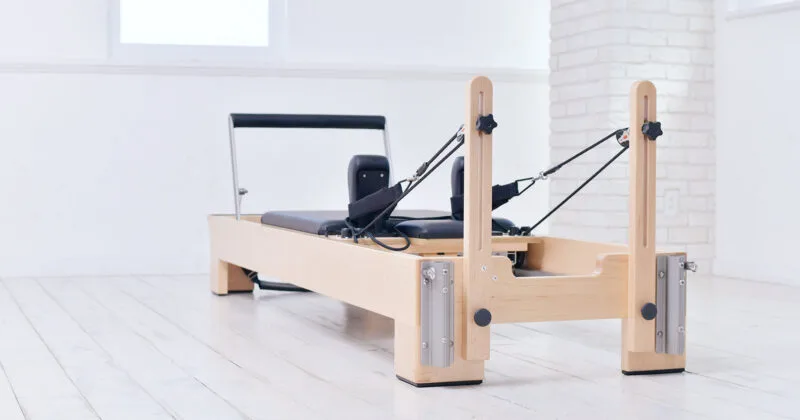
Many of our yoga instructors speak English, and the studio’s owner often helps guests from the US bases in English herself. There are 25+ kinds of yoga lessons, along with Pilates, women-only kickboxercise, boxercise, HIIT and personal training. The studio website lists the studio’s activities.
References
- The Effect of the Menstrual Cycle on Energy Intake: A Systematic Review and Meta-analysis — Jessica A. L. Tucker et al., 2024, Nutrition Reviews. DOI: 10.1093/nutrit/nuae093
- Dietary energy intake across the menstrual cycle: a narrative review — M. Rogan et al., 2022, Nutrition Reviews. DOI: 10.1093/nutrit/nuac094
- Energy intake and appetite in laboratory and free-living conditions may be consistent across menstrual cycle phases. — Miranda Smith et al., 2025, Appetite. DOI: 10.1016/j.appet.2025.108314
- Menstrual Cycle Phase Is Associated With Changes in Body Weight, Bioimpedance, and Carbohydrate Intake, but Not in Resting Metabolic Rate in Physically Active Females. — Michaela Wagner et al., 2026, International journal of sport nutrition and exercise metabolism. DOI: 10.1123/ijsnem.2026-0015
- Resting Energy Expenditure, Metabolic and Sex Hormones in Two Phases of the Menstrual and Hormonal Contraceptive Cycles — Ida E. Löfberg et al., 2024, Medicine & Science in Sports & Exercise. DOI: 10.1249/mss.0000000000003518
- Food intake, body weight, and sweetness preferences over the menstrual cycle in humans. — P. Pliner et al., 1983, Physiology & behavior. DOI: 10.1016/0031-9384(83)90240-8
- Resting metabolic rate fluctuations across the menstrual cycle: a systematic review — Anežka Hurtová et al., 2026, Frontiers in Physiology. DOI: 10.3389/fphys.2026.1778735
- Energy intakes are higher during the luteal phase of ovulatory menstrual cycles. — S. I. Barr et al., 1995, The American journal of clinical nutrition. DOI: 10.1093/ajcn/61.1.39
- No Effect of Menstrual Phase on Appetite-Regulatory Parameters Following a Moderate-Intensity Exercise Session. — Derek P. D. Bornath et al., 2025, Medicine and science in sports and exercise. DOI: 10.1249/mss.0000000000003839
- Impact of the menstrual cycle on determinants of energy balance: a putative role in weight loss attempts — L. Davidsen et al., 2007, International Journal of Obesity. DOI: 10.1038/sj.ijo.0803699
Cover photo: Close-up of hands holding a pen and writing in an open planner. (Photo: Shixart1985 / CC BY 2.0 / Wikimedia Commons)
Information as of October 2026. For your own health, consult a doctor.
More from Diet Science (English)
- Metabolic adaptation and why your weight loss can slow down
- Body composition and weight loss beyond the bathroom scale
- Food logging and weight loss: what matters beyond perfect records
- Protein and weight loss beyond fullness and the bathroom scale
- Dietary fiber and weight loss: what gut research really shows
- Low-carb vs low-fat diets: what long-term weight loss shows
- Time-restricted eating and weight loss: what trials reveal
- Breakfast and weight loss: what eating or skipping really changes
- Sleep deprivation and appetite: why nighttime snacks add up
- Stress and emotional eating beyond the cortisol explanation
- Aerobic vs resistance training for fat loss and lean mass
- HIIT and body fat loss: what shorter workouts can really offer
- Strength training, metabolism and the science of weight regain
- Yoga and weight loss: what body composition research shows
- Hot yoga calories and sweat: what a lighter scale really means
- Pilates and body composition: what posture and fat studies show
- NEAT and weight loss: what everyday movement can really do
- Daily steps and weight loss: what 8,000 steps really tells us
- Keeping weight off: what long-term maintainers do and how they recover
- Daily self-weighing and weight loss: how to use the numbers
- Water before meals and weight loss: what 500 ml trials show
- Sugary drinks and sweeteners: what replacement means for weight
- Alcohol and weight loss through calories, appetite and fat use
- Ultra-processed foods and overeating through the trial evidence
- Eating rate and weight loss: what slower chewing can change
- Menopause weight gain and why your waist can change first
- Postpartum weight loss through diet, exercise and support
- Sarcopenia and protein: protecting muscle as you grow older
- Visceral fat in men and what exercise changes beyond weight
- Supervised exercise and weight loss: building lasting habits
- GLP-1 drugs and exercise for muscle and weight maintenance
- Weight cycling and metabolism: what 23 studies actually found
- Low GI diets and weight loss: blood sugar is only part of the story
- Mediterranean diet trials separate weight loss from fat loss
- Plant-based diets and weight loss depend on what trials compare
- Snacking frequency alone cannot tell you how weight will change
- Late eating and weight gain: what meal timing trials show
- Portion size and weight loss: change the serving before the plate
- Eating out and weight loss: what meal frequency really tells us
- Menu calorie labeling changes some orders, but results vary
- Coffee and caffeine affect metabolism more clearly than weight
- Green tea catechins and weight loss: what the numbers mean
- Fat burner supplements can raise metabolism without fat loss
- Meal replacements for weight loss and the return to regular food
- Probiotics show small weight differences, not a uniform effect
- Genetics and obesity: what FTO studies say about weight loss
- Weight stigma and self-criticism can accompany daily barriers
- Exercise and appetite: why hunger and eating back calories differ
- Weekend warrior exercise and what it means for weight loss
- Exercise timing and weight loss: morning or evening workouts?
- Fat-burning zone measures fuel use, not future weight loss
- Interval walking for weight loss: what the trials really show
- Stair climbing for weight loss: what fitness studies really show
- Holiday weight gain and why it may still be there in spring
- Energy density and weight loss without shrinking every meal
- Whole grains and weight loss depend on more than a staple swap
- Nuts and weight loss: why high fat does not mean weight gain
- Body fat measurement accuracy in home scales and DXA scans
- Wearables and weight loss: why more steps may not move the scale
All Diet Science articles (English)
初日の汗は、予約した人だけが持ち帰れる。
2

