


In men with metabolic syndrome, more than weight changed
A randomized controlled trial compared 21 men assigned to aerobic exercise, 21 assigned to combined aerobic and resistance exercise, and 20 in a control group receiving no intervention. The exercise intervention lasted 12 weeks. Mean ages across the groups were approximately 34–38 years, and mean starting waist circumference was approximately 115 cm.[6] The study speaks directly to a concern men may bring from a health check. However, it involved 62 participants, so its results cannot automatically be generalized to all men with a similar concern.
Visceral-fat indicators gradually decreased in both exercise groups. In the aerobic group, concentrations of asprosin also declined during the intervention.[6] Asprosin is a substance that rises with excess fat tissue and is involved in glucose metabolism and hunger and fullness.[6] You do not need to memorize the name to understand the useful point: researchers followed a fat indicator and a substance involved in metabolism, rather than relying on weight alone. The study was designed to examine several aspects of the response to exercise.
The combined-exercise group did not show a significant change in asprosin concentration. It did show an increase in the ratio of fat-free mass to fat mass and a decrease in an indicator of insulin resistance.[6] Fat-free mass refers to body components other than fat; the ratio compares those components with fat mass. Insulin resistance describes reduced responsiveness to the action of insulin, which helps regulate blood glucose.
The researchers assessed body composition, glucose and lipid metabolic indicators, and asprosin at 4 points: before the intervention, after 6 weeks, after 12 weeks, and 4 weeks after training ended. In the aerobic group, the decline in asprosin was evident within 6 weeks, while the control group showed a gradual increase.[6] Assessments during and after training allowed researchers to follow the timing of changes. It was more detailed than a design that simply compared a starting measurement with a final one.
The everyday application is to bring your health-check results into the discussion about why you want to exercise. You might be concerned about waist size, or your doctor might have highlighted a metabolic result. Those are useful details to clarify before judging a plan’s success. The trial’s range of measurements illustrates why the aim and the assessment should be connected.[6] Interpretation of your test results belongs with your doctor; understanding what researchers measured can help you ask which part of your own report needs explanation.
初日の汗は、予約した人だけが持ち帰れる。
How resistance training and food fit alongside aerobic exercise
Resistance-training results are easier to interpret when the participants are kept in view. In the large network meta-analysis of people with overweight or obesity, resistance training, aerobic exercise, their combination and interval training were all beneficial for visceral fat.[2] Resistance training did not have a significant effect on body weight. In subgroup analyses, its visceral-fat benefit was found in men and in participants with body-fat percentages below 40%, but was not confirmed in women or those with body-fat percentages of 40% or above. The authors ranked resistance training as the least effective intervention among those compared.[2]
That is not the only conclusion in the literature. A review of 33 trials involving 1,740 people with prediabetes or type 2 diabetes found that aerobic exercise, combined exercise and interval training reduced visceral fat compared with controls. Resistance training alone did not show a clear effect.[7] Its standardized effect size was −0.25, with a 95% confidence interval of −0.54 to 0.03. The interval included the value representing no effect, which helps explain why the finding was not considered statistically significant.[7]
A standardized effect size allows researchers to combine studies with different measurement scales. In the prediabetes and diabetes review, the effect size was −0.63 for combined training and −0.38 for aerobic exercise, with 95% confidence intervals of −0.95 to −0.30 and −0.59 to −0.18, respectively.[7] Combined training was assessed in 5 trials, aerobic training in 24 and resistance training in 8. Interval training was assessed in 11 trials, with an effect size of −0.53 and a 95% confidence interval of −0.86 to −0.19.[7] The evidence available for each category was therefore not identical.
The earlier review of exercise dose also failed to find significant visceral-fat effects for resistance exercise or combined aerobic and resistance exercise.[17] The newer network meta-analysis, by contrast, found reductions with all the exercise interventions, including combined and resistance training.[19] These differences should remain part of the account. The health status of participants in research on overweight and obesity differs from that of participants with prediabetes or diabetes.[2][7] The studies do not justify erasing the uncertainty to declare a universal winning exercise.
Aerobic exercise remains a reasonable option to consider in this evidence, while the role of resistance training can be discussed in relation to other aims as well.
Food intake belongs in the discussion too. A meta-analysis of 40 randomized controlled trials involving 2,190 adults with overweight or obesity assessed visceral fat by imaging. Both exercise and calorie restriction reduced visceral fat compared with controls.[5] The effect size was −0.28 for exercise and −0.53 for calorie restriction. The respective 95% confidence intervals were −0.37 to −0.19 and −0.71 to −0.35.[5] Controls were under conditions in which energy intake and expenditure were balanced. The reported effects concern comparisons with those controls.
After accounting for the weekly energy deficit created by the interventions, the review found a dose-response relationship for exercise but did not establish a clear dose-response relationship for calorie restriction.[5] Finding an overall reduction and finding that a larger dose produces a larger reduction are separate questions. The authors suggested that fewer calorie-restriction studies might help explain the latter result. Most studies had a moderate risk of bias, meaning a risk that features of study design or conduct could distort the results.[5]
This evidence does not specify a particular food or an exact calorie reduction for you to use at home.[5] Before turning dinner into an extreme restriction plan, separate what you currently eat from what exercise you currently do, so that the question you bring for advice becomes more concrete. Our article on low-carbohydrate versus low-fat diets addresses comparisons between eating approaches. Here, the relevant point is that visceral-fat management need not be framed as a contest won by exercise alone, or as a competition between numbers measured in different units.

Common misconceptions
“If my weight has not fallen, my visceral fat has not fallen either.” A review of 17 randomized controlled trials involving 3,602 participants assessed visceral fat by imaging during interventions lasting at least 6 months. Both exercise and medication interventions reduced visceral fat.[16] Exercise produced greater visceral-fat reduction relative to weight loss, leading the authors to conclude that weight alone could underestimate its benefits. However, the absolute reduction in visceral fat was greater in the medication trials.[16] Both findings belong in the account; they describe different ways of comparing the results.
“Once the weight returns, every earlier improvement disappears.” A study followed participants from dietary and physical-activity intervention trials at 5 and 10 years after completion. Researchers reached 366 of 381 eligible participants. Despite complete weight regain, some improvements in waist circumference and abdominal fat, including visceral fat, were preserved.[15] Changes in liver and pancreatic fat did not follow the same course.[15]
In that follow-up, a 10% reduction in visceral fat during the intervention was associated with a 28% lower risk of developing diabetes afterward. The hazard ratio was 0.72, with a 95% confidence interval of 0.54–0.94.[15] The association was assessed using a multivariable model, which considers several variables in the analysis. It cannot guarantee a preventive effect for an individual. The original interventions were 18-month trials combining different eating patterns with structured physical activity, followed by long-term observation.[15] That setting matters when interpreting a striking risk figure.
“Higher intensity gives everyone the quickest solution.” Higher-intensity exercise ranked favorably in comparative visceral-fat research, but those rankings describe pooled findings in the study populations.[2][19] The large aerobic-exercise meta-analysis also estimated about 2 more mild-to-moderate adverse events per 100 participants, mostly musculoskeletal symptoms. Evidence certainty for this result was rated low.[4] Choosing intensity involves considering the burden of doing the activity as well as the possible benefit. A ranking should support a discussion about suitable exercise, rather than settle that discussion by itself.
What you can do today
- If moderate aerobic activity is manageable for you, plan an activity such as walking 3 times per week for 30–60 minutes per session. The review’s effective pattern came from interventions lasting 12–16 weeks; it is not an obligation to complete the full amount on your first day.[17]
- If you already exercise aerobically at moderate intensity or above, consider whether you can sustainably exceed 150 minutes per week. In supervised trials lasting at least 8 weeks, this amount might be needed for clinically important changes.[4] Use the study setting as context when considering your own schedule.
- Choose parts of your current meals where you can reduce energy intake, and adjust quantities while avoiding extreme restriction. Imaging-based trials found a visceral-fat reduction with calorie restriction, but the analysis does not provide a specific food choice or reduction amount for an individual.[5]
- Record weight, waist circumference, measurement conditions, and the type and duration of exercise together. The waist review linked changes in waist size with changes in visceral fat; recording both weight and waist can help organize questions about your progress.[1][16]
- If you are receiving treatment or taking medication, especially for blood pressure or blood glucose, consult your doctor before increasing exercise amount or intensity. Do not change medication doses yourself. Bring your health-check results and discuss which changes to assess and what workload is suitable for you, keeping in mind the musculoskeletal symptoms reported in aerobic-exercise trials.[4]
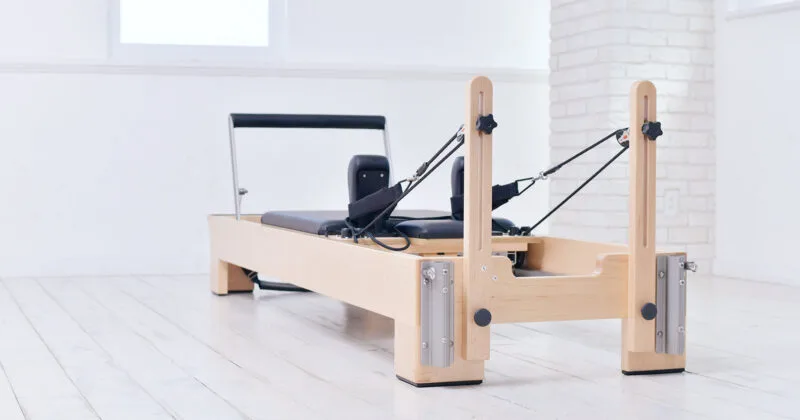
Planning weekly movement beyond the scale at On the Shore Tachikawa
When a waist measurement on a health-check report prompts you to reconsider exercise, choosing somewhere you can attend regularly helps turn that intention into a routine. On the Shore Tachikawa offers a place to keep that movement habit going.
On the Shore Tachikawa is a lava-stone hot yoga studio at 3F Etoile Bldg, 2-14-10 Akebonocho, Tachikawa, Tokyo, a 1-minute walk from the North Exit of JR Tachikawa Station. It is open every day 8:00–23:30.
The yoga trial includes a 60-minute lesson and rental of a mat, 2 bath towels and 1 face towel for ¥1,980 including tax. Details are available on the prices page, with reservations through the trial booking page.
HIIT and personal training are among the studio’s activities, alongside boxercise and Pilates. There is also women-only kickboxercise. The yoga selection comprises more than 25 kinds of lessons, with both room-temperature yoga and hot yoga in a studio fitted with lava-stone plates. Many of our yoga instructors speak English, and the studio’s owner often helps guests from the US bases in English herself.
Guests who have been told by a doctor not to exercise cannot join. Pregnant guests cannot participate in lava-stone hot yoga; room-temperature maternity yoga is available.
References
- Effect of aerobic exercise on waist circumference in adults with overweight or obesity: A systematic review and meta‐analysis — Alexander E. Armstrong et al., 2022, Obesity Reviews. DOI: 10.1111/obr.13446
- Effects of various exercise types on visceral adipose tissue in individuals with overweight and obesity: A systematic review and network meta‐analysis of 84 randomized controlled trials — Xiao-Ke Chen et al., 2023, Obesity Reviews. DOI: 10.1111/obr.13666
- Aerobic Exercise and Weight Loss in Adults — A. Jayedi et al., 2024, JAMA Network Open. DOI: 10.1001/jamanetworkopen.2024.52185
- Dose–response effects of exercise and caloric restriction on visceral adiposity in overweight and obese adults: a systematic review and meta-analysis of randomised controlled trials — Francesco Recchia et al., 2023, British Journal of Sports Medicine. DOI: 10.1136/bjsports-2022-106304
- Exercise-induced effects on asprosin and indices of atherogenicity and insulin resistance in males with metabolic syndrome: a randomized controlled trial — A. Suder et al., 2024, Scientific Reports. DOI: 10.1038/s41598-024-51473-1
- Comparative Efficacy of Exercise Type on Visceral Adipose Tissue in Patients With Prediabetes and Type 2 Diabetes Mellitus: A Systematic Review With Pairwise and Network Meta‐Analyses — M. Khalafi et al., 2025, Obesity Reviews. DOI: 10.1111/obr.70031
- Lifestyle-Induced Visceral Fat Loss as a Key Target for Durable Cardiometabolic Health: MRI-Assessed 5- and 10-Year Follow-Up After 2 Clinical Trials — Hadar Klein et al., 2026, Circulation. DOI: 10.1161/circulationaha.125.079009
- The Impact of Exercise and Pharmacological Interventions on Visceral Adiposity: A Systematic Review and Meta-Analysis of Long-term Randomized Controlled Trials — Shreya G. Rao et al., 2019, Mayo Clinic proceedings. DOI: 10.1016/j.mayocp.2018.09.019
- Effect of exercise intervention dosage on reducing visceral adipose tissue: a systematic review and network meta-analysis of randomized controlled trials — Yu-Hsuan Chang et al., 2021, International Journal of Obesity. DOI: 10.1038/s41366-021-00767-9
- Optimal exercise modality and dose for reducing visceral adipose tissue in overweight or obese adults: a network meta-analysis and dose-response study — Wenjie Xu et al., 2026, BMC Sports Science, Medicine and Rehabilitation. DOI: 10.1186/s13102-026-01793-8
Cover photo: A lone visitor runs downhill across the broad sandy slope of a dune. (Photo: Daniel Schwen / CC BY-SA 3.0 / Wikimedia Commons)
Information as of October 2026. For your own health, consult a doctor.
More from Diet Science (English)
- Metabolic adaptation and why your weight loss can slow down
- Body composition and weight loss beyond the bathroom scale
- Food logging and weight loss: what matters beyond perfect records
- Protein and weight loss beyond fullness and the bathroom scale
- Dietary fiber and weight loss: what gut research really shows
- Low-carb vs low-fat diets: what long-term weight loss shows
- Time-restricted eating and weight loss: what trials reveal
- Breakfast and weight loss: what eating or skipping really changes
- Sleep deprivation and appetite: why nighttime snacks add up
- Stress and emotional eating beyond the cortisol explanation
- Aerobic vs resistance training for fat loss and lean mass
- HIIT and body fat loss: what shorter workouts can really offer
- Strength training, metabolism and the science of weight regain
- Yoga and weight loss: what body composition research shows
- Hot yoga calories and sweat: what a lighter scale really means
- Pilates and body composition: what posture and fat studies show
- NEAT and weight loss: what everyday movement can really do
- Daily steps and weight loss: what 8,000 steps really tells us
- Keeping weight off: what long-term maintainers do and how they recover
- Daily self-weighing and weight loss: how to use the numbers
- Water before meals and weight loss: what 500 ml trials show
- Sugary drinks and sweeteners: what replacement means for weight
- Alcohol and weight loss through calories, appetite and fat use
- Ultra-processed foods and overeating through the trial evidence
- Eating rate and weight loss: what slower chewing can change
- Menopause weight gain and why your waist can change first
- Postpartum weight loss through diet, exercise and support
- Sarcopenia and protein: protecting muscle as you grow older
- Supervised exercise and weight loss: building lasting habits
All Diet Science articles (English)
初日の汗は、予約した人だけが持ち帰れる。
2

