


After weight loss, success can mean less regain
Studies of active weight loss and studies of maintaining a previous loss evaluate different outcomes. During maintenance, a smaller amount of regain may count as a benefit. A scale reading that does not keep falling therefore does not automatically mean the maintenance effort has no value. The question has shifted from how much weight is lost to how much returns.[1][5]
One randomized controlled trial enrolled 314 people who had lost an average of 19.3 kg over the previous two years. It compared a maintenance program emphasizing daily self-weighing and self-regulation delivered face to face or online with a control group receiving regular newsletters. Average regain over 18 months was 2.5 kg with face-to-face support, 4.7 kg with internet support, and 4.9 kg in controls. The mean regain differed significantly between the face-to-face and control groups.[5]
The same study asked how many people regained at least 2.3 kg. The proportions were 45.7% with face-to-face support, 54.8% with internet support, and 72.4% in controls. On this measure, both support groups did better than controls. A difference in average regain and a difference in the proportion crossing a threshold are separate findings. Describing the internet group requires saying which outcome is being discussed.[5]
Weekly weighing has also been studied in maintenance. A quasi-randomized controlled trial involved 3,768 men and women with overweight or obesity after a weight-loss program. The intervention combined telephone contact, provision of scales, and encouragement to weigh weekly and record readings on a card. Quasi-randomization describes an allocation approach that does not necessarily offer the same conditions as conventional random assignment.[1]
Both groups regained weight. Average regain was 1.23 kg in the intervention group and 1.83 kg in controls. After adjustment for background differences, the between-group difference was 0.68 kg, with a 95% confidence interval of 0.12–1.24 kg. The intervention prevented some regain; it did not eliminate average regain.[1]
An unfavorable result came from a UK maintenance trial involving 288 adults who had obesity before losing at least 5% of their weight in the previous 12 months. Adding a low-intensity behavioral intervention did not produce a weight advantage at 12 months. The intervention included face-to-face goal setting, monitoring, and remote feedback about weight, diet, and physical activity. Mean regain was 1.8 kg in both groups.[13]
The intervention group weighed more often and was more physically active, yet did not maintain weight better. Both groups received connected scales; only the intervention group was instructed to weigh daily and told that feedback would be provided. This comparison again reminds us that differences in participation or behavior do not necessarily become differences in the final weight outcome.[13]
Follow-up was completed by 264 participants, or 92% of the original sample. The 95% confidence interval around the intervention group’s mean regain of 1.8 kg was 0.5–3.1 kg; in controls it was 0.6–3.0 kg. Participants volunteered, many reported their previous weight loss themselves, and recruitment occurred in one UK region. Those details help identify the setting to which the result directly applies.[13]
The maintenance evidence gives a reason to name the goal before interpreting the display. If your goal has changed from losing weight to limiting regain, repeatedly expecting the same downward movement can set the wrong standard. A routine may be judged against how well it supports maintenance, while recognizing that some interventions have shown benefits and others have not. Name your goal before deciding what a change in the record means for your routine.
初日の汗は、予約した人だけが持ち帰れる。
Look at interruptions, not just the total number of readings
Frequency and consistency sound similar, but researchers have treated them as different measures. A study followed 74 adults for nine months after they completed a weight-loss program. It separately analyzed the total number of days on which they weighed and the number of weeks in which they maintained a particular weighing frequency. The measurements came from study-provided scales during an observational analysis of the maintenance period.[3]
Greater consistency, defined as more weeks with weighing on at least six days or on all seven days, was associated with less regain. The total number of weighing days during maintenance was not significantly associated with weight change. A stable pattern of near-daily measurement offered a signal that the cumulative count did not.[3]
This cannot establish that falling below six days means failure. The study did not randomly assign participants to those patterns, and people who maintained the habit may have differed in other ways. It also asks a different question from the meta-analysis comparing daily and weekly intervention instructions. An association with keeping a routine steady is not the same as a trial comparison of schedules.[3][20]
A larger observational cohort examined connected-scale users in everyday life. The eligible analysis included 9,768 people, whose mean age was 41.5 years; 66.7% were men. Average follow-up lasted 1,085 days. The proportion of days with a weighing was inversely correlated with weight change, with a correlation coefficient of −0.111. A cohort follows a group over time; this one observed existing use rather than assigning a weighing habit.[19]
Average weight change was −0.59 kg, and average weighing frequency was 2.8 times per week. This was not a group made up only of daily weighers. Participants classified as normal weight accounted for 41.0%, those with overweight for 38.4%, and those with obesity for 20.6%. Correlation coefficients for these groups were −0.100, −0.125, and −0.148, respectively.[19]
The associations were somewhat greater in the overweight and obesity groups, but none was strong. The sample also consisted of people who had used their scales for at least a year. These findings describe that user population, rather than everyone who might consider buying a scale or everyone trying to lose weight.[19]
At least one break of 30 days or longer occurred in 72.5% of users. Across those breaks, weight increased by 0.58 kg in the normal-weight group, 0.93 kg in the overweight group, and 1.37 kg in the obesity group. This cannot establish that not weighing caused the gain. Changes in everyday life or weight itself may have occurred alongside the interruption.[19]
Nor does the result mean that weight suddenly rises on the thirtieth day. It concerns changes across intervals without measurements, rather than a daily sequence demonstrating a turning point. The high proportion with a break also shows that interruptions were common in this group. An empty month in a personal record need not be interpreted as an unusual personal failure.[19]
In the study of 74 adults, the nine-month maintenance period involved no intervention after the weight-loss program ended. The analysis therefore concerned whether habits remained when support had finished. There was no significant interaction between total frequency and consistency: the research did not show that collecting many readings and keeping a regular pattern amplified each other’s effects.[3]
A total count can hide the shape of a home record. Readings may cluster when life is calmer, while blanks cluster during a busy period. If that is your pattern, consider what made the routine difficult then. Was getting the scale out inconvenient, or was looking at the number emotionally burdensome? These questions are practical ways to connect a gap with your schedule; they are not tested remedies from these studies.
A blank calendar can become a prompt to notice what changed. Perhaps your departure time changed, or you no longer wanted to review the record. Remembering changes in meals and activity alongside the interruption may make the next discussion more concrete. The purpose is to find a workable way to resume checking progress, rather than treating accumulated readings as a score of personal worth.

Common misconceptions
“People who weighed daily lost more, so daily weighing caused the loss.” That goes beyond what a comparison based on actual behavior can establish. People classified by their weighing frequency may differ in other characteristics too. Placing the analysis reporting better results among daily weighers beside the randomized trial finding no significant advantage from daily instructions shows why association and cause need to remain separate.[4][7]
“More measurements mean the support must work.” The UK maintenance trial found more frequent weighing and greater physical activity in the intervention group without a between-group weight advantage. A completed record and an improved weight outcome are different achievements. Recognizing effort does not require assuming a weight effect that the trial failed to demonstrate.[13]
“A good weight-loss average should also describe maintenance.” The participants’ starting points and the outcomes being evaluated differ. A smaller regain after earlier weight loss cannot be advertised as the amount a beginner should expect to lose. Equally, someone maintaining a previous loss should not be expected to reproduce the downward average from an active weight-loss trial.[1][5]
The UK maintenance study also assessed psychological outcomes. Intervention participants reported greater satisfaction with weight outcomes, more planning for dietary and activity goals and coping with interruptions, and greater confidence. Yet maintenance of body weight did not differ between groups. Feelings, behaviors, and weight were assessed separately, and the results need to be understood separately.[13]
When the numbers become a burden
If looking at your weight lowers your mood, or you have a history of treatment for an eating disorder, do not make daily weighing your goal. Consult a doctor or an appropriate professional about weighing frequency and how to approach weight management. The ability to keep producing measurements is not the only consideration when choosing a routine.
In the graph-and-email trial, intervention participants viewed daily weighing positively. That reports the experience of those participants. It does not establish the safety of recommending daily weighing to people with an eating-disorder treatment history or people whose mood deteriorates when they see the number.[8]
If weighing becomes distressing after you start, prioritize a discussion about your relationship with the numbers over maintaining a particular count. The research cannot supply a universal schedule that overrides this concern. A plan that makes sense on paper still needs to be suitable for the person expected to carry it out.
What you can do today
- If numbers lower your mood or you have an eating-disorder treatment history, do not start daily weighing before consulting a doctor or an appropriate professional about frequency and weight management. If an existing routine becomes distressing, prioritize consultation over keeping up the count.[8]
- If weighing feels manageable, consider measuring once daily at the same time or once weekly and recording the result. Both schedules were used in research; choose according to whether your aim is loss or maintenance and how burdensome the routine feels.[1][16][20]
- For food, put advice you already receive into practice: choose one dish to change for your next dinner and make it. One dish is a practical example, not a tested quantity. Keep trial-average calorie intakes separate from your own targets, and avoid abruptly reducing your whole diet.[8]
- For activity, choose one activity you can already do, such as walking, and carry it out at a suitable opportunity, such as after returning home. One activity is a practical choice, not a tested exercise dose. These studies establish no walking duration or intensity; follow an activity goal you already have, if applicable. Physical activity was part of the maintenance support studied in the UK trial, although greater activity did not produce a weight advantage.[13]
- Before carrying out the day’s meal or activity plan, decide what you will do; afterward, check whether you did it. The 12-week trial’s daily morning target setting and bedtime feedback provide a model for this planning-and-checking step. Applying it to meals or activity at home is a practical suggestion. Judge completion of the action separately from whether that day’s weight fell.[16]
From weight records to weekly movement at On the Shore Tachikawa
A weight record and a movement habit each need their own place in your schedule. On the Shore Tachikawa offers a place to keep the movement habit going: compare the lesson options with the times you can attend, separately from when you review your weight record.
The studio is open every day 8:00–23:30 and is a one-minute walk from the North Exit of JR Tachikawa Station. Its address is 3F Etoile Bldg, 2-14-10 Akebonocho, Tachikawa, Tokyo. Many of our yoga instructors speak English, and the studio’s owner often helps guests from the US bases in English herself.
A 60-minute yoga trial costs ¥1,980 including tax. The rental items included are two bath towels, one face towel, and a yoga mat. Visit the prices page for costs or the trial booking page to book.
Anyone told by a doctor not to exercise cannot join. Pregnant guests cannot join lava-stone hot yoga; room-temperature maternity yoga is available.
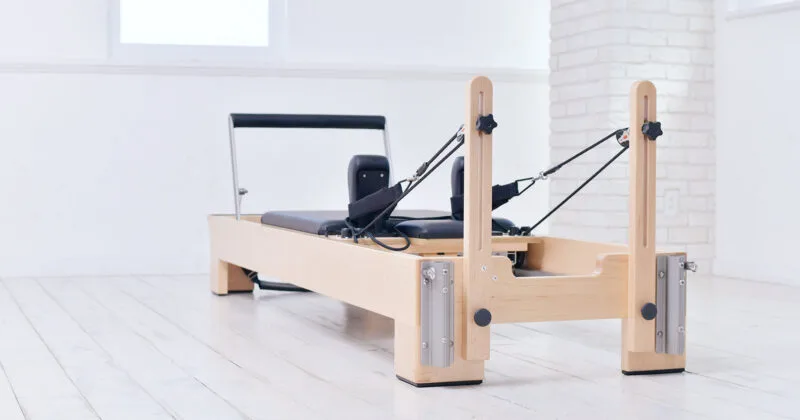
Lava-stone hot yoga uses a studio fitted with lava-stone plates. There are more than 25 kinds of yoga lessons, plus room-temperature yoga, Pilates, women-only kickboxercise, boxercise, HIIT, and personal training. The studio website presents the lesson options.
References
- Regular self-weighing to promote weight maintenance after intentional weight loss: a quasi-randomized controlled trial. — C. Madigan et al., 2014, Journal of public health. DOI: 10.1093/pubmed/fdt061
- Frequency and Consistency of Self-Weighing to Promote Weight Loss Maintenance — Andrea N Brockmann et al., 2020, Obesity (Silver Spring, Md.). DOI: 10.1002/oby.22828
- Weighing everyday matters: Daily weighing improves weight loss and adoption of weight control behaviors — Dori M. Steinberg et al., 2015, Journal of the Academy of Nutrition and Dietetics. DOI: 10.1016/j.jand.2014.12.011
- A self-regulation program for maintenance of weight loss. — R. Wing et al., 2006, The New England journal of medicine. DOI: 10.1056/nejmoa061883
- A randomised controlled trial of the effectiveness of self-weighing as a weight loss intervention — C. Madigan et al., 2014, The International Journal of Behavioral Nutrition and Physical Activity. DOI: 10.1186/s12966-014-0125-9
- The efficacy of a daily self-weighing weight loss intervention using smart scales and email — Dori M. Steinberg et al., 2013, Obesity (Silver Spring, Md.). DOI: 10.1002/oby.20396
- Behavioural intervention for weight loss maintenance versus standard weight advice in adults with obesity: A randomised controlled trial in the UK (NULevel Trial) — F. Sniehotta et al., 2019, PLoS Medicine. DOI: 10.1371/journal.pmed.1002793
- Effect of weight-loss program using self-weighing twice a day and feedback in overweight and obese subject: a randomized controlled trial. — Y. Oshima et al., 2013, Obesity research & clinical practice. DOI: 10.1016/j.orcp.2012.01.003
- Frequency of Self-Weighing and Weight Change: Cohort Study With 10,000 Smart Scale Users — Anna-Leena Vuorinen et al., 2020, Journal of Medical Internet Research. DOI: 10.2196/25529
- Is self-weighing an effective tool for weight loss: a systematic literature review and meta-analysis — C. Madigan et al., 2015, The International Journal of Behavioral Nutrition and Physical Activity. DOI: 10.1186/s12966-015-0267-4
Cover photo: A digital bathroom scale used for measuring body weight. (Photo: franchise opportunities / CC BY-SA 2.0 / Wikimedia Commons)
Information as of October 2026. For your own health, consult a doctor.
More from Diet Science (English)
- Metabolic adaptation and why your weight loss can slow down
- Body composition and weight loss beyond the bathroom scale
- Food logging and weight loss: what matters beyond perfect records
- Protein and weight loss beyond fullness and the bathroom scale
- Dietary fiber and weight loss: what gut research really shows
- Low-carb vs low-fat diets: what long-term weight loss shows
- Time-restricted eating and weight loss: what trials reveal
- Breakfast and weight loss: what eating or skipping really changes
- Sleep deprivation and appetite: why nighttime snacks add up
- Stress and emotional eating beyond the cortisol explanation
- Aerobic vs resistance training for fat loss and lean mass
- HIIT and body fat loss: what shorter workouts can really offer
- Strength training, metabolism and the science of weight regain
- Yoga and weight loss: what body composition research shows
- Hot yoga calories and sweat: what a lighter scale really means
- Pilates and body composition: what posture and fat studies show
- NEAT and weight loss: what everyday movement can really do
- Daily steps and weight loss: what 8,000 steps really tells us
- Keeping weight off: what long-term maintainers do and how they recover
- Water before meals and weight loss: what 500 ml trials show
- Sugary drinks and sweeteners: what replacement means for weight
- Alcohol and weight loss through calories, appetite and fat use
- Ultra-processed foods and overeating through the trial evidence
- Eating rate and weight loss: what slower chewing can change
- Menopause weight gain and why your waist can change first
- Postpartum weight loss through diet, exercise and support
- Sarcopenia and protein: protecting muscle as you grow older
- Visceral fat in men and what exercise changes beyond weight
- Supervised exercise and weight loss: building lasting habits
All Diet Science articles (English)
初日の汗は、予約した人だけが持ち帰れる。
2

