Less exercise volume does not always mean a better result
A lower-volume program may be easier to place in a busy week. But the research does not show a simple progression in which reducing exercise volume continually improves the result. Sultana and colleagues combined 47 studies of low-volume HIIT in adults ranging from normal weight to overweight and obesity. Compared with a non-exercising group, they found no significant differences in fat mass, body fat percentage, or lean body mass.[14]
For fat mass, the effect size compared with no exercise was −0.129, with a 95% confidence interval of −0.468 to 0.210.[14] This is an effect size used to combine differences across studies, rather than a number of kilograms. It cannot be read directly as a change on the scale. The absence of a significant difference is an unfavorable finding for claims that very brief interval programs reliably reduce body fat.
At the same time, low-volume HIIT improved cardiorespiratory fitness more than either no exercise or continuous training.[14] The analysis therefore gives different answers for fitness and body composition. A program can show a favorable fitness result without establishing a favorable fat-loss result. Keeping those outcomes separate lets you acknowledge what improved without assigning the program a result it did not demonstrate.
The included interventions lasted at least 4 weeks and covered both randomized and non-randomized controlled trials. The participants spanned normal weight, overweight, and obesity. The review separately compared low-volume HIIT with no exercise and with continuous training.[14] Those details are necessary when interpreting the conclusion. It would be misleading to present the whole analysis as if it involved only people with obesity, or only comparisons with inactivity.
Against continuous training, the fat mass effect size was −0.021, with a 95% confidence interval of −0.272 to 0.231. For body fat percentage, the effect size was 0.005, with a confidence interval of −0.294 to 0.304. Neither comparison showed a significant difference.[14] These estimates reinforce the division between the review’s favorable fitness findings and its lack of a demonstrated advantage for body composition.
A later systematic review by Zhu and colleagues reached a more favorable conclusion for low-volume interval exercise. It combined 56 studies involving 1,831 adults with overweight or obesity. Compared with non-exercising groups, low-volume interval training reduced whole-body fat mass, body fat percentage, abdominal fat, and visceral fat. Low-volume HIIT also had a favorable effect on visceral fat compared with continuous training, although the certainty of evidence was low.[11]
The standardized mean differences against no exercise were −0.62 for whole-body fat mass, −0.85 for body fat percentage, −0.65 for abdominal fat, and −0.90 for visceral fat. A standardized mean difference puts measurements from different studies onto a common scale. These are not kilograms or measurements of area. Against continuous training, the visceral fat difference for low-volume HIIT was −0.53. Sprint interval training did not show the same superiority, and evidence certainty remained low.[11]
Zhu and colleagues found no significant differences in fat reduction between low-volume interval training and high-volume HIIT.[11] That finding is relevant to the question of how much training is needed, but it does not make every short routine equivalent to the studied programs. Check what “low volume” means in the review and what participants actually did. A small number on an advertisement may describe only part of a session, while the research concerns the complete exercise protocol.
The disagreement between low-volume reviews remains part of the evidence.[11][14] It is reasonable to consider a shorter program, but the expectation should include the possibility that improvements in fitness will be clearer than improvements in body fat. Neither a favorable review nor an unfavorable one removes the need to identify which participants, comparison, and outcome are relevant to your own question.
初日の汗は、予約した人だけが持ち帰れる。
Exercise mode, recovery, and measurement change the question
“Fat burning” can refer to using fat as fuel during exercise. Yin and colleagues combined 13 studies involving 519 adults with overweight or obesity to examine maximum fat oxidation during exercise. In this context, fat oxidation means using fat as an exercise fuel. The direct comparison between HIIT and continuous training found no difference in the change in this measure.[6]
A limited number of HIIT studies and variation between protocols constrained the authors’ ability to make firm training recommendations.[6] More fundamentally, a change in the body’s use of fat during exercise is a different question from a change in the amount of fat remaining in the body. Yin and colleagues studied how ongoing training changed maximum fat oxidation. To answer a question about fat mass itself, look for studies measuring that outcome.[6][8]
Zhang and colleagues provide a concrete example. Their 12-week comparison included 43 young women with obesity: 15 in the HIIT group, 15 in continuous training, and 13 in a non-exercising group. The exercise groups performed the same amount of work, 300 kJ per session. Abdominal visceral fat area was measured using computed tomography, and whole-body fat mass using dual-energy X-ray absorptiometry.[19]
Visceral fat area changed by −9.1 cm² with HIIT and −9.2 cm² with continuous training. Abdominal subcutaneous fat changed by −35 cm² and −28.3 cm², respectively. The combined visceral and subcutaneous fat area changed by −44.7 cm² and −37.5 cm². Whole-body fat mass fell by 2.8 kg in both exercise groups, while body fat percentage fell by 2.5 and 2.4 percentage points.[19]
There were no significant differences between exercise approaches, and the non-exercising group showed no changes.[19] The study illustrates why matching the work performed matters. These were young women with obesity exercising under a work-matched protocol. Copying only the duration of a session does not establish that you are reproducing the exercise condition, and it cannot justify expecting the same change in body fat.
Khodadadi and colleagues examined exercise structure by combining 36 randomized clinical trials lasting 3–15 weeks. Compared with no exercise, HIIT across all modes produced a fat mass difference of −1.86 kg, with a 95% confidence interval of −2.55 to −1.18 kg. The body fat percentage difference was −1.53 percentage points, with a confidence interval of −2.13 to −0.92. Fat-free mass increased by an average of 0.51 kg, with a confidence interval of 0.06 to 0.95 kg.[15]
Fat-free mass refers to the parts of the body other than fat. Its change is a separate outcome from fat loss. This review’s combined results were favorable, but the exercise modes did not all produce identical findings. Cycling and outdoor running had fat mass differences of −1.72 kg and −4.25 kg, respectively. For treadmill running, the estimate was −1.10 kg, with a confidence interval of −2.82 to 0.62 kg, and the change was not significant. Only cycling produced a significant increase in fat-free mass in the mode-specific analysis.[15]
Outdoor and treadmill running both involve running, yet the pooled findings were different. It is better to examine results close to the mode you intend to use than to transfer the outdoor estimate directly to an indoor workout. There was also variation between studies in the pooled fat mass result across all modes.[15] The separate estimates describe the research collected in each category, rather than a guaranteed ranking for everyone choosing between activities.
Subgroup analyses suggested favorable body composition changes with training lasting more than 8 weeks, at least 3 sessions per week, work intervals shorter than 60 seconds, and active recovery intervals of 90 seconds or less.[15] These are study conditions that can inform a discussion about a program. They do not make the interval timings alone a complete prescription. The high-intensity and recovery parts belong together; removing recovery merely to make a session shorter changes the structure you are trying to assess.
When considering an interval program, check its exercise mode and how hard efforts and recovery are arranged.[3][4] Enjoying a particular movement is one reason to choose it. The body fat result demonstrated under a particular research protocol is another piece of information. Keeping both in view allows preference and evidence to inform the decision without asking the activity’s name to guarantee an outcome.
Questions about preserving muscle are explored further in aerobic exercise versus resistance training and strength training and weight regain. The low-volume HIIT review did not establish superiority for lean body mass.[14] Fat, cardiorespiratory fitness, and muscle-related outcomes deserve separate attention when deciding what a program should accomplish.
Common misconceptions
“Harder exercise must produce much more weight loss in the same time.” That claim goes beyond the comparisons. A meta-analysis of 26 studies involving 784 people with overweight or obesity found no significant difference in body fat percentage between continuous training and HIIT.[7] Keating and colleagues also found a trend favoring continuous training when it was compared with interval protocols requiring less time or energy expenditure. That trend was not statistically significant.[1] How demanding a session feels cannot by itself establish its efficiency for reducing body fat.
“No significant difference means neither approach is worth doing.” In Wewege and colleagues’ review, both approaches reduced whole-body fat mass and waist circumference even though their results did not differ significantly from each other.[3] Poon and colleagues also found improvements in fat-related outcomes when interval exercise was compared with no exercise.[4] A small difference between exercise methods and a small difference between exercise and inactivity are different propositions. Always ask which comparison produced the finding.
“If a short workout improves fitness, fat must fall in the same way.” Sultana and colleagues found improved cardiorespiratory fitness while finding no significant body fat percentage or fat mass advantage over the comparison groups.[14] Guo and colleagues also assessed body composition and fitness as distinct outcomes.[2] You can recognize a fitness improvement without translating it into an unmeasured weight-loss result. That distinction makes it easier to assess your own progress fairly, particularly when the reason for choosing a short workout includes how you feel during activity.
What you can do today
- If you choose continuous exercise, build activity suited to your fitness into your week, using 3 sessions per week as a planning reference. This was the average frequency in studies where both HIIT and continuous exercise reduced fat mass and waist circumference. It is a research reference rather than a reason to call an imperfect week a failure.[3]
- If you choose HIIT, discuss an appropriate intensity with an instructor. A low-volume approach with less than 15 minutes of high-intensity effort per session is an option examined in the research. That duration covers the high-intensity portion, not recovery, preparation, or the complete visit.[4]
- Consider a structure with work intervals shorter than 60 seconds and active recovery of 90 seconds or less. These conditions were associated with favorable body composition changes in subgroup analyses. Adjust the activity to what you can do rather than increasing intensity simply to match a stopwatch.[15]
- When planning around the finding of about 40% less HIIT training time, check the total time needed, including preparation, recovery, and travel. Keep track of body fat percentage or waist circumference alongside your sense of fitness. If you have concerns about your health, consult a doctor before beginning exercise.[3]

Fit interval exercise into your week at On the Shore Tachikawa
Shorter HIIT training time still needs room for preparation and travel. On the Shore Tachikawa offers a place to keep an exercise habit going, with visits planned around the whole time you need.
The lava-stone hot yoga studio is a 1-minute walk from the North Exit of JR Tachikawa Station, at 3F Etoile Bldg, 2-14-10 Akebonocho, Tachikawa, Tokyo. It is open every day 8:00–23:30. See the studio website for studio information and the prices page for pricing. Pregnant guests cannot join lava-stone hot yoga; room-temperature maternity yoga is available. Guests told by a doctor not to exercise cannot join.
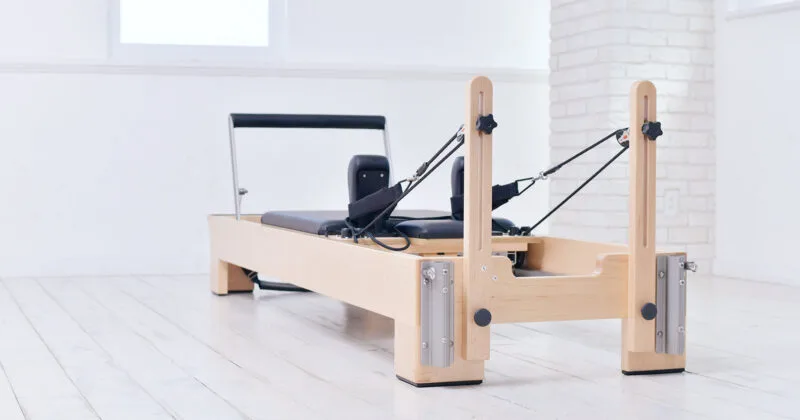
HIIT and personal training are among the options, alongside boxercise and women-only kickboxercise. The yoga range includes more than 25 kinds of lessons, with lava-stone hot yoga and room-temperature yoga available; the studio also offers Pilates. Many of our yoga instructors speak English, and the studio’s owner often helps guests from the US bases in English herself.
For ¥1,980 including tax, the yoga trial includes a 60-minute lesson, mat rental, 2 bath towels, and 1 face towel. Reservations are available through the trial booking page. This yoga lesson’s duration is distinct from the high-intensity portion measured in HIIT studies; preparation and travel also belong in the visit’s schedule.
References
- A systematic review and meta‐analysis of interval training versus moderate‐intensity continuous training on body adiposity — S. Keating et al., 2017, Obesity Reviews. DOI: 10.1111/obr.12536
- Effect of High-Intensity Interval Training vs. Moderate-Intensity Continuous Training on Fat Loss and Cardiorespiratory Fitness in the Young and Middle-Aged a Systematic Review and Meta-Analysis — Zhi-Cheng Guo et al., 2023, International Journal of Environmental Research and Public Health. DOI: 10.3390/ijerph20064741
- The effects of high‐intensity interval training vs. moderate‐intensity continuous training on body composition in overweight and obese adults: a systematic review and meta‐analysis — M. Wewege et al., 2017, Obesity Reviews. DOI: 10.1111/obr.12532
- Efficacy of Interval Training in Improving Body Composition and Adiposity in Apparently Healthy Adults: An Umbrella Review with Meta-Analysis — E. Poon et al., 2024, Sports Medicine (Auckland, N.z.). DOI: 10.1007/s40279-024-02070-9
- Chronic high-intensity interval training and moderate-intensity continuous training are both effective in increasing maximum fat oxidation during exercise in overweight and obese adults: A meta-analysis — Ming-Yue Yin et al., 2023, Journal of Exercise Science and Fitness. DOI: 10.1016/j.jesf.2023.08.001
- Comparison of High-Intensity Training Versus Moderate-Intensity Continuous Training on Cardiorespiratory Fitness and Body Fat Percentage in Persons With Overweight or Obesity: A Systematic Review and Meta-Analysis of Randomized Controlled Trials. — N. Rugbeer et al., 2021, Journal of physical activity & health. DOI: 10.1123/jpah.2020-0335
- High-intensity interval training is not superior to continuous aerobic training in reducing body fat: A systematic review and meta-analysis of randomized clinical trials — A. Kramer et al., 2023, Journal of Exercise Science and Fitness. DOI: 10.1016/j.jesf.2023.09.002
- Effect of low-volume interval training on whole-body, abdominal and visceral fat in adults living with overweight and obesity: A systematic review and meta-analysis — Xiangui Zhu et al., 2025, Journal of Sports Sciences. DOI: 10.1080/02640414.2025.2559518
- The Effect of Low-Volume High-Intensity Interval Training on Body Composition and Cardiorespiratory Fitness: A Systematic Review and Meta-Analysis — R. Sultana et al., 2019, Sports Medicine. DOI: 10.1007/s40279-019-01167-w
- The Effect of High-Intensity Interval Training Type on Body Fat Percentage, Fat and Fat-Free Mass: A Systematic Review and Meta-Analysis of Randomized Clinical Trials — F. Khodadadi et al., 2023, Journal of Clinical Medicine. DOI: 10.3390/jcm12062291
- Comparable Effects of High-Intensity Interval Training and Prolonged Continuous Exercise Training on Abdominal Visceral Fat Reduction in Obese Young Women — Hai-Feng Zhang et al., 2017, Journal of Diabetes Research. DOI: 10.1155/2017/5071740
Cover photo: A person runs around the curve of an outdoor running track. (Photo: U.S. Air Force photo by Staff Sgt. Wes Wright / Public domain / Wikimedia Commons)
Information as of October 2026. For your own health, consult a doctor.
More from Diet Science (English)
- Metabolic adaptation and why your weight loss can slow down
- Body composition and weight loss beyond the bathroom scale
- Food logging and weight loss: what matters beyond perfect records
- Protein and weight loss beyond fullness and the bathroom scale
- Dietary fiber and weight loss: what gut research really shows
- Low-carb vs low-fat diets: what long-term weight loss shows
- Time-restricted eating and weight loss: what trials reveal
- Breakfast and weight loss: what eating or skipping really changes
- Sleep deprivation and appetite: why nighttime snacks add up
- Stress and emotional eating beyond the cortisol explanation
- Aerobic vs resistance training for fat loss and lean mass
- Strength training, metabolism and the science of weight regain
- Yoga and weight loss: what body composition research shows
- Hot yoga calories and sweat: what a lighter scale really means
- Pilates and body composition: what posture and fat studies show
- NEAT and weight loss: what everyday movement can really do
- Daily steps and weight loss: what 8,000 steps really tells us
- Keeping weight off: what long-term maintainers do and how they recover
- Daily self-weighing and weight loss: how to use the numbers
- Water before meals and weight loss: what 500 ml trials show
- Sugary drinks and sweeteners: what replacement means for weight
- Alcohol and weight loss through calories, appetite and fat use
- Ultra-processed foods and overeating through the trial evidence
- Eating rate and weight loss: what slower chewing can change
- Menopause weight gain and why your waist can change first
- Postpartum weight loss through diet, exercise and support
- Sarcopenia and protein: protecting muscle as you grow older
- Visceral fat in men and what exercise changes beyond weight
- Supervised exercise and weight loss: building lasting habits
All Diet Science articles (English)
初日の汗は、予約した人だけが持ち帰れる。
2