

Support should leave room for the person’s own choices
Saying that you are encouraging someone does not define what your support consists of. A 2019 randomized controlled trial assigned 64 couples to standard behavioral weight loss attended together or to an intervention intended to strengthen autonomy support. Here, autonomy support meant supporting meaningful personal choice while reducing control.[13] Both approaches involved couples, so the trial was comparing different approaches within joint participation, rather than couples participation with an individual program.
Across the groups, weight loss was 10.4% at 6 months and 9.2% at 12 months. There were no differences between the assigned groups in percentage weight loss or in changes in autonomy support. Yet higher autonomy support at the start predicted greater weight loss, and increases in autonomy support over time also predicted greater weight loss.[13] The randomized comparison and the associations within the study answer different questions. The positive associations do not cancel the absence of a group difference.
The groups met weekly for 6 months, with assessments at the start and at 3, 6, and 12 months.[13] This was an ongoing program, not a comparison of what happens after a single supportive conversation. The schedule matters because it describes the setting in which the couples participated. It cannot be reduced to a suggestion that one weekly conversation, or one weekly exercise session, would reproduce the reported weight loss percentages.
A further analysis found that participants with low autonomy support at the start had a greater increase in support at 12 months in the autonomy-focused group. This difference was not found among those whose starting support was high. The analysis was post hoc, meaning it was conducted after the main planned comparison.[13] It is a more limited finding than a general claim that the intervention improved support for everyone, and it still does not establish extra weight loss from that approach.
For everyday life, a question such as “If you want to walk after work, how shall we divide dinner preparation?” illustrates a way to leave the decision with the person exercising. Asking whether they have walked can instead feel like checking compliance, depending on what they have agreed to share. These are practical examples of respecting choice, not sentences tested individually in the trial.[13] The important issue is whether the person can make a meaningful decision, including deciding differently that day.
A supporter can offer options while still trying to steer someone toward a predetermined answer. If declining the walk leads to an argument, the invitation may function as an instruction. Discussing what help is welcome gives both people a clearer task: one chooses what to do, and the other says what they can realistically offer. The study provides a reason to pay attention to autonomy, but it does not let us calculate a weight loss benefit from a particular phrase.[13]
The supporter has choices too. Someone unable to attend every appointment might be willing to handle shopping or prepare dinner on a program day. Partner2Lose involved partners in half of the intervention sessions, while the autonomy-support trial brought couples to weekly meetings for 6 months.[4][13] Those are different participation arrangements. Neither should be translated into an obligation for a family member to accompany every activity at home.
初日の汗は、予約した人だけが持ち帰れる。
More encouragement does not always mean more useful help
The 2016 MedWeight study examined support among people who had maintained weight loss and people who had regained weight. This Greek registry included 289 maintainers and 122 regainers. Maintainers had intentionally lost at least 10% of their weight and kept that loss for more than a year.[20] The comparison offers a view of support around maintenance, but it does not randomly assign people to different kinds of family interaction.
People who had regained weight reported receiving more support overall than those who had maintained their loss. The forms of support differed: maintainers reported compliments and active participation, while regainers reported verbal instructions and encouragement.[20] It would be a mistake to read this as evidence that encouragement causes regain. Regain itself might have prompted others to speak up more. The comparison cannot establish the direction of events or identify a causal effect.
The study combined online lifestyle questionnaires, two telephone recalls of food intake over the previous 24 hours, and validated measures of family and friend support for eating and exercise. Among maintainers, receiving dietary support was associated with better dietary intake, including lower energy intake. The same dietary difference was not seen among regainers.[20] The finding concerns the form and context of support, rather than a simple count of encouraging remarks.
Helping someone prepare the food they have chosen is different from evaluating how much they ate. Listening when they want to talk is different from repeatedly asking whether things are going well. These everyday examples give practical meaning to the distinction between participation and instructions. They were not individually tested as methods in MedWeight.[20] Asking for help with a meal is therefore a reasonable application to consider, without attaching an unsupported kilogram benefit to it.
For the person giving support, the useful starting point may be to ask what is needed before offering more advice. A family member’s anxiety about a changing weight can produce a question that mainly reassures the questioner. The person receiving it may instead need a particular task shared. The registry findings give a reason to examine what support looks like, while leaving open why the groups differed.[20] They do not identify a universally correct amount of encouragement.
A household can discuss the difference directly: which offers were welcome, which comments felt intrusive, and what can be continued? That is a practical reflection, rather than a research-proven reporting schedule. It allows the request to be revised without declaring either person responsible for the weight result. The studies here measure different aspects of participation, perceived support, and outcomes. Those distinctions help keep a conversation about help from becoming an assessment of whether someone is a good enough partner.

Common misconceptions
“If my family joins me, I will definitely lose more weight.” Partner2Lose does not support that promise: the partner-assisted and participant-only programs produced similar weight loss at 24 months.[4] Other interventions and households may differ, but that possibility does not justify guaranteeing an additional benefit. Inviting a family member can be framed as asking for help you want, rather than asking them to ensure a particular result on the scale.
“If we started together and it did not work, my partner supported me badly.” The family-and-friend trial found associations between participation, partner weight loss, and participant outcomes, while the assigned higher and lower support treatments did not differ in weight change.[7] Blaming a partner confuses these kinds of findings. It is more useful to separate what was requested, what actually happened, and how the person receiving the help experienced it. None of those questions requires treating a partner as the cause of a disappointing weight result.
“The more friends I can call on, the better my chances.” In the online program, smaller networks were associated with greater weight loss, and support and relationship quality were involved in that association.[15] This is not advice to shrink your social circle. Announcing a diet widely and choosing someone for a practical task are different actions. You can decide how far to share the plan without using the number of people told as a measure of your commitment.
“A good family should be able to discuss every detail of food and weight.” The support-selection study found higher working-alliance ratings with friends than with spouses or partners, and greater comfort discussing exercise than eating or weight.[2] Having limits on a topic does not show that a relationship is uncaring. Different people can be useful for different conversations. Someone who does not want to report weight may still welcome help making time to go out for exercise.
“If someone regains weight, they need more encouragement.” MedWeight found more reported support among regainers, with instructions and encouragement prominent in that group.[20] This does not make encouragement inherently harmful. It does mean that increasing the quantity of comments is not an adequate answer by itself. Before speaking, a supporter can ask whether the person wants a conversation, a practical favor, or space. That is an application of the distinction, not an intervention proven to prevent regain.
What you can do today
- Prepare your next dinner together after agreeing who will do what. Ask for help preparing 1 dinner, explain what you want to eat, and check what the other person can take on. This specific request was not tested in the studies described here.
- Before your next walk, invite someone whose company you want and agree when to leave, while keeping the option of walking alone. These studies did not test a home walking duration or frequency, so they do not support prescribing particular minutes or session counts.
- If you join a partner-assisted weight management program, agree which sessions your partner can attend and who will handle shopping or cooking on those days. In Partner2Lose, partners attended half of the intervention sessions, without a significant extra weight loss benefit.[4] Use that participation arrangement to discuss practical help, not as a target for attendance or a guarantee of better results.
- To take part in a program addressing eating and physical activity as a couple, agree who will prepare meals and how you will make time to attend. The couples trial involved meetings once a week for 6 months.[13] Ask whether that commitment fits both schedules before enrolling. This was the program schedule, not evidence that exercising once a week produces the same result.
- Tell your supporter which help was useful this week and which comments were unwanted, then discuss the roles to continue next week. Decide for yourself whether to include weight reports. This everyday reflection does not imply a weight loss benefit from any reporting frequency.
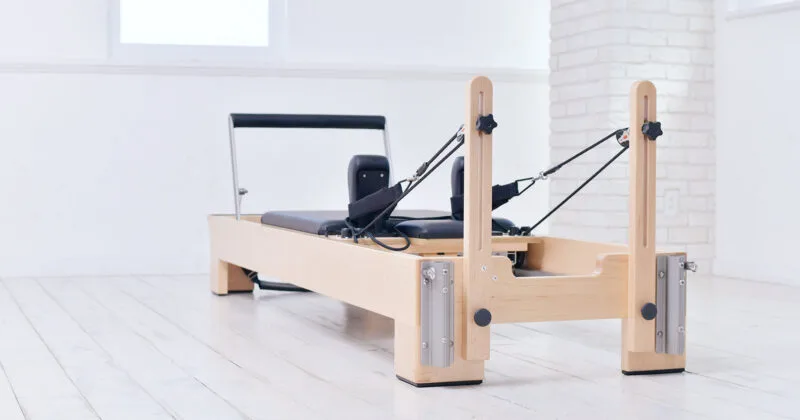
Agree on support for a weekly visit to On the Shore Tachikawa
Before visiting On the Shore Tachikawa, decide whether you want company for the lesson or help preparing dinner at home, then ask your supporter for that specific role.
The studio is a 1-minute walk from the North Exit of JR Tachikawa Station, at 3F Etoile Bldg, 2-14-10 Akebonocho, Tachikawa, Tokyo. Opening hours are 8:00–23:30 every day, throughout the year. Many of our yoga instructors speak English, and the studio’s owner often helps guests from the US bases in English herself.
Room-temperature maternity yoga is available, but pregnant guests cannot participate in lava-stone hot yoga. Anyone whose doctor has told them not to exercise cannot use the studio.
Yoga choices at this lava-stone hot yoga studio span more than 25 lesson types. Other activities include room-temperature yoga, Pilates, women-only kickboxercise, boxercise, HIIT, and personal training. Review the lesson options on the studio website when deciding which activity to put in your household calendar.
The trial yoga lesson lasts 60 minutes and costs ¥1,980 including tax. Rental of 2 bath towels, 1 face towel, and a yoga mat is included. The prices page and trial booking page provide the next steps for arranging that visit.
References
- The effectiveness of social-support-based weight-loss interventions—a systematic review and meta-analysis — Mette Tækker Jensen et al., 2024, International Journal of Obesity. DOI: 10.1038/s41366-024-01468-9
- Understanding the selection of support partners in a behavioral weight loss program — N. Crane et al., 2024, Psychology & health. DOI: 10.1080/08870446.2024.2381238
- Outcomes from Partner2Lose: a randomized controlled trial to evaluate 24-month weight loss in a partner-assisted intervention — C. Voils et al., 2024, BMC Public Health. DOI: 10.1186/s12889-024-19464-z
- A meta-analytic evaluation of couples weight-loss programs. — D. R. Black et al., 1990, Health psychology : official journal of the Division of Health Psychology, American Psychological Association. DOI: 10.1037/0278-6133.9.3.330
- Trial of family and friend support for weight loss in African American adults. — S. Kumanyika et al., 2009, Archives of internal medicine. DOI: 10.1001/archinternmed.2009.337
- A randomized controlled trial of a theory-based weight loss program for couples — Amy A. Gorin et al., 2019, Health psychology : official journal of the Division of Health Psychology, American Psychological Association. DOI: 10.1037/hea0000808
- Impact of social connectedness on weight loss outcomes in an online program — Carnisha M. Gilder et al., 2023, Journal of Behavioral Medicine. DOI: 10.1007/s10865-023-00447-1
- The role of social support in weight loss maintenance: results from the MedWeight study — Eleni Karfopoulou et al., 2016, Journal of Behavioral Medicine. DOI: 10.1007/s10865-016-9717-y
Cover photo: Several participants are running together on an outdoor track. (Photo: U.S. Air Force photo by Airman 1st Class Eve Daugherty / Public domain / Wikimedia Commons)
Information as of October 2026. For your own health, consult a doctor.
初日の汗は、予約した人だけが持ち帰れる。
2


