

Food and exercise do not have equally clear answers
It is easy to explain a holiday increase by remembering how little you walked while visiting family. Activity is worth reviewing, but it cannot automatically explain the whole change. A study of 23 adults with obesity, 87% of whom were women, found an average holiday weight change of 0.41 kg, compared with an average change of −0.86 kg before the holidays. The difference between the periods was statistically significant.[8]
The researchers used doubly labeled water to estimate total energy expenditure, the energy used by the body as a whole. This method uses specially labeled water to assess energy expenditure. Total expenditure did not change between the preholiday and holiday periods. The authors therefore considered increased intake a more likely explanation than reduced expenditure. Objective measurement offers a useful check on the impression that a change must have happened because you felt less active.[8]
However, the reported increase in energy intake was 80 kcal per day and was not statistically significant. Lower satisfaction after a meal was associated with weight gain, and participants also reported more occasions of eating at sit-down restaurants. These findings point toward changes in eating patterns. They do not establish the additional calorie amount with certainty or demonstrate that this amount alone accounted for the weight change. The authors’ interpretation must be read alongside that nonsignificant intake finding.[8]
The sample was small, mostly female and restricted to adults with obesity. It cannot establish that activity is irrelevant to holiday weight change for everyone. Its practical contribution is to widen the questions you ask. Alongside exercise plans, consider the occasions on which you ate, changes in restaurant visits and how satisfied you felt after meals. Those are prompts drawn from the observed patterns, rather than proof that any particular eating occasion caused your own gain.[8]
The study of 148 men and women also complicates a simple exercise explanation. Self-reported exercise did not significantly predict changes in weight or body fat percentage over the holidays. Average exercise time was 4.8 hours per week, yet the group still gained both weight and body fat. This result means that exercising regularly was not a guarantee against holiday gain in that sample. It does not mean that the researchers assigned exercise and proved that it had no effect.[18]
A different observational study followed 63 adults across Islamic festive periods and found a more favorable pattern among those exercising at least 150 minutes per week. Their average weight change was 0.32 kg and was not statistically significant. The group below that exercise threshold gained an average of 0.61 kg, and the difference in change between the groups was significant. An association between exercise and smaller festive weight gain was therefore present in this study.[10]
The disagreement should remain visible. The festive setting and observation period differed, and the latter study followed participants for 18 weeks from before Ramadan until after the celebrations. Neither study randomly assigned people to exercise groups. Other differences in everyday life could therefore contribute to the results. The evidence does not justify either promising that exercise alone prevents holiday gain or declaring that exercise has no role.[10][18]
A workable interpretation is to plan activity and food choices as separate parts of the break. Keeping an exercise appointment does not answer every question about meals, just as reviewing a meal does not tell you whether an activity routine continued. Because the observations differ, maintaining movement while paying attention to eating situations respects the uncertainty better than giving all the explanatory weight to one habit.[8][10][18]
初日の汗は、予約した人だけが持ち帰れる。
Prevention looks promising, but certainty is limited
Daily self-weighing means measuring your own weight each day. A randomized trial involving 111 adults compared an intervention combining daily weighing, graphical feedback and a goal of staying at or below preholiday weight with a control group. Random allocation is intended to reduce background differences between groups so that the intervention can be compared more fairly. It is a stronger design for testing an intervention than simply observing people who choose different habits.[13]
From before to after the holiday, average weight change was −0.13 kg in the weighing-and-graph group and 2.65 kg in the control group. The difference between groups was statistically significant. In this trial, making the weight trend visible within a maintenance-focused intervention helped prevent gain. The tested method was a package, however: weighing, graphical feedback and the maintenance goal worked together. The result cannot be assigned to stepping on the scale alone.[13]
The control group’s gain was also larger than the averages in other adult holiday studies. That does not by itself invalidate the trial, because different studies enrolled different people in different circumstances. It does limit what a reader can expect. The amount gained without an intervention, and the response to an intervention, may depend on the group and setting. The impressive difference in this trial should not become a promised result for everyone who begins weighing daily.[4][5][13]
A broader systematic review placed individual prevention studies in context. A systematic review collects and evaluates relevant studies according to a specified method. Its adult festive-period meta-analysis combined five studies and found a mean difference of −0.99 kg favoring intervention groups. The 95% confidence interval ranged from −2.15 to 0.18 kg, so the combined result was not statistically significant. The direction looked favorable, but the uncertainty did not exclude no difference.[2]
A confidence interval crossing zero includes estimates favorable to the intervention as well as no effect and a small effect in the opposite direction. The review also found substantial differences between study results and rated the certainty of the evidence as very low. Across all 12 included primary studies, only two were judged to have a low risk of bias. Bias refers to features of a study that can systematically distort the result.[2]
This assessment does not show that prevention is pointless. It means that promising approaches have not yet been supported by sufficiently strong evidence to establish their effect reliably. If you try daily weighing and a graph, regard them as a way to notice changes and support a maintenance plan, rather than a treatment with a guaranteed outcome. That interpretation accommodates both the positive individual trial and the much less certain pooled evidence.[2][13]
A survey of 683 people with a history of successful weight loss adds information about planning. Daily self-weighing and prioritizing food choices were associated with smaller holiday gains. Commonly planned strategies included maintaining exercise, checking portions, recording food and weighing. Nevertheless, the group’s average gain was 0.66 kg. Previous success did not make the holiday period effortless, and having strategies available did not mean everyone maintained their starting weight.[19]
The survey relied on self-report and did not randomly allocate strategies. It therefore cannot establish that weighing caused a smaller gain, or that a particular combination will work for you. Its practical interest is the preparation: participants considered several ways to respond to a period when normal routines might change. A plan can acknowledge that disruption in advance. It need not depend on treating the holiday as a series of ordinary days or expecting one technique to handle every situation.[19]

Common misconceptions
“Everyone gains several kilograms over New Year” overstates what these adult averages show. The prospective US study found a mean holiday increase of 0.37 kg, and the narrative review reported roughly 0.4–0.9 kg. Those are group findings, not a ceiling on individual gain. A small average is therefore a reason to reconsider an exaggerated general claim, rather than a reason to ignore your own measurements. Both the average and the spread matter when interpreting the result.[4][5]
“It will all disappear by spring” turns a possible outcome into a scheduled certainty. The European maintenance participants had not fully compensated for their Christmas gain in the following months. Conversely, the control group in the weighing trial did lose weight during follow-up. These findings can both be true: some postholiday reduction is possible, while full return to the starting point is not assured. Comparing a later reading with the preholiday record is more informative than assuming the season will settle the matter.[3][13]
“If I exercise, I do not need to think about food” is also stronger than the observational evidence supports. One study found that exercise did not predict holiday weight or body-fat changes; another found smaller increases among people meeting its exercise threshold. These are not interchangeable populations or randomized exercise prescriptions. Review both eating and activity; an exercise timetable alone cannot explain the entire weight trend. The scale cannot confirm that all parts of a holiday routine stayed the same.[10][18]
What you can do today
- Measure your weight before and after the holiday and record the dates. Compare those readings with your weight after your usual routine resumes, so your judgment includes more than the immediate postholiday reading. This comparison takes its timing from the follow-up studies; it is not a separately tested prevention procedure.[5][13]
- If you try self-weighing, measure once a day during the holiday and graph the readings. Review the trend alongside a goal of maintaining your preholiday weight. The trial tested daily weighing together with graphical feedback and that maintenance goal.[13] If daily weighing causes distress or you have a history of eating disorders, discuss a suitable monitoring approach with a doctor.
- At shared meals, put your portion on your plate before starting and check how satisfied you feel before taking more. Turn portion awareness and food selection into actions during the meal. This is an everyday application; researchers did not test the preventive effect of this exact procedure.[8][19]
- Keep your usual exercise during the holiday and, if manageable for you, plan activity totaling 150 minutes per week. That duration distinguished exercise groups in the observational study; it is not an established amount required to prevent New Year weight gain. Pay attention to food portions on exercise days too.[10][18]
- After the holiday, portion out what you will eat from leftover dishes before starting. You do not need to finish them all at once. Try this as a way to return to your usual portions, and combine it with weighing when choosing habits you can sustain. The leftover procedure itself was not tested in the survey.[19]
Put holiday movement back on the calendar at On the Shore Tachikawa
Before the holiday ends, consider when your first visit to On the Shore Tachikawa will fit alongside the return to ordinary meals and workdays. Many of our yoga instructors speak English, and the studio’s owner often helps guests from the US bases in English herself.
Pregnant guests cannot join lava-stone hot yoga, but room-temperature maternity yoga is available. Guests told by a doctor not to exercise cannot join.
The studio is at 3F Etoile Bldg, 2-14-10 Akebonocho, Tachikawa, Tokyo, a 1-minute walk from the North Exit of JR Tachikawa Station. Opening hours are 8:00–23:30 every day. Compare those hours with your postholiday schedule when choosing a time to return.
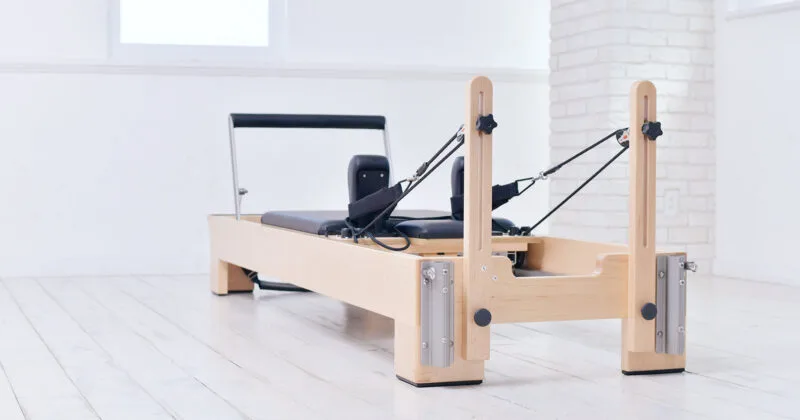
Yoga includes more than 25 kinds of lessons, with both lava-stone hot yoga and room-temperature yoga available. Other activity choices are personal training, HIIT, boxercise, women-only kickboxercise and Pilates. These are options for continuing movement as ordinary routines resume.
A trial yoga lesson lasts 60 minutes and costs ¥1,980 including tax. Two bath towels, one face towel and yoga mat rental are included. Check the studio information and prices as you consider your schedule; trial booking is available online.
References
- Weekly, Seasonal, and Festive Period Weight Gain Among Australian Adults — C. Maher et al., 2023, JAMA Network Open. DOI: 10.1001/jamanetworkopen.2023.26038
- Interventions for the prevention of weight gain during festive and holiday periods in children and adults: A systematic review — D. E. Guerrero-Magaña et al., 2024, Obesity Reviews. DOI: 10.1111/obr.13836
- Weekly, seasonal and holiday body weight fluctuation patterns among individuals engaged in a European multi-centre behavioural weight loss maintenance intervention — J. Turicchi et al., 2020, PLoS ONE. DOI: 10.1371/journal.pone.0232152
- Effect of the Holiday Season on Weight Gain: A Narrative Review — R. G. Díaz-Zavala et al., 2017, Journal of Obesity. DOI: 10.1155/2017/2085136
- A prospective study of holiday weight gain. — J. Yanovski et al., 2000, The New England journal of medicine. DOI: 10.1056/nejm200003233421206
- Change in eating pattern as a contributor to energy intake and weight gain during the winter holiday period in obese adults — Surabhi Bhutani et al., 2020, International journal of obesity (2005). DOI: 10.1038/s41366-020-0562-2
- Seasonal weight change during islamic holidays and effect of exercise on body weight and composition — Hazal Tutumlu et al., 2024, Mediterranean Journal of Nutrition and Metabolism. DOI: 10.1177/1973798×241296346
- Daily Self‐Weighing to Prevent Holiday‐Associated Weight Gain in Adults — Sepideh Kaviani et al., 2019, Obesity. DOI: 10.1002/oby.22454
- Effects of exercise during the holiday season on changes in body weight, body composition and blood pressure — Jada L. Stevenson et al., 2013, European Journal of Clinical Nutrition. DOI: 10.1038/ejcn.2013.98
- Strategies to manage weight during the holiday season among US adults: A descriptive study from the National Weight Control Registry — KayLoni L. Olson et al., 2020, Obesity Science & Practice. DOI: 10.1002/osp4.470
- Weight Gain over the Holidays in Three Countries. — E. Helander et al., 2016, The New England journal of medicine. DOI: 10.1056/nejmc1602012
Cover photo: Traditional Japanese New Year osechi dishes arranged in an assortment of serving containers. (Photo: Gryffindor / Public domain / Wikimedia Commons)
Information as of October 2026. For your own health, consult a doctor.
初日の汗は、予約した人だけが持ち帰れる。
2


