


Adding exercise does not guarantee that lean mass is retained
The findings so far may sound like a straightforward solution: add exercise to dietary restriction and the lean-mass problem is resolved. The evidence is more specific. Results vary with the people studied and the combination of interventions. Research involving women around or after menopause, older adults, and adults near retirement age helps show why the type of exercise and the study population belong in the conclusion.[1][12][13]
A systematic review and meta-analysis in women with overweight or obesity around or after menopause included 11 studies. Adding exercise to diet produced greater weight loss and fat loss than diet alone. It also produced greater loss of lean mass. That unfavorable result needs to remain beside the favorable findings. Evaluating an intervention only by its reduction in total weight or fat would omit another change that the same analysis found.[12]
The review included prospective studies as well as randomized trials and considered exercise broadly. Its inclusion criteria differed from those of the analysis specifically testing the addition of resistance exercise. Reading both supports a careful conclusion: there is evidence that resistance training during dietary weight loss reduces lean-mass loss, but exercise in general cannot be assumed to eliminate it. The apparently conflicting results should prompt attention to the intervention and participants, rather than selection of whichever paper offers the more reassuring message.[7][12]
In the 18-month older-adult trial, weight loss was 8.5 kg with aerobic training and 8.7 kg with resistance training. Those totals were close. Lean-mass losses, however, were 1.6 kg and 0.8 kg, respectively, while fat-mass losses were 6.8 kg and 7.8 kg. The total reductions would make the exercise approaches look similar; their components show a different pattern. Resistance training was associated with less lean mass lost than aerobic training in this trial.[13]
The resistance-training group still lost lean mass. Its advantage was a smaller loss relative to the aerobic-training group, rather than complete prevention. Participants had a mean age of 66.9 years, and 71% were women. In the weight-loss-only group, total weight fell by 5.7 kg, fat mass by 4.8 kg, and lean mass by 1.0 kg. Both exercise groups lost more fat than the weight-loss-only group. Keeping all those results together avoids treating the lowest total weight as the only possible measure of performance.[13]
A network meta-analysis examined dietary and exercise approaches in adults aged 55–70 with overweight or obesity, near retirement age. This method uses connections across different comparisons to evaluate interventions. The systematic review included 92 studies, of which 66 studies with 4,957 participants contributed to the network analysis. It compared multiple combinations of diet and exercise, rather than following a single group through one program.[2]
Energy restriction alone tended to reduce muscle mass, while interventions including exercise supported preservation. A statistically significant increase in muscle mass was found only with combined aerobic and resistance exercise. The interventions lasted from 8 weeks to 6 months. These findings address relatively short-term changes; they do not establish that the same preservation continues indefinitely. Duration is part of the finding, especially when you are considering a habit intended to last beyond an initial weight-loss period.[2]
Combining energy restriction and high protein intake with resistance training or mixed aerobic and resistance exercise was most effective for many outcomes in that analysis. However, some exercise-only combinations did not reduce body mass index or waist circumference. Body mass index expresses body size using height and weight. Outcomes for fat, muscle, and waist size did not all move together across the interventions. The analysis supports considering the dietary and exercise combination in relation to the intended outcome. For the separate question of protein, see protein, satiety, and muscle preservation during weight loss.[2]
初日の汗は、予約した人だけが持ち帰れる。
Long follow-up makes total weight harder to interpret
The weight recorded at the end of an initial intervention can be an intermediate result. A subgroup of a randomized trial in people with overweight or obesity and type 2 diabetes followed body composition in 1,019 participants over 8 years. It compared an intensive lifestyle intervention promoting increased physical activity and reduced energy intake with a group receiving social support and diabetes education. The long follow-up allowed researchers to examine what happened after the first reduction in weight.[15]
After 1 year, the intervention group had lost 5.6 kg of fat and 2.3 kg of lean mass. During subsequent follow-up, fat was regained and lean mass was also lost. From baseline to year 8, total weight loss was 4.0 kg in the intervention group and 2.3 kg in the comparison group. In the comparison group, most of the reduction was lean mass. The same phrase, “weight loss,” therefore described different trajectories and different components.[15]
Fat mass in the intervention group remained lower than in the comparison group at every measurement after baseline. That is a result worth retaining alongside the regain and lean-mass loss. The authors suggested that lower fat mass might place the intervention group at lower risk of obesity-related problems, but described this as a hypothesis for future studies to test. A body-composition finding does not itself complete the evidence needed for a conclusion about disease outcomes.[15]
Of the comparison group’s 2.3 kg weight loss over 8 years, 2.1 kg was lean mass. Meanwhile, the intervention group’s initial fat loss was followed by fat regain. These observations make it especially useful to compare weight, fat mass, and lean mass at corresponding time points. Comparing an early fat result with a much later total weight would obscure the course of the changes. Long follow-up adds information that an endpoint on the scale cannot supply on its own.[15]
Another study examined adults whose weight stayed relatively stable. It involved 152 adults with a mean age of 49 and a mean body mass index of 30.0. They performed resistance exercise twice a week and aerobic exercise once a week for 9 months, with weight changes within ±5% of baseline. Participants consumed equal-energy supplements twice daily, assigned to contain 0, 10, 20, or 30 g of whey protein per serving. Reductions in fat mass were associated with smaller waist circumference and improvements in some measured metabolic markers, independently of whey protein supplementation.[18]
Increases in lean mass, by contrast, did not predict changes in any of the measured metabolic markers. The measurements included high-density lipoprotein cholesterol in the blood and an index of insulin sensitivity, reflecting how readily insulin acts. Body composition was assessed with dual-energy X-ray absorptiometry before and after training. Researchers then statistically analyzed the relationships between changes in fat or lean mass and changes in these markers. This was a question about associations within the measured changes, rather than a simple test of how much muscle training could add.[18]
The study shows why fat-mass changes can be informative even when total weight changes little. It does not establish that losing fat will necessarily improve your own test results, or specify how large an improvement you should expect. The favorable association and the absence of a predictive relationship for lean-mass gains both belong in the account. Before deciding that exercise has achieved nothing because your weight is similar, there may be other measured outcomes to examine.[18]

Common misconceptions
“If my weight is not falling, I cannot be losing fat.” The resistance-exercise meta-analysis found no statistically significant difference in weight change between groups, yet did find differences in fat mass and lean mass. That challenges the use of total weight as the sole score for an intervention. It does not allow us to explain every personal plateau as muscle growth. A group comparison establishes what differed between the interventions; it does not identify the unmeasured composition of your own weight change.[7]
“Any loss of lean mass means the weight-loss attempt failed.” Older adults doing resistance training still lost lean mass, but lost less than those doing aerobic training. Fat loss and changes in physical function were assessed separately. A single decrease cannot settle whether an intervention succeeded or failed without considering its purpose and other outcomes. Preservation can be relative, and a smaller loss is a different finding from no loss at all.[13]
“If body fat percentage falls and lean-mass percentage rises, I have gained muscle.” The lifestyle trial reported changes in proportions of body weight. A higher lean-mass proportion does not establish an increase in the absolute amount of muscle. Keep percentages and weights distinct in your own records too. An encouraging direction of change is most useful when you can still say accurately what changed.[3]
What you can do today
- Put resistance exercise into your schedule twice a week and use those appointments to move. This was the frequency used in the 9-month study, rather than a universal prescription. Choose exercises and loads suited to your experience and current condition.[18]
- Include aerobic exercise once a week alongside those resistance sessions. The study combining these frequencies assessed fat-mass changes even though weight remained within ±5% of baseline. Begin with an activity you can keep doing within your current routine.[18]
- When reducing food intake, keep protein-containing meals alongside your exercise routine. The analysis in adults aged 55–70 included high-protein interventions of 1.1–1.7 g per kg of body weight. Energy restriction and high protein intake combined with resistance or mixed exercise performed best for many outcomes. That amount describes study conditions, rather than a target everyone should adopt.[2]
- Separate existing measurements into weight, fat mass or body fat percentage, and lean mass. Copy only the values you actually have, including their units, and distinguish percentages from weights. Leave unmeasured categories blank instead of inferring them from total weight.
- Bring earlier and current measurements to your next discussion with an exercise professional or your doctor. Review fat changes, ways to preserve lean mass, and physical function together. If a doctor is supervising changes in food intake, check exercise and protein amounts with that doctor as well.
Choosing a time and activity you can keep up at On the Shore Tachikawa
When reviewing an exercise routine, consider more than the number on the scale. If you want to keep exercising while following those changes, On the Shore Tachikawa can be a place to build a habit around a time and activity you can keep up.
For planning that appointment, the studio opens every day from 8:00 to 23:30. Its address is 3F Etoile Bldg, 2-14-10 Akebonocho, Tachikawa, Tokyo, a 1-minute walk from the North Exit of JR Tachikawa Station.
Check participation conditions when choosing. Guests told by a doctor not to exercise cannot join. Pregnant guests cannot join lava-stone hot yoga; room-temperature maternity yoga is available.
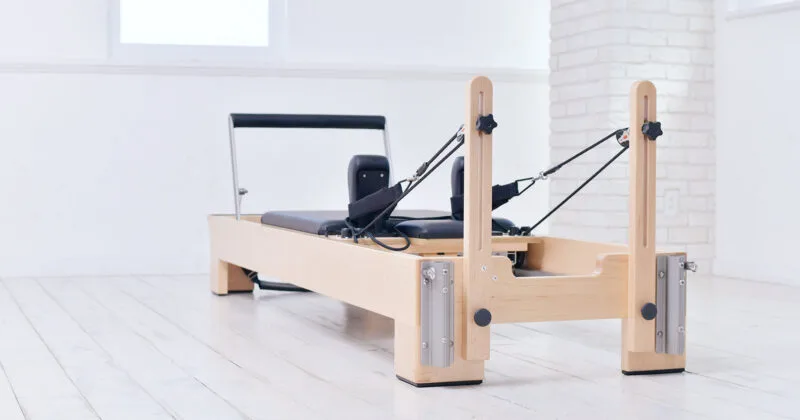
Personal training, Pilates, and room-temperature yoga are among the activities available alongside boxercise, HIIT, and women-only kickboxercise. On the Shore is a lava-stone hot yoga studio with more than 25 kinds of yoga lessons; browse the studio website to review the choices. Many of our yoga instructors speak English, and the studio’s owner often helps guests from the US bases in English herself.
For a yoga trial, the ¥1,980 tax-inclusive price covers a 60-minute lesson, mat rental, 2 bath towels, and 1 face towel. The prices page and trial booking page provide the next steps for arranging a visit around your available time and chosen activity.
References
- Resistance training effectiveness on body composition and body weight outcomes in individuals with overweight and obesity across the lifespan: A systematic review and meta‐analysis — P. Lopez et al., 2022, Obesity Reviews. DOI: 10.1111/obr.13428
- Nutrition and Exercise Interventions to Improve Body Composition for Persons with Overweight or Obesity Near Retirement Age: A Systematic Review and Network Meta-Analysis of Randomized Controlled Trials — D. Eglseer et al., 2023, Advances in Nutrition. DOI: 10.1016/j.advnut.2023.04.001
- An Energy-Reduced Mediterranean Diet, Physical Activity, and Body Composition — J. Konieczna et al., 2023, JAMA Network Open. DOI: 10.1001/jamanetworkopen.2023.37994
- Effect of exercise training on weight loss, body composition changes, and weight maintenance in adults with overweight or obesity: An overview of 12 systematic reviews and 149 studies — Alice Bellicha et al., 2021, Obesity Reviews. DOI: 10.1111/obr.13256
- Effect of resistance exercise on body composition, muscle strength and cardiometabolic health during dietary weight loss in people living with overweight or obesity: a systematic review and meta-analysis — A. Binmahfoz et al., 2025, BMJ Open Sport & Exercise Medicine. DOI: 10.1136/bmjsem-2024-002363
- Effects of dietary and exercise intervention on weight loss and body composition in obese postmenopausal women: a systematic review and meta-analysis — Chao-Chun Cheng et al., 2018, Menopause. DOI: 10.1097/gme.0000000000001085
- Effect of Exercise Type during Intentional Weight Loss on Body Composition in Older Adults with Obesity — K. Beavers et al., 2017, Obesity (Silver Spring, Md.). DOI: 10.1002/oby.21977
- Changes in Body Composition over Eight Years in a Randomized Trial of a Lifestyle Intervention: The Look AHEAD Study — H. Pownall et al., 2015, Obesity (Silver Spring, Md.). DOI: 10.1002/oby.21005
- Reductions in whole-body fat mass but not increases in lean mass predict changes in cardiometabolic health indices with exercise training among weight-stable adults. — A. Amankwaah et al., 2019, Nutrition research. DOI: 10.1016/j.nutres.2018.11.004
Cover photo: One person holds a measuring tape around another person’s waist. (Photo: Department of Defense. American Forces Information Service. Defense Visual Information Center. 1994 / Public domain / Wikimedia Commons)
Information as of October 2026. For your own health, consult a doctor.
More from Diet Science (English)
- Metabolic adaptation and why your weight loss can slow down
- Food logging and weight loss: what matters beyond perfect records
- Protein and weight loss beyond fullness and the bathroom scale
- Dietary fiber and weight loss: what gut research really shows
- Low-carb vs low-fat diets: what long-term weight loss shows
- Time-restricted eating and weight loss: what trials reveal
- Breakfast and weight loss: what eating or skipping really changes
- Sleep deprivation and appetite: why nighttime snacks add up
- Stress and emotional eating beyond the cortisol explanation
- Aerobic vs resistance training for fat loss and lean mass
- HIIT and body fat loss: what shorter workouts can really offer
- Strength training, metabolism and the science of weight regain
- Yoga and weight loss: what body composition research shows
- Hot yoga calories and sweat: what a lighter scale really means
- Pilates and body composition: what posture and fat studies show
- NEAT and weight loss: what everyday movement can really do
- Daily steps and weight loss: what 8,000 steps really tells us
- Keeping weight off: what long-term maintainers do and how they recover
- Daily self-weighing and weight loss: how to use the numbers
- Water before meals and weight loss: what 500 ml trials show
- Sugary drinks and sweeteners: what replacement means for weight
- Alcohol and weight loss through calories, appetite and fat use
- Ultra-processed foods and overeating through the trial evidence
- Eating rate and weight loss: what slower chewing can change
- Menopause weight gain and why your waist can change first
- Postpartum weight loss through diet, exercise and support
- Sarcopenia and protein: protecting muscle as you grow older
- Visceral fat in men and what exercise changes beyond weight
- Supervised exercise and weight loss: building lasting habits
All Diet Science articles (English)
初日の汗は、予約した人だけが持ち帰れる。
2

