
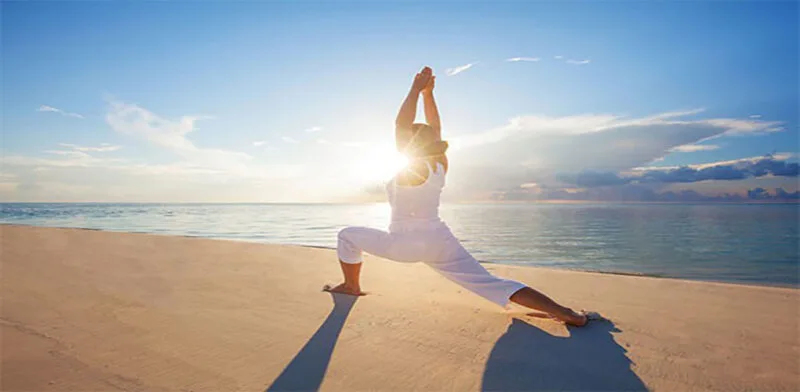
Older assisted-living residents reported better sleep and fewer daytime difficulties after yoga 3 times weekly, 70 minutes per session, for 24 weeks.
You have spent a reasonable stretch of the night asleep, yet morning arrives without much sense of rest. What bothers you is less the number on the clock than how the next day feels. Research on yoga in later life addresses that distinction. In a nonrandomized comparison of older residents in assisted living, participants who continued yoga reported better overall sleep quality, fewer sleep disturbances and fewer daytime difficulties. The groups were formed according to where people lived, rather than through an individually randomized trial.[11]
Movement for sleep does not have to mean vigorous exercise. An analysis of studies involving older adults with sleep disturbances found improvements in subjective sleep quality with yoga, meditation, tai chi and qigong.[8] Activities that bring movement, breathing and rest together therefore have a place among the options worth considering. Their relevance is not confined to whether they make a night longer. Research also asks how people experience their sleep and how they function afterward.
For readers over 60, and adult children helping a parent choose an activity, the useful question is what changed under the conditions actually studied. This article follows those conditions: the people involved, the frequency of practice, the length of programs and the sleep outcomes assessed. Depression and anxiety are covered elsewhere in this feature; here the focus is the connection between the night and the following day.

Better sleep has more than one measurable meaning
Sleep research can ask people to describe their own experience or use instruments to measure it. A systematic review and meta-analysis of structured exercise programs in older adults reported improvement in both approaches: scores on the Pittsburgh Sleep Quality Index, or PSQI, and sleep efficiency measured with objective instruments.[2] The questionnaire captures participants’ assessment of sleep. The instrument-based result adds a different kind of evidence. Seeing both in the same analysis gives a broader view than relying on a report of feeling better alone.
The analysis combined 13 articles with data on 2,612 participants. Five of the included articles studied yoga; the collection also covered walking and programs that combined several kinds of exercise. Compared with control groups, exercise groups had PSQI scores that were lower by an average of 2.49 points, with a 95% confidence interval from −3.84 to −1.14. The between-group difference in objectively measured sleep efficiency was 1.18%.[2] These are results for the exercise programs collectively. They provide support for structured physical activity as a way of addressing sleep in later life.
The range of activities matters when choosing what to try. Alongside the five yoga studies were three studies of multicomponent exercise and two of walking, as well as studies involving cycling, Pilates and elastic-band exercise.[2] Yoga was one of the activities repeatedly examined for sleep benefits. A person who prefers walking can also recognize a familiar activity within the same broader research picture.
A 2026 systematic review focused specifically on yoga in older adults. It analyzed 10 articles after screening and reported associations with improved sleep quality, fewer psychological complaints and better quality of life.[3] The yoga described combined light physical activity, breathing exercises and relaxation. That description is a more helpful starting point than imagining yoga as a contest in flexibility. The research concerns a practice with several elements, including quieter parts that can be overlooked when attention settles entirely on poses.
To bring these findings into everyday life, give your sleep concern a clear name. Is the difficulty getting to sleep, disturbances during the night or feeling unable to get going during the day? Studies assess different components, and those distinctions help match an outcome to a personal goal.[9][11] “Sleep better” can remain the overall aim, but it is easier to review when it includes something you can describe the next morning or afternoon. This also gives a family member a more useful question to ask than simply how many hours you slept.
初日の汗は、予約した人だけが持ち帰れる。
Assisted-living research includes frail older adults
The evidence is not restricted to older people who already feel physically confident. Chen and colleagues studied frail older residents in assisted-living facilities using a quasi-experimental before-and-after design with a comparison group. Residents were divided into yoga and control groups according to residence location. The study assessed overall sleep quality and daytime dysfunction, among other outcomes.[11] Here, daytime dysfunction refers to the daytime difficulties assessed in the sleep questionnaire. It directs attention to how a night is experienced beyond the bedroom.
There were 69 participants at the start: 38 in the yoga group and 31 in the control group. Of these, 55 completed the study. Yoga took place in small groups under pretrained, certified instructors. Sessions were held three times a week, lasted 70 minutes and continued for 24 weeks. Sleep and mood were assessed at baseline, at 12 weeks and at 24 weeks.[11] The schedule shows a sustained program with instruction and repeated assessment, rather than an isolated exercise performed when someone happened to have a bad night.
After six months, overall sleep quality improved, while sleep disturbances, daytime dysfunction and depression scores decreased. The intervention group had better results than the control group on all reported outcome indicators.[11] For someone whose main concern is how the following day feels, that is a particularly relevant finding. The study did not limit its account of improvement to nighttime experience. It followed outcomes that could matter to the participant throughout the day as well.
The conditions surrounding the practice deserve as much attention as its duration. People had instructors, practiced in groups and had opportunities for assessment during the program.[11] When considering how to use this research, it makes sense to look for an activity setting where you can explain your physical condition and learn an appropriate way to participate. Reproducing an unfamiliar set of movements alone at home would capture less of the study’s structure than arranging instruction and a repeatable schedule.
For an adult child helping a parent, the starting point can therefore be practical: what kind of support makes regular participation possible? The study offers an example of supported practice in a residential setting, with a defined timetable and follow-up.[11] It does not require every reader to adopt that setting. Its useful lesson is to consider the whole arrangement. A session length, a place to practice and someone to teach the activity belong together when translating a research program into a personal plan.

Comparisons show which sleep concerns yoga may address
Research comparing yoga with other activities helps make the benefits more specific. A 2026 network meta-analysis combined 45 studies involving 3,568 older adults with sleep disturbances. Compared with control conditions, meditation, yoga, qigong and tai chi were all associated with improved subjective sleep quality.[8] This offers a choice of approaches with favorable findings. It also places yoga within a field of related activities, allowing readers to consider what they would be willing to keep doing.
For yoga, the mean difference was −2.40, with a 95% credible interval from −4.55 to −0.27. Meditation had a mean difference of −3.49 and the highest probability of ranking best in the primary analysis.[8] The positive direction for yoga is encouraging, while the comparison also gives meditation a clear place in the discussion. A ranking helps describe the analysis; choosing a practice still involves the person’s concerns and willingness to participate. An activity that feels approachable may provide a more realistic beginning to a sustained routine.
A different network meta-analysis examined exercise and the separate components of the PSQI in middle-aged and older adults. It included 28 studies and 3,460 participants. Aerobic exercise ranked highest for the total PSQI score, the time taken to fall asleep and sleep medication use. Yoga ranked highest for sleep disturbances, sleep efficiency, sleep duration and daytime dysfunction.[9] The result changes depending on whether the reader looks at the overall score or a particular component. That is why naming the concern first is useful.
This analysis compared aerobic exercise, resistance exercise, combined training and yoga. It included randomized controlled trials with control groups and used both direct comparisons and indirect comparisons across studies.[9] Its rankings describe how the activities compared on particular sleep outcomes; they do not predict how an individual will respond.
For someone who enjoys walking, aerobic activity may be an appealing option. For someone drawn to slower attention to posture and breathing, yoga may be an appealing entry point. The comparisons give a reason to consider the particular sleep difficulty alongside the activity itself.[9] A separate article in this feature explores exercise choices more broadly. Here, the key point is that a good night has several components. Yoga’s position in the research includes nighttime disturbances and daytime difficulties, which may be the very concerns that prompted you to look for an activity.
Studies of people with poor sleep also report improvement
Some research begins with participants who already report poor sleep quality. A 2025 meta-analysis brought together 11 randomized controlled trials involving 1,052 older adults with poor sleep. The interventions included mindfulness, tai chi, yoga and qigong, grouped as meditation-based mind-body activities.[6] The finding therefore belongs to that group of interventions as a whole. It is useful evidence about this approach to sleep, with yoga among the activities examined.
Compared with control groups, the interventions significantly improved sleep quality. The standardized effect size, which combined results expressed on different scales, was −0.66, with a 95% confidence interval from −0.894 to −0.426. The treatment effect for stress, however, did not show a statistically significant difference.[6] Sleep and stress were separate outcomes, and their results differed. A favorable change in sleep can be worth recognizing even when another concern has not shown the same pattern.
The trials included in this analysis were published between 2008 and 2023. Depression, anxiety and stress were assessed separately from sleep, and the authors also reported improvements in depression and anxiety. However, the reported 95% confidence intervals for both outcomes include no difference, so those findings need caution.[6] This matters when several difficulties overlap in everyday life. Instead of bundling every change into a general claim of “feeling better,” it helps to identify what moved. The articles on depression and anxiety examine those subjects in more detail. For sleep, improvement was reported in trials specifically involving older adults with poor sleep quality.
The variety of sleep measurements becomes clearer in a wider review of physical activity. Among its 14 studies, 11 used subjective sleep measures, two used objective measures and one used both. Across the studies, researchers reported 16 different sleep outcomes.[17] Reviewing how rested you feel, how disturbed the night was and how manageable the next day felt can make a conversation about change more useful than relying on duration alone.
That review included studies rated moderate or strong in methodological quality: five were moderate and nine were strong. The participants were generally healthy adults aged 60 and over.[17] For a reader receiving medical care, that description is relevant when discussing suitability with a doctor. The evidence includes people in a defined health context. Asking how your own condition affects participation is a practical step toward choosing an activity that fits, rather than treating age alone as the deciding factor.
The programs covered activities aimed at mobility, endurance and strength, and their duration ranged from two weeks to 12 months.[17] Short-term changes and longer periods of practice appeared in the same review. When reading a report of improved sleep, the length of participation belongs alongside the kind of exercise. A program continued for months answers a different practical question from one observed over a short period, even when both use sleep questionnaires.
Effect sizes could be calculated in 10 studies in this review and ranged from 0.34 to 1.55. Four studies had values of at least 0.8, which the authors described as substantial.[17] The spread shows variation in the size of the reported changes. For a reader, it gives a reason to follow a personal concern before and after participation rather than expecting a single amount of improvement. For families, listening to the participant’s account of the night and day keeps the review centered on the person experiencing the change.
Numbers: sleep research in older adults
- 13 articles, 2,612 participants: the exercise meta-analysis included yoga and other activities; these were not yoga-only totals.[2]
- PSQI mean difference −2.49 points: exercise versus control, with a 95% confidence interval of −3.84 to −1.14.[2]
- Three sessions a week, 70 minutes, 24 weeks: the instructor-led yoga program in assisted living.[11]
- 45 studies, 3,568 participants: the analysis comparing mind-body therapies for older adults with sleep disturbances.[8]
- Sleep effect size −0.66: the pooled finding for meditation-based activities including yoga, across 11 controlled trials.[6]
初日の汗は、予約した人だけが持ち帰れる。
1
2


